
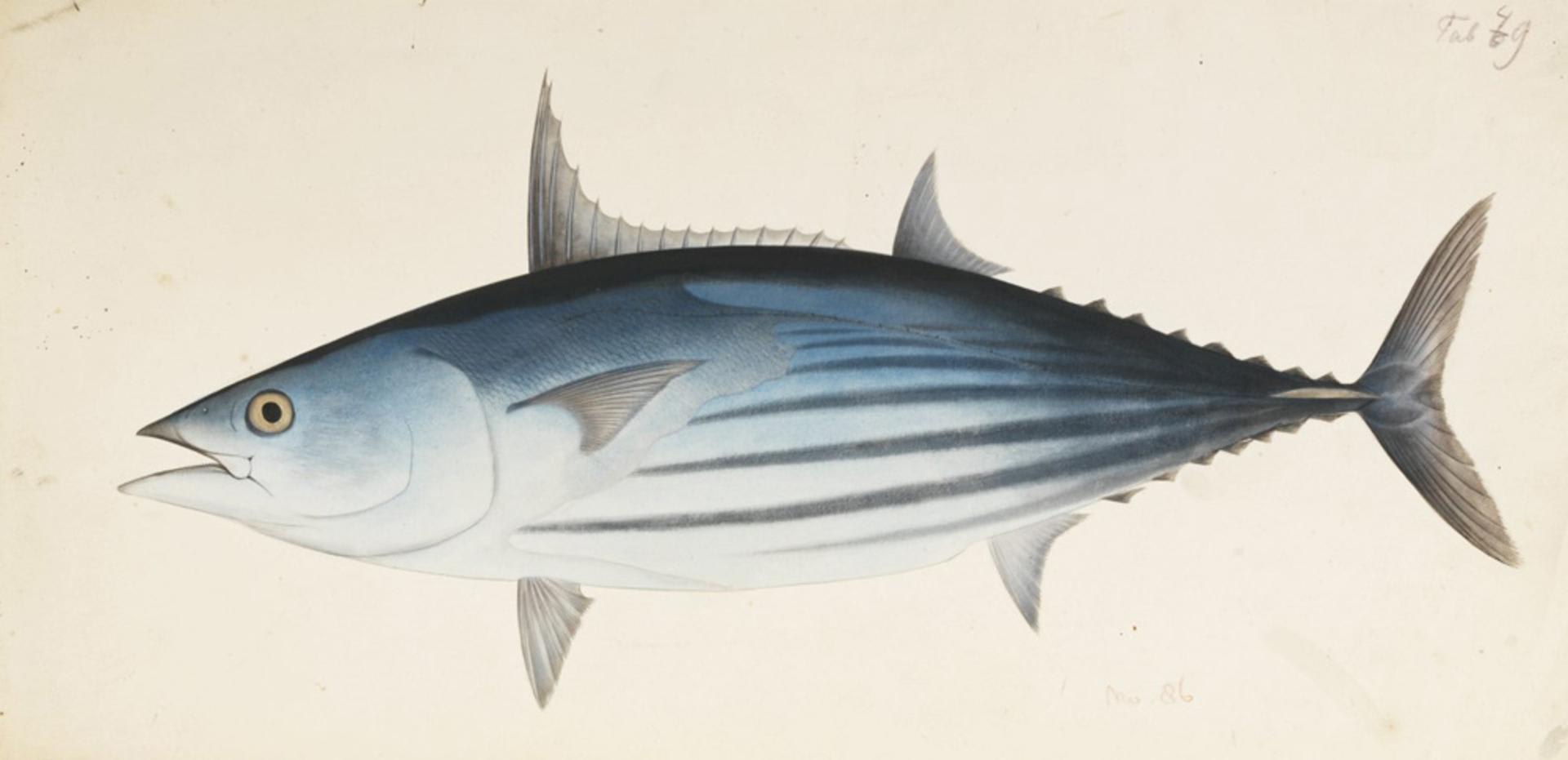
Taxonomy
- Kingdom
- Animalia
- Phylum
- Chordata
- Class
- Actinopterygii
- Order
- Pleuronectiformes
- Family
- Scombridae
- Genus
- Katsuwonus
- Species
- pelamis
Habitat
Skipjack tuna primarily inhabit tropical and subtropical pelagic waters of the Atlantic, Indian, and Pacific Oceans, often in surface layers above 20°C. They prefer open ocean environments, forming large schools around areas with upwelling currents that bring nutrient-rich waters. They are less common in coastal zones except when following prey near shorelines.
Diet
Skipjack tuna mainly eat small fish like herring, anchovies, and sardines, as well as squid and crustaceans. They hunt in coordinated schools, using high speeds to chase and capture prey, and are most active feeders during the day when light penetrates the water. This schooling behavior allows them to efficiently target dense schools of smaller organisms.
Behavior
Skipjack tuna are highly social, forming large, fast-moving schools for protection and cooperative hunting. They are diurnal, most active during the day for feeding and migration, and can swim at speeds up to 70 km/h while often leaping out of the water. These fish exhibit migratory patterns following ocean currents and food sources, and they show strong schooling to evade predators.
Fishing
Skipjack tuna are a premier sport fish in tropical and subtropical oceans, offering thrilling fights that make them a favorite for anglers and contributing to conservation through license fees that fund habitat protection and research. Target them using trolling with lures or live bait, as their schooling behavior makes them ideal for methods like chunking or casting fast-retrieving jigs to simulate fleeing prey—aim for speeds up to 7-10 knots when trolling. Use medium-heavy rods (7-9 feet) with conventional reels spooled with 20-50 lb test monofilament or braided line, paired with strong hooks and leaders to handle their powerful runs; effective baits and lures include live sardines, mackerel, or squid, as well as metal jigs, spoons, and brightly colored feather lures that mimic small fish. The best seasons are year-round in warm waters, with peak activity during summer months in the Atlantic, Indian, and Pacific Oceans, and optimal times are early morning or late afternoon when they feed aggressively near the surface; focus on pelagic habitats like open ocean areas with upwelling currents that bring nutrient-rich waters, often 10-100 miles offshore where temperatures exceed 20°C. The IGFA all-tackle world record stands at 45 pounds 4 ounces, caught in the Indian Ocean in 2013, showcasing their impressive size potential. Conservation efforts, including international quotas and catch limits managed by organizations like the International Commission for the Conservation of Atlantic Tunas, ensure sustainable populations by allowing harvest while protecting spawning stocks, with angler-funded programs supporting marine habitat restoration and monitoring to keep skipjack tuna thriving as a key species in ocean ecosystems.
Conservation Status
Listed as Least Concern by IUCN.