
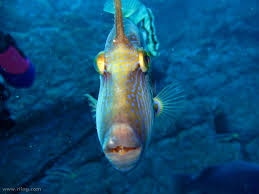
Taxonomy
- Kingdom
- Animalia
- Phylum
- Chordata
- Class
- Actinopterygii
- Order
- Cichliformes
- Family
- Carangidae
- Genus
- Meuschenia
- Species
- freycineti
Habitat
Adults occur on the continental shelf while juveniles are found in estuaries and shallow bays.
Diet
This species primarily feeds on benthic invertebrates such as small crustaceans, mollusks, and echinoderms, as well as algae and seagrasses. They forage during the day by grazing on the ocean floor, using their beak-like mouths to scrape food from rocks and substrates. Feeding behavior is opportunistic, adapting to available prey in their habitat.
Behavior
Six-spined leatherjackets are generally solitary or form small loose groups, actively foraging during daylight hours. They exhibit territorial behavior around feeding sites and can change color for camouflage to avoid threats. These fish are known for their erratic, darting swimming patterns to evade predators.
Fishing
Anglers targeting the Six-spined leatherjacket, a member of the Carangidae family, can enjoy this species as a rewarding light-tackle catch in Australian waters, contributing to conservation through license fees that fund habitat protection in the Eastern Indian Ocean and surrounding regions. Use bottom fishing techniques with a light spinning rod setup—opt for a 6-10 foot rod paired with 6-10 lb test line and size 4-6 hooks—to effectively probe the ocean floor where these fish graze; cast baits like small crustaceans, mollusks, or strips of squid to mimic their natural diet, or try jigging with lightweight lures for an active approach. The best season is spring to summer when they're more active during spawning, with prime fishing times in the daytime hours when they forage; target adults on the continental shelf in areas like Dampier, Southwest Reef, or New South Wales, and juveniles in estuaries and shallow bays such as those in Tasmania for higher success rates. Record sizes reach up to 40 cm (about 16 inches) and 2 lbs, though IGFA records are not specifically documented for this species. Conservation efforts benefit from angler participation, as catch-and-release practices help maintain stable populations, and slot limits in similar species demonstrate effective management tools that ensure healthy fisheries through programs supported by excise taxes on tackle.
Conservation Status
Listed as Not Evaluated by IUCN.