
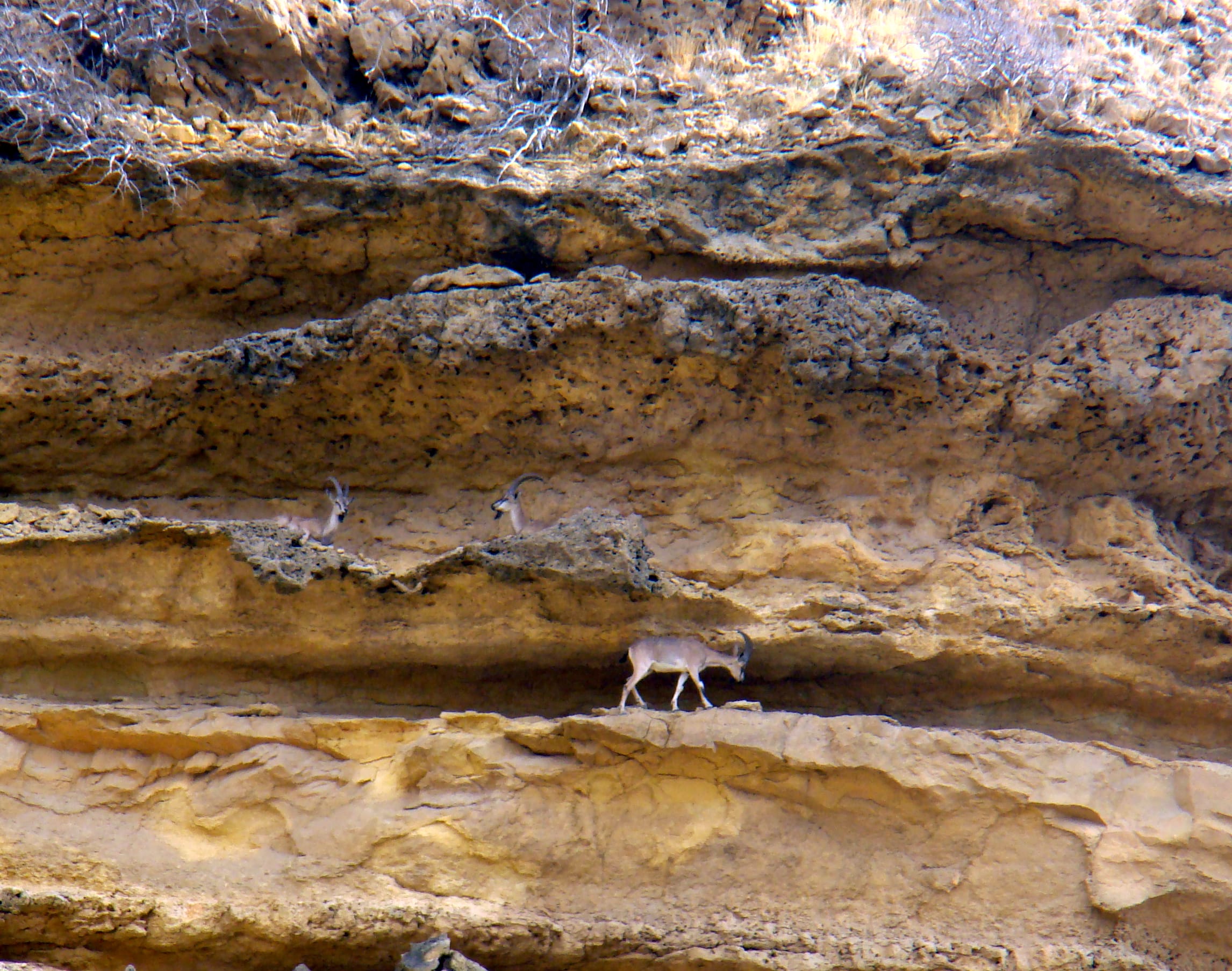
Overview
Differs from the typical bezoar by being paler in color and somewhat smaller in size, and in having horns that are closer together at the tips and either without knobs on the front keel or with only a few small ones.
Taxonomy
- Kingdom
- Animalia
- Phylum
- Chordata
- Class
- Mammal
- Order
- Artiodactyla
- Family
- Bovidae
- Genus
- Capra
- Species
- Capra aegagrus
Habitat
Distribution- West of the Indus River in southern Pakistan and the adjoining Chagai Hills of southern Afghanistan. Boundaries with the typical bezoar or pasang to the west are unclear.
Diet
This animal both grazes and browses based on seasonal availability.
Behavior
A gregarious herd animal, although older males are usually solitary or in small bachelor groups. Mates in late autumn, with the kids (usually two) born five months later. Sedentary, living its life in a small area. Favors steep, rocky terrain, whether in forests or arid regions. May be diurnal or nocturnal, depending on predator and human activity, but older males tend to sleep in hiding places (often caves) by day and feed at night. Extremely surefooted and agile. All senses are acute.
Hunting
Hunting methods will vary based on topography of the specific area, but generally ibex are pursued through spot and stalk methods, glassing from vantage points and then pursuing a herd containing a desired male. Hunters should be in good physical condition and be prepared for precipitous terrain and potentially long shots.
Conservation Status
More information is needed, as IUCN does not recognize this subspecies, and current population dynamics are not well understood.