
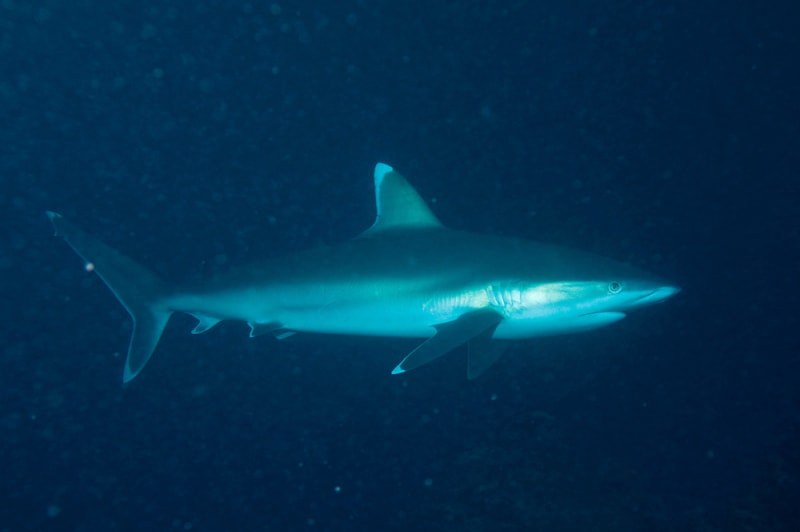
Taxonomy
- Kingdom
- Animalia
- Phylum
- Chordata
- Class
- Chondrichthyes
- Order
- Carcharhiniformes
- Family
- Carcharhinidae
- Genus
- Carcharhinus
- Species
- albimarginatus
Habitat
Silvertip sharks primarily inhabit coral reefs, offshore islands, and deeper waters from 10 to 800 meters, preferring warm tropical and subtropical seas. They are commonly found in the Indo-Pacific region, including areas around Australia, the Indian Ocean, and the Western Pacific. These sharks favor areas with strong currents and abundant structure for hunting.
Diet
Silvertip sharks mainly feed on bony fishes such as jacks, snappers, and groupers, as well as cephalopods like squid and octopus. They are active predators that hunt during the day, often ambushing prey in open water or near reefs. Occasionally, they consume smaller sharks or rays.
Behavior
Silvertip sharks are typically solitary or found in small groups, patrolling reef edges and open waters in search of food. They exhibit territorial behavior around feeding areas and can be aggressive when provoked, especially near bait or injured prey. These sharks are primarily active during the day but may hunt at night in deeper waters.
Fishing
Targeting the silvertip shark offers anglers an exciting challenge while supporting conservation efforts through regulated fishing practices that fund habitat protection in the Indo-Pacific; always adhere to local regulations to ensure sustainable populations. Best techniques include trolling with heavy tackle or chumming to attract these powerful predators, focusing on live bait presentations for a more natural strike. Use robust gear like a heavy-action rod (8-12 feet), a high-capacity reel with 50-80 pound test line, and strong circle hooks to minimize injury during catch-and-release; effective baits and lures are live fish such as mackerel or jacks, or sturdy artificial lures mimicking squid. The best seasons are during warmer months in tropical regions like the Indian Ocean, Western Pacific, or around Australia, with peak activity in the daytime when these sharks patrol reef edges and areas with strong currents from 10 to 800 meters; target drop-offs, channels, and offshore islands for the highest success. The IGFA all-tackle record stands at approximately 410 pounds 7 ounces, caught in the Pacific, highlighting the species' impressive size up to 3.5 meters. Conservation-wise, silvertip sharks are listed as Vulnerable by the IUCN, so angler-funded programs emphasize catch-and-release and slot limits as effective tools to maintain healthy populations and protect these vital apex predators in coral reef ecosystems.
Conservation Status
Listed as Vulnerable by IUCN.