
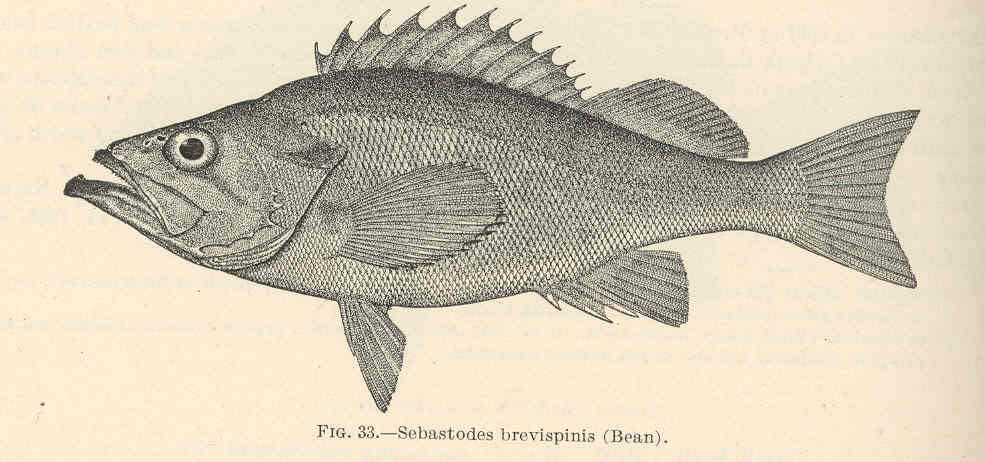
Taxonomy
- Kingdom
- Animalia
- Phylum
- Chordata
- Class
- Actinopterygii
- Order
- Salmoniformes
- Family
- Sebastidae
- Genus
- Sebastes
- Species
- brevispinis
Habitat
Silvergray rockfish primarily inhabit rocky reefs, boulder fields, and deep waters in the Northeast Pacific Ocean, from Alaska to Baja California. They prefer depths of 50 to 600 feet, often in areas with strong currents and cold water temperatures. These environments provide ample hiding spots among rocks and kelp.
Diet
Silvergray rockfish feed mainly on small fish, squid, and crustaceans such as shrimp and crabs. They are ambush predators that lie in wait among rocks to capture prey, typically during daylight hours. Their feeding behavior helps them conserve energy in deep-water environments.
Behavior
Silvergray rockfish are generally solitary or form loose aggregations, often resting in crevices during the day and being more active at dawn and dusk. They exhibit territorial behavior around prime feeding spots, using their coloration for camouflage to avoid detection. This species is not highly migratory, staying within specific depth ranges year-round.
Fishing
Target Silvergray rockfish, a prized species in the Northeast Pacific from Alaska to Baja California, using effective bottom fishing techniques like jigging or bait fishing in depths of 50 to 600 feet around rocky reefs, boulder fields, and areas with strong currents for the best results. Opt for medium-heavy rods with reels spooled in 20-30 lb test line, paired with sinkers to reach these depths, and use bait such as shrimp, squid, or small fish to imitate their natural diet of crustaceans and smaller prey. The prime seasons are spring and fall, coinciding with their reproductive periods, and focus on dawn and dusk when they are most active; year-round fishing is possible in stable populations, but always check local regulations. These fish typically reach lengths up to 61 cm and weights of 16 lbs 4 oz, with IGFA records highlighting impressive catches that underscore the sport's excitement. Conservation-wise, angler license fees fund essential habitat protection and stocking programs, while measures like slot limits and catch-and-release practices in certain areas serve as effective tools to sustain populations and combat overfishing pressures, ensuring these cold-water environments remain thriving for future generations.
Conservation Status
Listed as Not Evaluated by IUCN.