
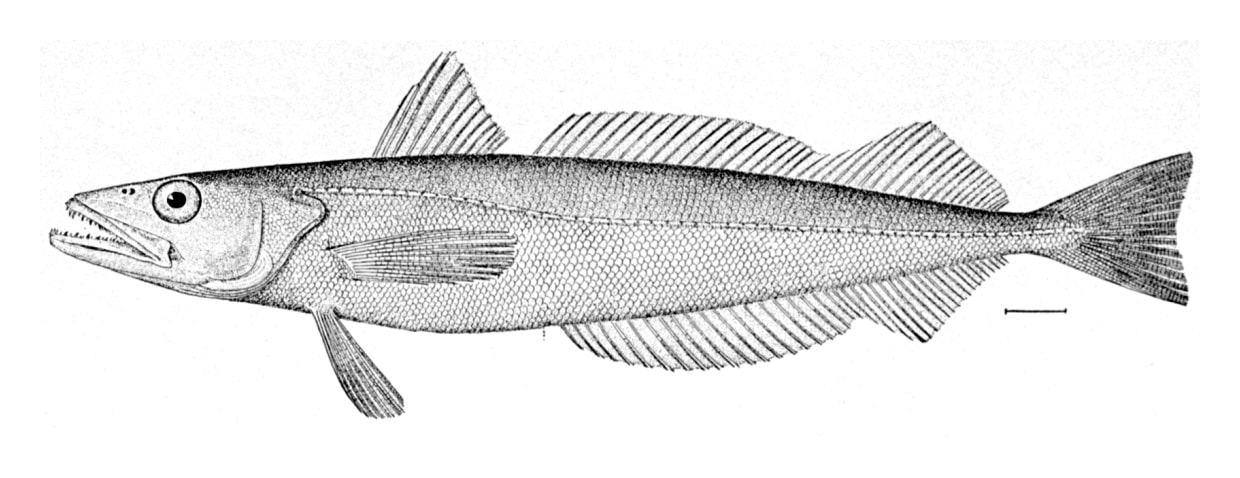
Taxonomy
- Kingdom
- Animalia
- Phylum
- Chordata
- Class
- Actinopterygii
- Order
- Perciformes
- Family
- Merlucciidae
- Genus
- Merluccius
- Species
- bilinearis
Habitat
Silver hake inhabit continental shelf waters of the Northwest Atlantic, from the Gulf of Maine to the northern Gulf of Mexico, typically at depths of 50 to 900 meters over sandy or muddy bottoms. They prefer cooler waters and migrate seasonally to deeper areas in winter.
Diet
Silver hake primarily feed on small fish such as herring and sand lance, as well as squid and shrimp. They are nocturnal predators, actively hunting in schools during the night and using their speed to chase down prey.
Behavior
Silver hake form large schools for protection and feeding, often migrating vertically in the water column to follow prey. They are generally active at night and can be territorial when feeding, but they exhibit schooling behavior to evade predators. In warmer months, they move to shallower waters for spawning.
Fishing
Silver hake, a popular sport and food fish in the Northwest Atlantic, offer exciting angling opportunities that support conservation through license fees and habitat programs; target them using bottom fishing techniques like jigging or bait fishing from boats, as they school in deeper waters and respond well to fast retrieves to mimic their predatory chases. Use medium-heavy rods with 20-30 lb test line, sturdy reels for depths up to 900 meters, and circle hooks to minimize injury during catch-and-release; effective baits include live shrimp, squid strips, or small fish like herring and sand lance, while metal jigs or soft plastic lures in silver and white colors excel for imitating prey. The best seasons are spring and summer when they move to shallower waters for spawning, with peak activity at night due to their nocturnal feeding habits—aim for dusk to dawn in areas like the Gulf of Maine or off Florida's coast. Focus on continental shelf habitats over sandy or muddy bottoms at 50-300 meters initially, adjusting for seasonal migrations to deeper zones in winter, and always check local regulations for bag limits and size slots that help maintain stable populations. The IGFA all-tackle record stands at around 4 pounds 8 ounces, showcasing their potential size. Angler-funded programs, including stocking and monitoring, play a key role in protecting silver hake as a Near Threatened species, ensuring sustainable fisheries through effective management tools like catch limits that balance recreation with population health.
Conservation Status
Listed as Near Threatened by IUCN.