
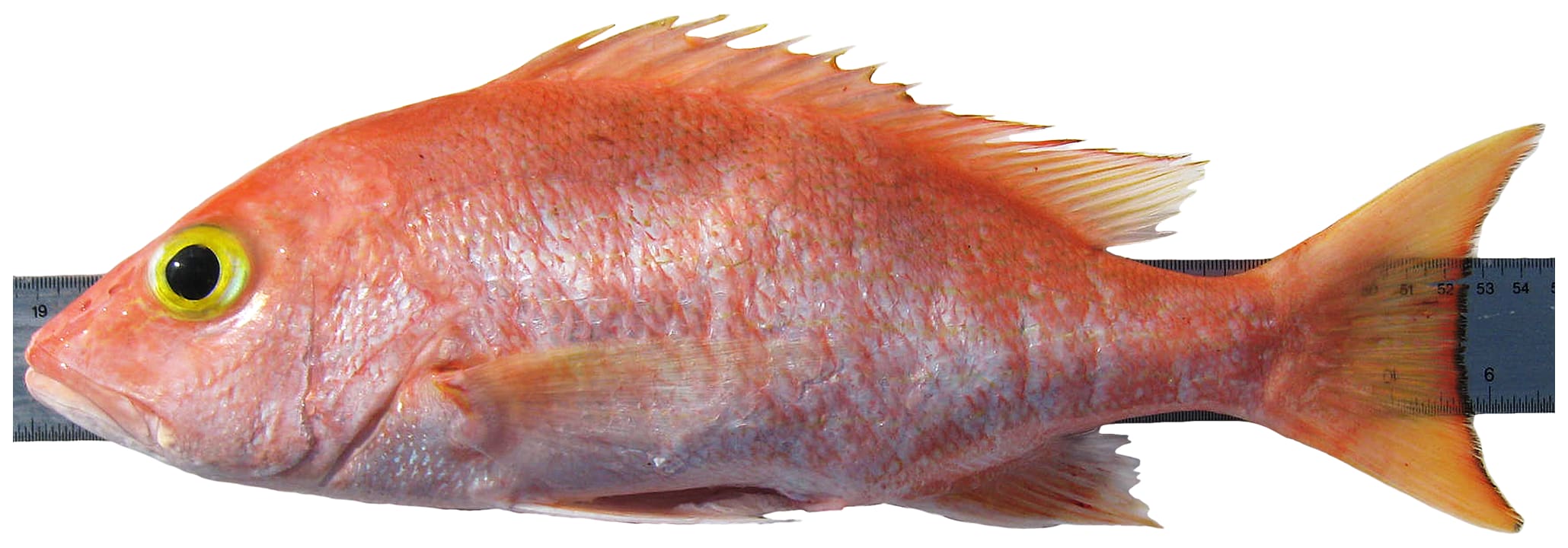
Taxonomy
- Kingdom
- Animalia
- Phylum
- Chordata
- Class
- Actinopterygii
- Order
- Perciformes
- Family
- Lutjanidae
- Genus
- Lutjanus
- Species
- vivanus
Habitat
Silk snappers primarily inhabit coral reefs, rocky bottoms, and ledges in the Western Central Atlantic Ocean. They prefer depths from 50 to 400 meters in warmer waters, often around islands and continental shelves. This species avoids shallow coastal areas, favoring more stable, deeper marine environments.
Diet
Silk snappers feed mainly on small fishes, shrimps, crabs, and other benthic invertebrates. They are ambush predators that hunt during the day, using their surroundings for cover. Feeding behavior involves quick strikes in reef areas.
Behavior
Silk snappers are typically solitary or found in small groups, actively swimming during the day and resting in crevices at night. They exhibit territorial behavior around feeding sites, defending against intruders. This species is known for its cautious nature, often fleeing quickly when approached.
Fishing
Target silk snappers with bottom fishing techniques like vertical jigging or bait fishing to effectively reach their preferred depths of 50 to 400 meters around coral reefs, rocky ledges, and continental shelves in the Western Central Atlantic, such as near the Bahamas, Bermuda, or Brazil; use a heavy-action rod with 20-50 lb test line, strong reels, and circle hooks to minimize injury during catch-and-release, paired with baits like fresh shrimp, squid, or cut fish, or metal jigs and soft plastics for a more dynamic approach; the best seasons are spring and summer when they spawn in warmer waters, with peak activity during daylight hours for optimal strikes; these fish can grow up to 80 cm and weigh as much as 18 pounds 5 ounces, with the IGFA all-tackle record at 18 pounds 5 ounces, showcasing their potential as a premier sport fish; angler-funded conservation efforts, including license fees and excise taxes, support habitat protection and stocking programs, while regulations like slot limits and seasonal closures in certain areas serve as effective management tools to maintain stable populations, as evidenced by their IUCN Least Concern status, ensuring sustainable fishing for future generations.
Conservation Status
Listed as Least Concern by IUCN.