
Overview
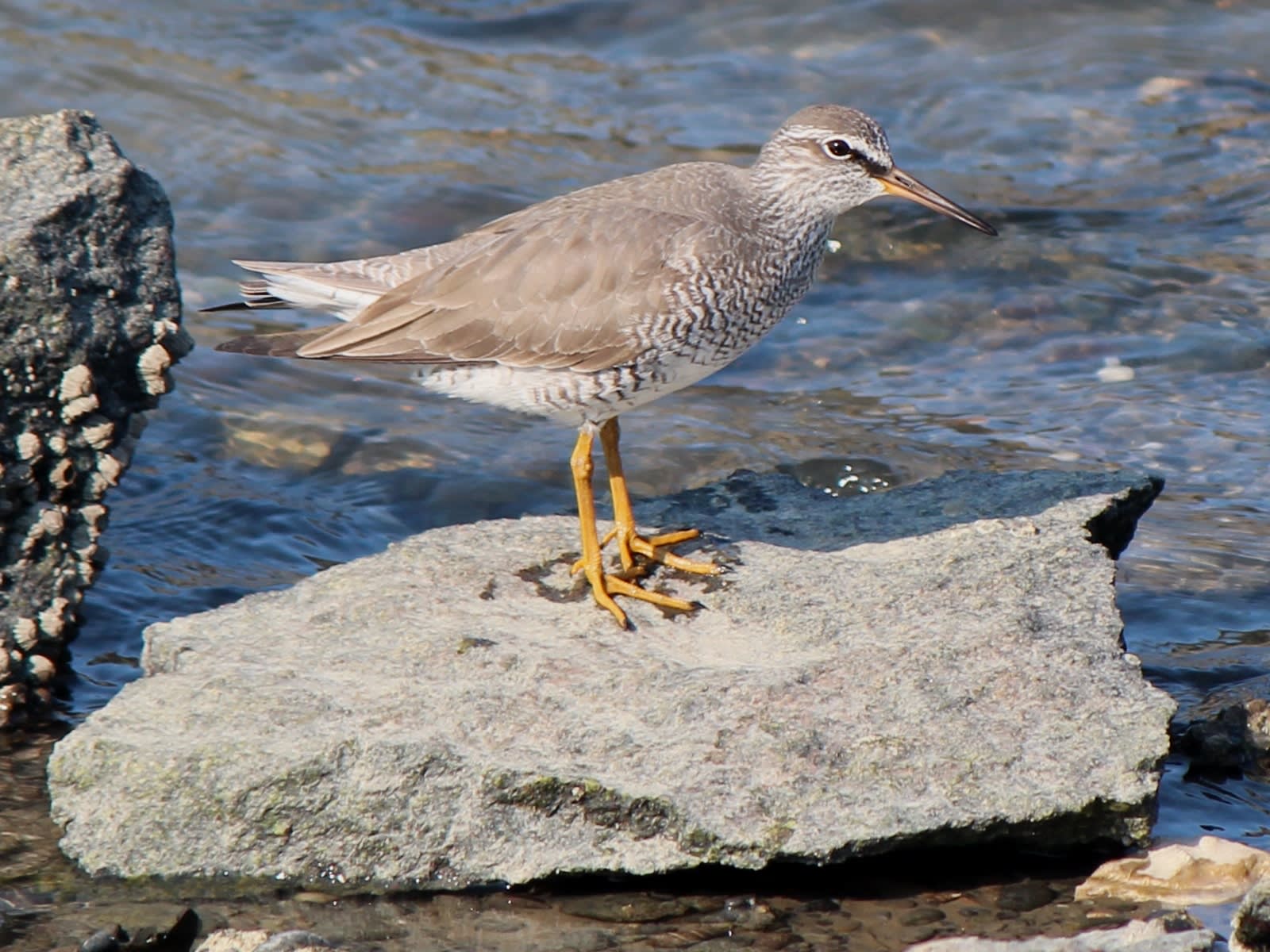
The grey-tailed tattler is closely related to its North American counterpart, the wandering tattler (T. incana) and is difficult to distinguish from that species. Both tattlers are unique among the species of Tringa for having unpatterned, greyish wings and back, and a scaly breast pattern extending more or less onto the belly in breeding plumage, in which both also have a rather prominent supercilium. These birds resemble common redshanks in shape and size. The upper parts, underwings, face and neck are grey, and the belly is white. They have short yellowish legs and a bill with a pale base and dark tip. There is a weak supercilium. They are very similar to their American counterpart, and differentiation depends on details like the length of the nasal groove and scaling on the tarsus. The best distinction is the call; grey-tailed has a disyllabic whistle, and wandering a rippling trill.
Taxonomy
- Kingdom
- Animalia
- Phylum
- Chordata
- Class
- Bird
- Family
- Charadriidae
- Genus
- Tringa
- Species
- brevipes
Habitat
Coastal shores and inland rivers and lakes, depending on the season.
Diet
Insects and small invertebrates.
Behavior
Its breeding habitat is stony riverbeds in northeast Siberia. It nests on the ground, but these birds will perch in trees. They sometimes use old nests of other birds as well. Grey-tailed tattlers are strongly migratory and winter on muddy and sandy coasts from southeast Asia to Australia. They are very rare vagrants to western North America and western Europe. These are not particularly gregarious birds and are seldom seen in large flocks except at roosts. These birds forage on the ground or water, picking up food by sight.
Hunting
More information is needed.
Conservation Status
Listed as Near Threatened by IUCN.