
Overview
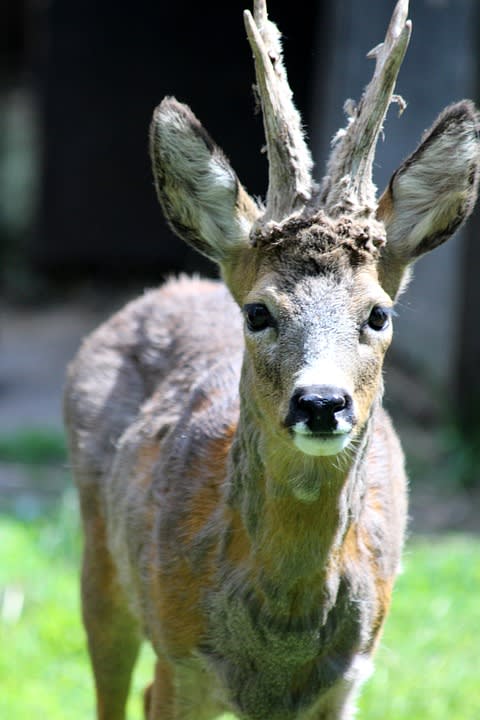
The typical Siberian roe deer (pygargus) is considerably larger than the European roe deer. The antlers are considerably larger and the summer coat is a brighter and lighter red than in the European roe. The winter coat is grayish-brown with a white rump patch, and is much thicker and rougher than in the European roe. The heavily pearled antlers grow upward in the shape of a V and are widely separated at the base, with the coronets never touching as they do in the European species. Typically there are three points to a side (the beam tip plus two tines), but the rear tine is frequently bifurcated so as to make four points. Any tines other than the normal brow and rear tines are non-typical
Taxonomy
- Kingdom
- Animalia
- Phylum
- Chordata
- Class
- Mammal
- Order
- Artiodactyla
- Family
- Cervidae
- Genus
- Capreolus
Habitat
Forest and steppes. Distribution- Mainly from the eastern foot of the Ural Mountains eastward in Siberia, northern Kazakhstan, and northern Mongolia to the Gulf of Tatary, roughly between latitudes 57-46°N. Also in the Tian Shan range of southeastern Kazakhstan, eastern Kyrgyzstan, and western Xinjiang, China, and on the northern slopes of the Caucasus Mountains. Intergrades with the Chinese roe deer in the Amur-Ussuri region. Outside Asia, Siberian roe deer are also found in European Russia on the western slopes of the Urals, roughly between 50-60°N latitudes and east of about 52°E longitude.
Diet
Primarily browses.
Behavior
Breeds during July and August, with births delayed until May and early June because of delayed implantation.
Hunting
Spot & stalk methods. Calling roe deer bucks is also practiced with a high degree success if the the time is right.
Conservation Status
Listed as Least Concern by IUCN.