
Taxonomy
- Kingdom
- Animalia
- Phylum
- Chordata
- Class
- Actinopterygii
- Order
- Anguilliformes
- Family
- Acipenseridae
- Genus
- Scaphirhynchus
- Species
- platorynchus
Habitat
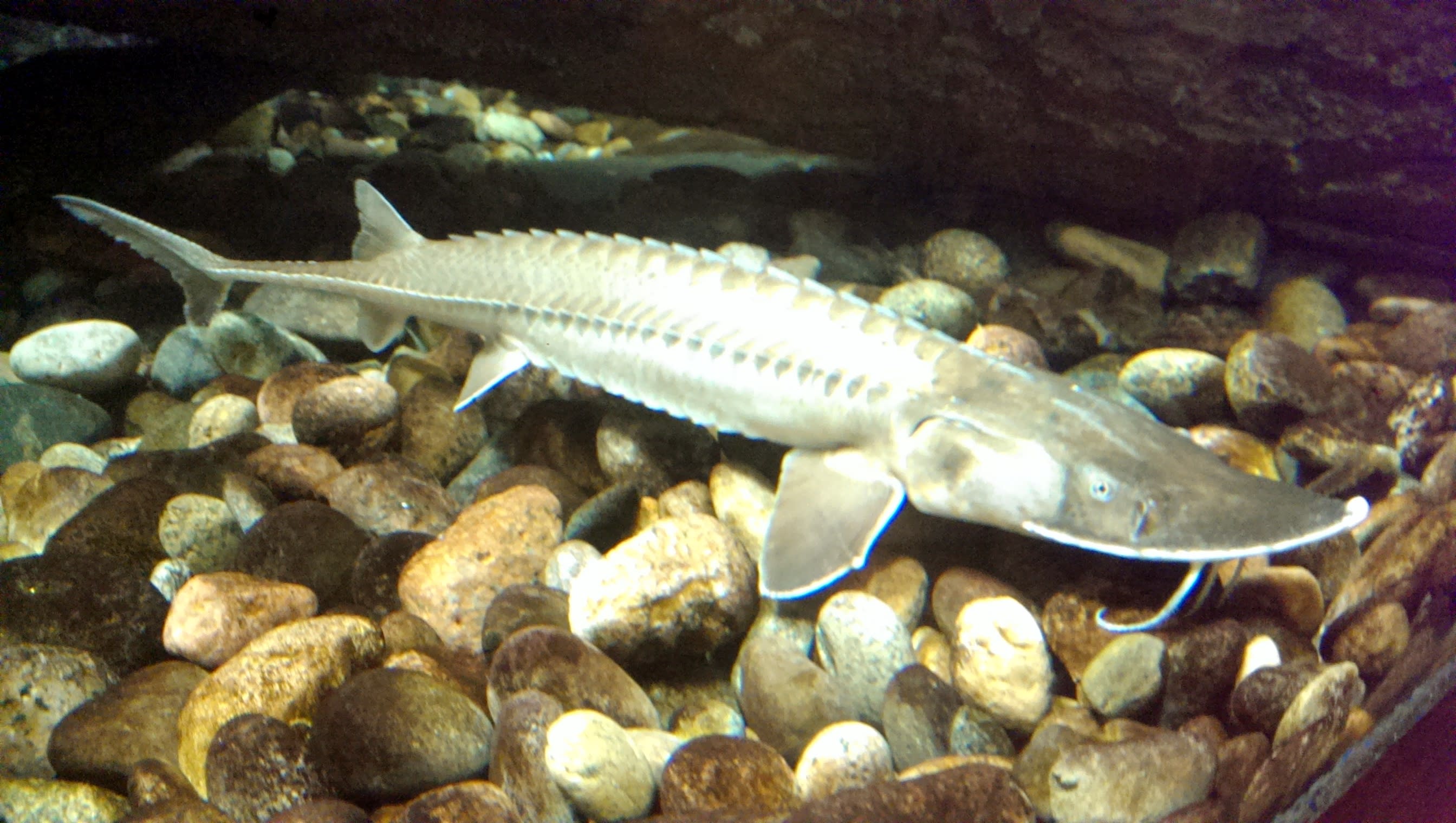
Shovelnose sturgeons primarily inhabit large rivers with sandy or gravel bottoms and moderate currents, such as the Mississippi, Missouri, and Ohio rivers in the central United States. They prefer deep channels and avoid shallow or stagnant waters, often moving to faster flows during migration. This species is adapted to freshwater environments but can tolerate a range of water conditions.
Diet
Shovelnose sturgeons feed mainly on benthic invertebrates like insect larvae, mollusks, and crayfish, using their barbels to detect prey on the river bottom. They are opportunistic bottom-feeders and may also consume small fish or worms. Feeding activity peaks at night when they are most active.
Behavior
Shovelnose sturgeons are primarily nocturnal, spending daylight hours buried in the substrate to avoid predators and emerging at night to feed. They exhibit migratory behavior, moving upstream in spring for spawning, and are generally solitary or found in small groups. They show little territorial aggression but can be sensitive to water quality changes.
Fishing
Target shovelnose sturgeon as a resilient sport fish in major rivers like the Mississippi, Missouri, and Ohio, where they thrive in sandy or gravel bottoms with moderate currents, focusing on deep channels during their nocturnal feeding periods; use bottom-fishing techniques such as drift fishing or anchoring with heavy weights to keep bait on the riverbed, employing stout rods (7-9 feet) with strong lines (20-30 lb test) and a sensitive tip to detect subtle bites. Opt for bait that mimics their diet of benthic invertebrates, like nightcrawlers, crayfish, or bloodworms, rigged on a Carolina or fishfinder setup for natural presentation; the best season is spring and fall when water temperatures are between 50-70°F, with prime times at night or early dawn for increased activity, aligning with their migratory and feeding behaviors. Anglers should note the IGFA all-tackle record of 10 pounds 12 ounces, caught in the United States, as a benchmark for this species' impressive size potential up to 4 feet. Special regulations, such as slot limits and catch-and-release requirements in many states, serve as effective management tools to sustain healthy populations and support conservation efforts; these angler-funded programs, including license fees that bolster habitat restoration and stocking initiatives, ensure shovelnose sturgeon remain a vital part of recreational fishing's role in protecting North American waterways.
Conservation Status
Listed as Vulnerable by IUCN.