
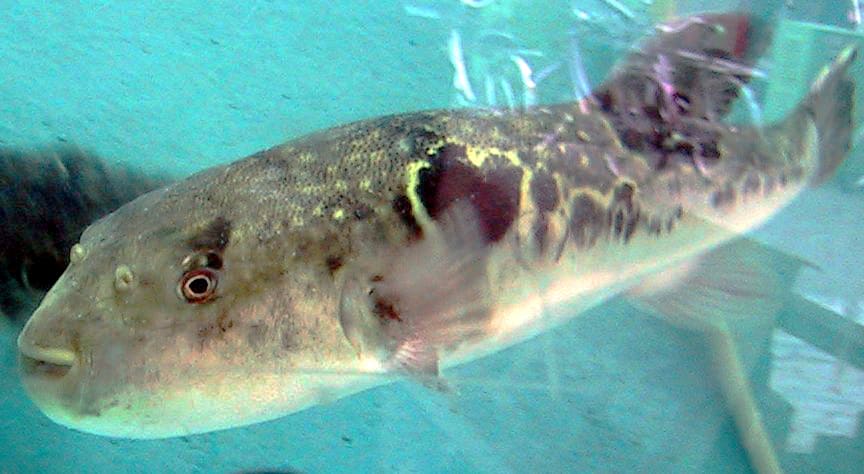
Taxonomy
- Kingdom
- Animalia
- Phylum
- Chordata
- Class
- Actinopterygii
- Order
- Tetraodontiformes
- Family
- Tetraodontidae
- Genus
- Takifugu
- Species
- snyderi
Habitat
This species inhabits coastal waters of the Northwest Pacific, including the Yellow Sea and South China Sea, preferring sandy or muddy bottoms in depths up to 100 meters. It is commonly found near rocky areas or coral reefs where it can hide and forage.
Diet
Shosai fugu primarily feeds on mollusks, crustaceans, and small fish, using its strong jaws to crush shells. It is mostly nocturnal, foraging on the seafloor during the night to avoid predators. Feeding behavior includes sucking in prey and expelling water to manipulate food.
Behavior
Shosai fugu is generally solitary and territorial, defending small areas of the seafloor from intruders. It is nocturnal, spending days hidden in crevices and becoming active at night to feed. When threatened, it inflates its body with water to deter predators, and it uses camouflage to blend into its surroundings.
Fishing
Targeting Shosai fugu, a prized species in Japanese fisheries, offers anglers a unique opportunity to engage in conservation-minded recreational fishing that supports marine habitat protection through license fees and regulated practices in the Northwest Pacific, Yellow Sea, and South China Sea. Use bottom fishing techniques with a medium-light rod and reel setup, employing a 6- to 8-foot rod paired with 10- to 20-pound test line, and a simple Carolina rig or drop shot to present bait near the seafloor; this allows for precise detection of bites from this nocturnal feeder. Opt for natural baits like crabs, shrimp, or small fish to mimic its diet of mollusks and crustaceans, as these entice strikes in deeper waters up to 100 meters over sandy, muddy bottoms, or near rocky reefs and coral structures where the fish hides during the day. The best season is spring during spawning, with peak activity at night when Shosai fugu forages, making dusk to dawn the optimal times for successful catches; focus on areas off the coasts of Japan, Korea, and China for the highest chances. Record sizes include lengths up to 40 cm and weights reaching 1 lb 6 oz, though IGFA records are not established for this species. Conservation efforts, such as catch-and-release practices and strict regulations on harvesting due to its toxicity, serve as effective management tools to maintain stable populations, as evidenced by its IUCN Least Concern status, with angler-funded programs in regions like Japan ensuring sustainable fisheries that protect coastal ecosystems.
Conservation Status
Listed as Least Concern by IUCN.