
Overview
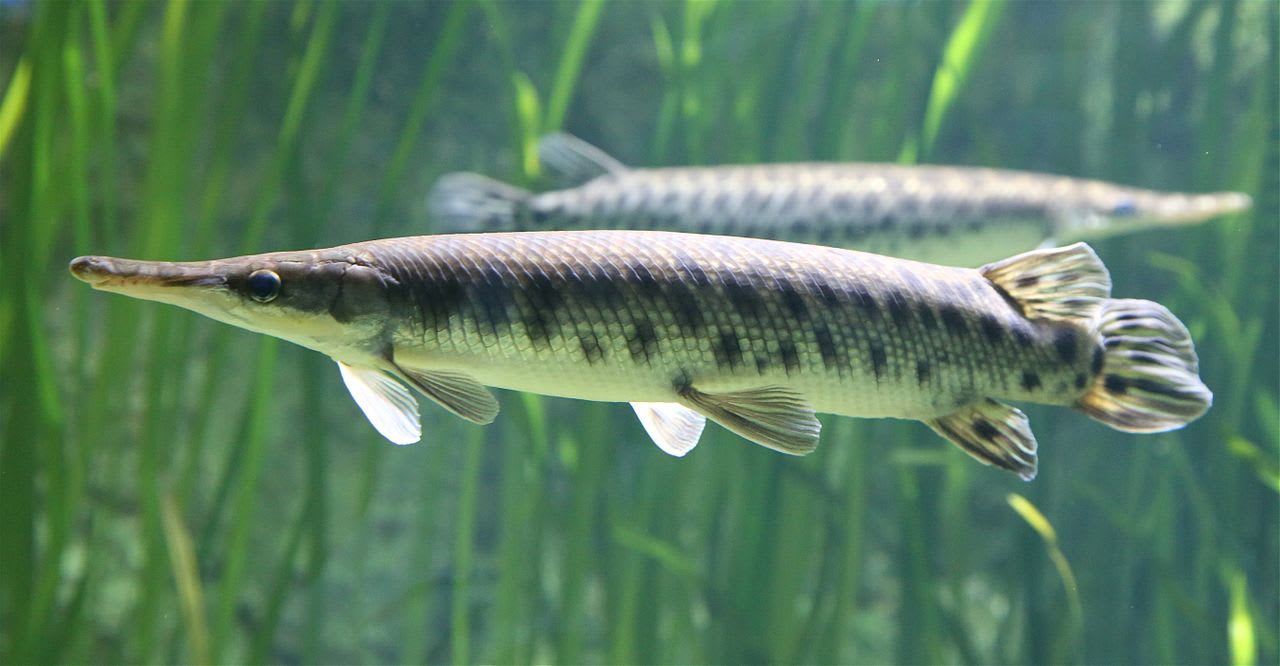
Because the shortnose gar occurs in many of the same areas (specifically the fertile Mississippi drainage system) as the alligator gar, the spotted gar, and the longnose gar, identifying it involves a process of elimination. It isn't what it is unique for, but rather what the other species have that sets them apart. The alligator gar has two rows of teeth in the upper jaw, while all other gars have only one row. The spotted gar and its close relative the Florida gar have spots on top of the head, over the entire body, and on all the fins. The spots on other gars are confined mainly to the rear portion of the bodies and on the fins, never on the head. The longnose gar is distinguished by its beak or snout which is 18-20 times as long as it is wide at its narrowest point, a considerably greater length to width ratio than in other species. The beak of the shortnose gar is only about 5½ times as long as its narrowest width. Shortnose gar may be distinguished from other Texas species in that they lack the double row of teeth in the upper jaw of the alligator gar, the long snout of the longnose gar, and the spots of the spotted gar.
Taxonomy
- Kingdom
- Animalia
- Phylum
- Chordata
- Class
- Actinopterygii
- Order
- Perciformes
- Family
- Lepisosteidae
- Genus
- Lepisosteus
- Species
- platostomus
Habitat
It can withstand higher turbidity than most gars, and is common in calm backwater areas of rivers as well as in lakes and other such waters, frequently where little or no aquatic vegetation is present. In U.S. it can be found from northern Alabama to Oklahoma and down through Louisiana to the Gulf. In the north, it has a broad range in the river systems that feed the Mississippi from southern Ohio to Montana.
Diet
The young begin to feed on insect larvae and small crustaceans. At little over an inch in length, fish appear in the diet. They will also eat crayfish, insects, and other invertebrates
Behavior
Shortnose gar spawning activity may occur from May into July. Females are often accompanied by more than one male. Yellow eggs are scattered in vegetation and other submerged structures, usually hatching within eight days of spawning. Sexual maturity is usually achieved when fish reach about 15 inches in length. Shortnose gar are more tolerant of high turbidity than other gar species.
Fishing
Like all gars, the shortnose gar is a good sport fish. Though edible, it is not popular. The dark green eggs of the gars are poisonous, and cause violent illness in humans and death in small animals and birds. Fish seem to suffer no harm from them. As with alligator gar, shortnose gar may be captured by entangling the teeth in nylon threads or by bowfishing. Shortnose gar up to five pounds have been brought in by anglers.
Conservation Status
Listed as Least Concern by IUCN.