
Overview
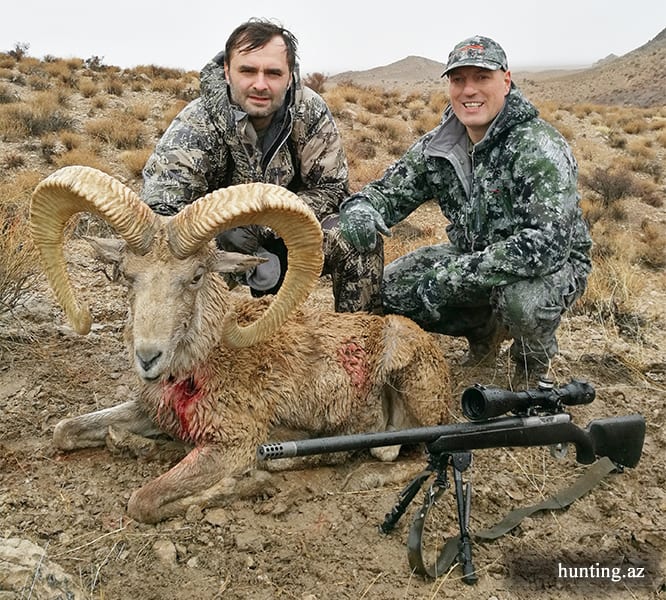
The Shiraz mouflon has a much larger body size than the Laristan mouflon. There is no bib. The horns should curve downward and start the curl back up, because of the Laristan mouflon influence from the south. Yet, there should be a more pronounced white saddle patch and typical mouflon look to them. Maybe there will be an occasional ram with more of an Esfahan/Armenian horn configuration look, but should not be at all common. The horns of the Shiraz mouflon more resemble the horn configuration of the Laristan mouflon found to its south.
Taxonomy
- Kingdom
- Animalia
- Phylum
- Chordata
- Class
- Mammal
- Order
- Artiodactyla
- Family
- Bovidae
- Genus
- Ovis
- Species
- Mouflon, gmelini
Habitat
Grassy slopes below the timberline. They rarely move to the rocky areas of the mountains.
Diet
Primarily grazes but will browse when necessary. Typically feeding in the early morning and evening.
Behavior
They are a gregarious animal and the herds they form are non-territorial. These animals rest during the day under and between rocks and shade trees where they can stay well hidden. Mating season lasts from late November to early December with females giving usually giving birth to one single lamb after a 5-6 month gestation.
Hunting
The season usually run from the first of October to the end of February. Good physical condition is essential for the hunter. Horses may be available in some camps.
Conservation Status
This animal is susceptable to threats of many kinds due to the limited size of its range. Continued protection and research must be provided to ensure the survival of this animal.