
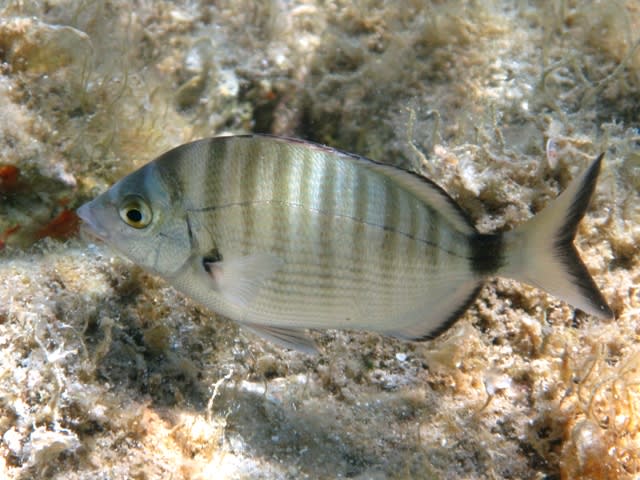
Taxonomy
- Kingdom
- Animalia
- Phylum
- Chordata
- Class
- Actinopterygii
- Order
- Siluriformes
- Family
- Sparidae
- Genus
- Diplodus
- Species
- puntazzo
Habitat
This species inhabits coastal waters of the Mediterranean Sea and eastern Atlantic, preferring rocky reefs, seagrass beds, and sandy bottoms at depths of 5 to 200 meters. It is commonly found in areas with moderate currents and abundant algae, avoiding very deep or open ocean environments.
Diet
Sharpsnout seabream primarily feeds on small benthic invertebrates like crustaceans, mollusks, and worms, as well as algae and seagrass. They exhibit diurnal feeding behavior, foraging in schools over rocky substrates during the day. Occasionally, they consume small fish or plankton.
Behavior
Sharpsnout seabream are schooling fish that form loose groups for protection and feeding, often seen swimming near the bottom during daylight hours. They display territorial behavior around feeding sites, chasing away intruders, and are generally active and wary in the presence of predators. This species is known for its agility in navigating complex reef structures.
Fishing
Anglers targeting the Sharpsnout seabream, a popular sport fish in the Mediterranean and eastern Atlantic, can use effective bottom fishing techniques such as drifting baits or light jigging to entice these schooling predators in their rocky reef and seagrass habitats. Opt for medium-light spinning or baitcasting rods with 10-20 lb test monofilament line, paired with a 7-10 foot rod for maneuverability, and size 1-2 hooks baited with live shrimp, worms, or small crabs to mimic their diet of benthic invertebrates and algae; soft plastic jigs or metal spoons can also work for a more active presentation. The best seasons are spring and summer, from April to July during spawning periods, with prime fishing times in the daytime when they actively forage in moderate currents at depths of 5-200 meters around coastal structures in locations like the Mediterranean Sea, Gibraltar Bay, or the Black Sea. Target areas with abundant algae and rocky substrates while adhering to local regulations, which serve as effective management tools to sustain populations by promoting catch-and-release and seasonal closures in some regions. The IGFA all-tackle world record is 3 pounds 11 ounces, highlighting the species' impressive size potential. As a Least Concern species per IUCN, Sharpsnout seabream benefit from angler-funded conservation programs, including habitat restoration and stocking initiatives, that ensure healthy waterways and support recreational fishing as a key tool for aquatic conservation.
Conservation Status
Listed as Least Concern by IUCN.