
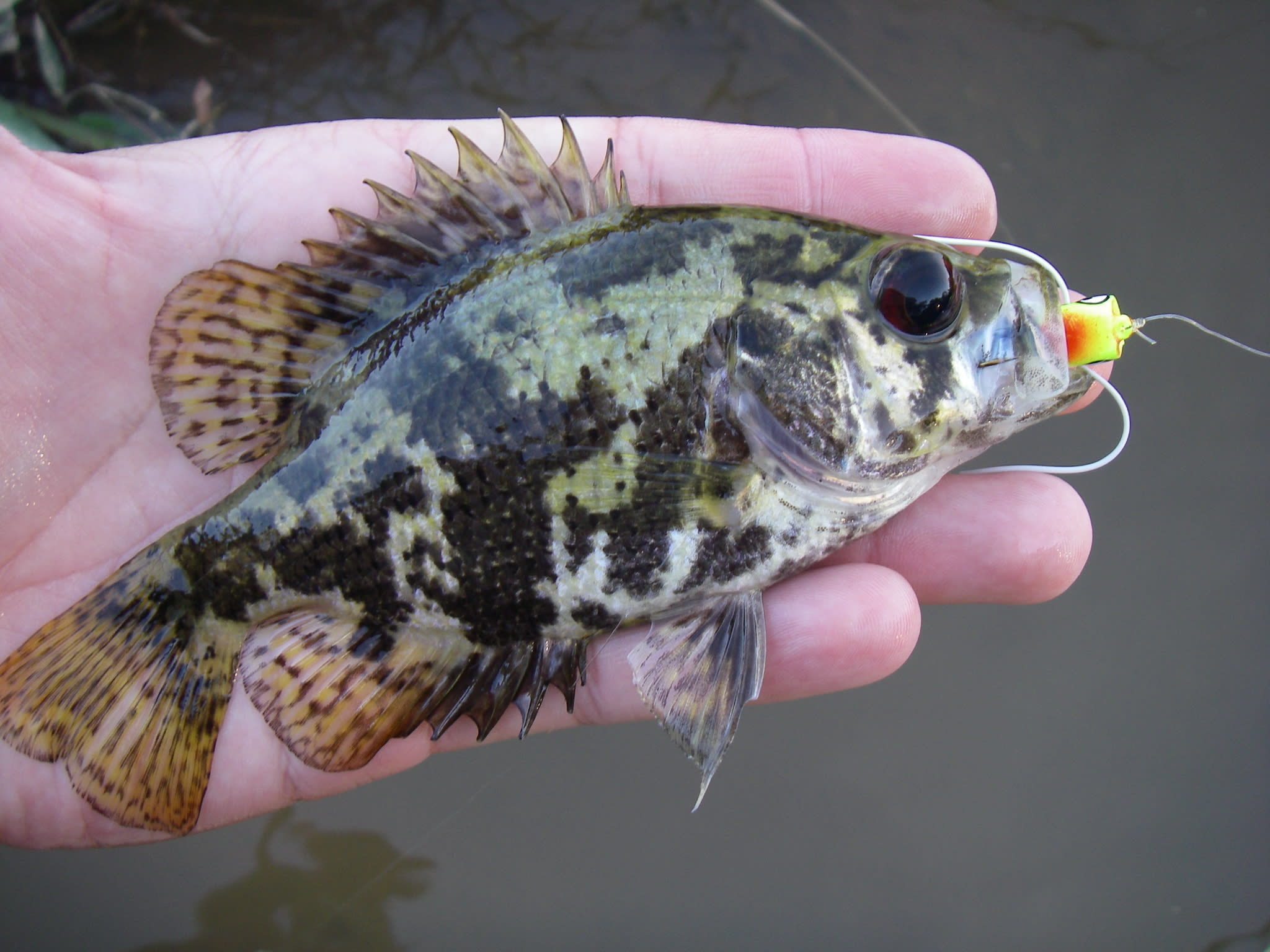
Taxonomy
- Kingdom
- Animalia
- Phylum
- Chordata
- Class
- Actinopterygii
- Order
- Cypriniformes
- Family
- Centrarchidae
- Genus
- Ambloplites
- Species
- ariommus
Habitat
Shadow bass primarily inhabit clear, rocky streams and rivers in the southeastern United States, favoring pools, runs, and areas with submerged cover like rocks or logs. They are found in moderate to fast-flowing waters of drainages such as the Apalachicola and Ouachita rivers. This species avoids murky or heavily vegetated areas, preferring well-oxygenated environments.
Diet
Shadow bass feed on a variety of aquatic insects, crayfish, and small fish, often ambushing prey from cover. They are opportunistic feeders, most active during dawn and dusk when they hunt in shallow waters. Their feeding behavior includes darting quickly to capture items near the bottom.
Behavior
Shadow bass are generally solitary and territorial, defending specific areas in rivers and streams from intruders. They are diurnal, most active during the day, and often hide among rocks or vegetation to avoid threats. This species exhibits aggressive behavior when competing for food or during spawning.
Fishing
Shadow bass offer exciting angling opportunities in the southeastern United States, serving as a key species in recreational fishing that funds conservation through license fees and habitat restoration programs. Target them with light-tackle techniques like casting small jigs, inline spinners, or soft plastic lures that mimic crayfish and insects, or use live bait such as worms and minnows, focusing on precise presentations around rocky cover to entice strikes from their ambush positions. Recommended tackle includes ultralight spinning rods paired with 4-6 lb test monofilament line and size 1-4 hooks to handle their subtle bites without overwhelming the fight. The best season is spring and early summer when water temperatures reach 60-65°F during spawning, with peak activity at dawn and dusk in moderate to fast-flowing rivers; fish pools, runs, and areas with submerged rocks or logs in clear, well-oxygenated streams like the Apalachicola, Ouachita, or Guadalupe rivers for the highest success. Record sizes include fish up to 12 inches and 1 pound 13 ounces, highlighting the thrill of landing these feisty sunfish. Conservation efforts, such as catch-and-release practices and basic bag limits in many states, are effective management tools that maintain stable populations, with angler-funded programs protecting these waterways and supporting the species' Least Concern status on the IUCN Red List.
Conservation Status
Listed as Least Concern by IUCN.