
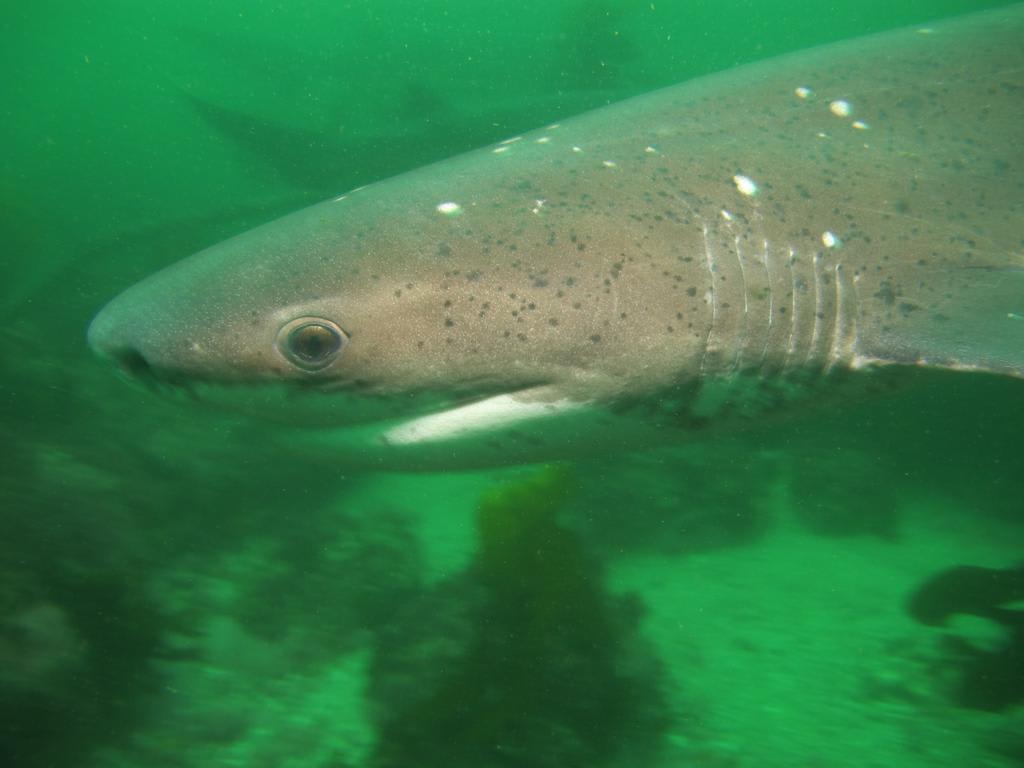
Taxonomy
- Kingdom
- Animalia
- Phylum
- Chordata
- Class
- Chondrichthyes
- Order
- Myliobatiformes
- Family
- Hexanchidae
- Genus
- Notorynchus
- Species
- cepedianus
Habitat
Sevengill sharks prefer coastal waters, including bays, estuaries, and shallow reefs, often staying near the seafloor in depths up to 200 meters. They inhabit temperate regions of the Atlantic, Indian, and Pacific Oceans, tolerating both saltwater and brackish environments. This adaptability allows them to frequent areas close to human activity.
Diet
Sevengill sharks are opportunistic predators that feed on a variety of prey, including fish, squid, crustaceans, and occasionally marine mammals like seals. They hunt during the day using ambush tactics and powerful jaws to crush hard-shelled prey. Feeding behavior varies by location, with diets shifting based on seasonal availability of food sources.
Behavior
Sevengill sharks are primarily solitary and territorial, often patrolling specific areas in coastal waters. They are active during the day, exhibiting ambush predation and occasionally showing aggressive behavior when threatened. These sharks are curious and may investigate divers, but they generally avoid large groups.
Fishing
Targeting the sevengill shark offers exciting recreational fishing opportunities in temperate coastal waters, supporting conservation through angler-funded programs that protect shark populations and marine habitats; always adhere to local regulations as effective tools for maintaining healthy stocks. For best results, use heavy tackle like a sturdy 30-50 pound test rod and reel setup with strong leaders to handle their powerful runs, employing techniques such as bottom fishing or chumming to attract these ambush predators—cast with live bait like fish chunks, squid, or crustaceans near the seafloor in bays, estuaries, and shallow reefs up to 200 meters deep, particularly in regions like New Zealand's Ngunguru Beach or the Northeast Pacific. The prime season runs from spring through summer when they are more active during daylight hours, capitalizing on their daytime hunting behavior for higher success rates. Sevengill sharks can reach impressive sizes, with the IGFA all-tackle record at 235 pounds from California waters, underscoring the thrill of the sport while promoting catch-and-release practices to aid in population recovery, as these sharks are Data Deficient by IUCN and benefit from angler-supported habitat restoration efforts to combat overfishing and ensure sustainable fisheries.
Conservation Status
Listed as Data Deficient by IUCN.