
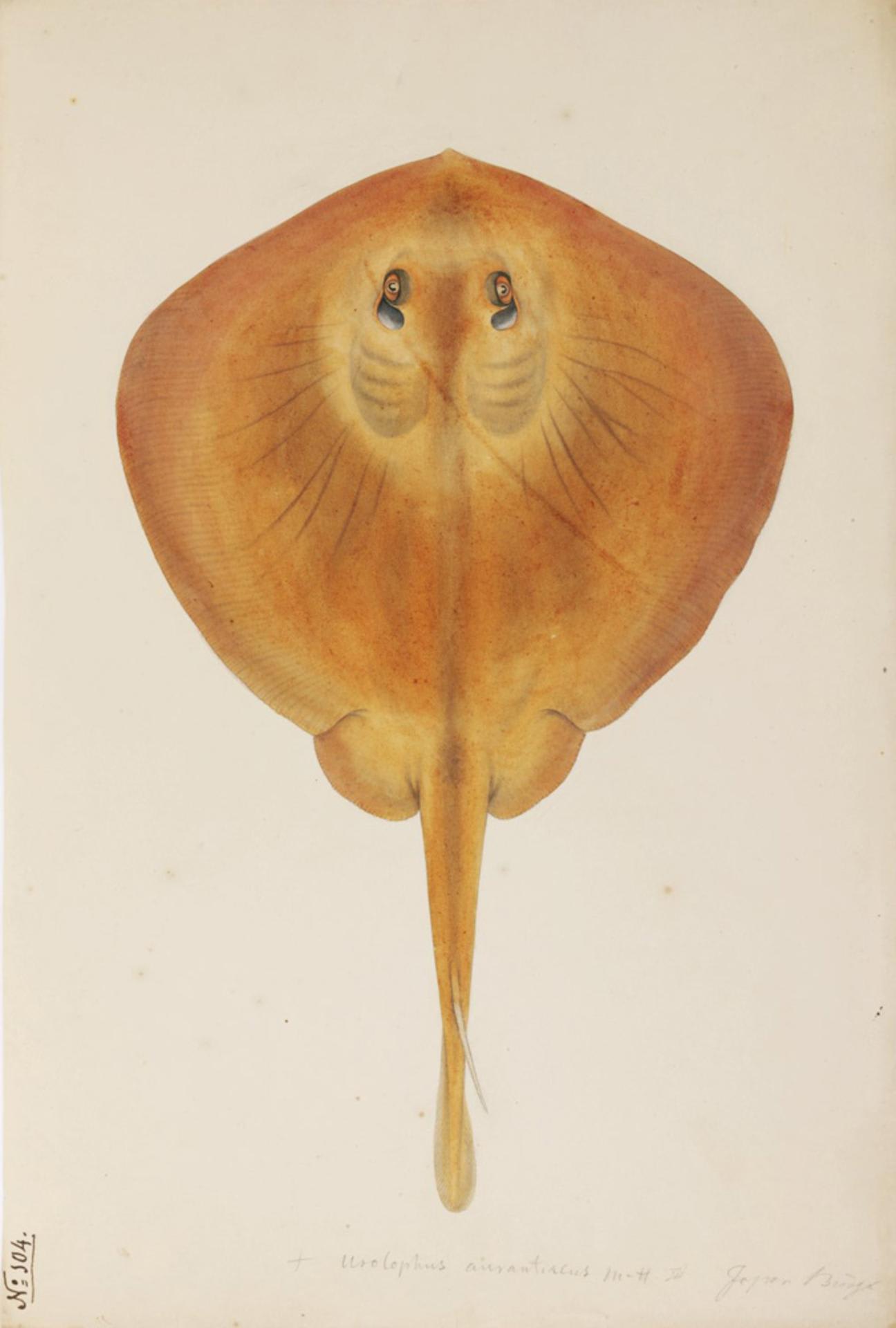
Taxonomy
- Kingdom
- Animalia
- Phylum
- Chordata
- Class
- Chondrichthyes
- Order
- Myliobatiformes
- Family
- Dasyatidae
- Genus
- Urolophus
- Species
- aurantiacus
Habitat
This species inhabits shallow coastal waters of the western Pacific, including areas around Japan, Taiwan, and Vietnam, often over sandy or muddy substrates near coral reefs or estuaries. It prefers depths of 10 to 50 meters, where it can bury itself in the sediment for protection. These environments provide ample prey and cover from predators.
Diet
The Sepia stingray primarily feeds on bottom-dwelling invertebrates such as worms, small crustaceans, and mollusks, which it locates by foraging along the seafloor. It uses its pectoral fins to stir up sediment and uncover prey, typically hunting at night when it is more active. Feeding behavior includes ambushing or scavenging, depending on prey availability.
Behavior
Sepia stingrays are mostly solitary and nocturnal, spending daylight hours buried in sand to avoid detection. They exhibit territorial behavior around feeding areas, using their tails defensively if threatened. These rays are generally docile but can deliver a painful sting if provoked.
Conservation Status
Listed as Near Threatened by IUCN.