
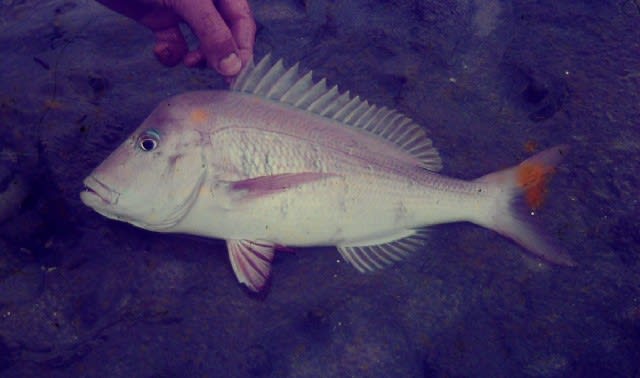
Taxonomy
- Kingdom
- Animalia
- Phylum
- Chordata
- Class
- Actinopterygii
- Order
- Siluriformes
- Family
- Sparidae
- Genus
- Polysteganus
- Species
- praeorbitalis
Habitat
This species inhabits rocky reefs and coastal waters in the Western Indian Ocean, particularly around South Africa, Mozambique, and Algoa Bay. It prefers depths from 10 to 100 meters with strong currents and abundant cover like corals and rocks. These areas provide shelter and ample food sources.
Diet
The Scotsman seabream primarily feeds on crustaceans, small fish, and mollusks found on the seafloor. It hunts actively during the day, often in small groups over reefs, using its strong jaws to crush prey. Feeding behavior intensifies in areas with high prey density.
Behavior
The Scotsman seabream is generally solitary but may form loose schools when feeding or migrating. It is diurnal, active during the day for hunting and resting in crevices at night. This species exhibits territorial behavior around prime reef habitats to protect food resources.
Fishing
Anglers targeting the Scotsman seabream, a prized sport fish in the Western Indian Ocean regions like South Africa, Mozambique, Algoa Bay, and Beira, can leverage its preference for rocky reefs and depths of 10-100 meters to support conservation through regulated fishing that funds habitat protection. Employ bottom fishing or jigging techniques with strong, abrasion-resistant tackle, including heavy spinning or conventional rods (rated 20-50 lb), braided lines for sensitivity, and sturdy circle hooks to handle their aggressive runs and reduce gut hooking for better catch-and-release success. Use baits like live crustaceans, small fish, or mollusks to mimic their natural diet, or opt for metal jigs and soft plastics that imitate prey for more dynamic presentations. The best season is summer during spawning, with optimal daytime hours when they actively feed in small groups over reefs with strong currents. Focus on areas with abundant cover like corals and rocks, adhering to local regulations such as size limits and catch quotas, which are effective tools for maintaining healthy populations of this Vulnerable species as per IUCN listings—ensuring angler-funded programs continue to protect these vital waterways. The IGFA all-tackle world record is 21 pounds, caught in South African waters, highlighting the thrill of this conservation-minded pursuit.
Conservation Status
Listed as Vulnerable by IUCN.