
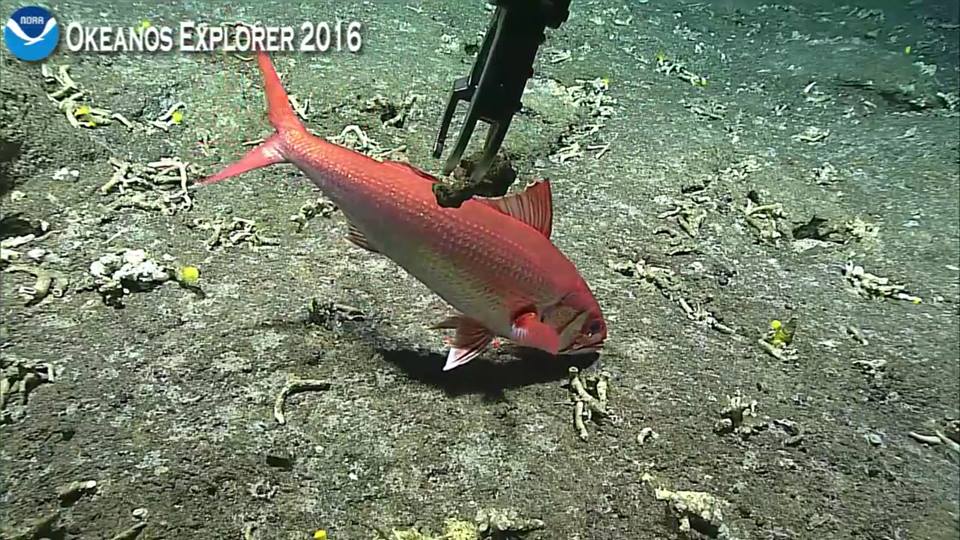
Taxonomy
- Kingdom
- Animalia
- Phylum
- Chordata
- Class
- Actinopterygii
- Order
- Perciformes
- Family
- Lutjanidae
- Genus
- Etelis
- Species
- radiosus
Habitat
Scarlet snappers primarily inhabit deep oceanic waters and coral reefs in the Indo-Pacific region, at depths ranging from 100 to 400 meters where light is minimal. They prefer rocky substrates, steep slopes, and areas with strong currents that provide cover and prey. This species is commonly found around islands and seamounts in the Western and Central Pacific.
Diet
Scarlet snappers feed mainly on smaller fish, squid, and crustaceans, which they capture using ambush tactics. They are nocturnal feeders, emerging from hiding at night to hunt in open waters or near reefs. Their feeding behavior involves quick strikes and relies on their excellent vision in low-light environments.
Behavior
Scarlet snappers are typically solitary or found in small groups, spending daylight hours hiding in caves or under ledges to avoid predators. They become active at night for feeding and exhibit territorial behavior around preferred hunting grounds. This species is cautious and elusive, often fleeing quickly when approached, and they may migrate seasonally to deeper waters.
Fishing
Targeting the Scarlet snapper (Etelis radiosus) in the deep waters of the Indo-Pacific, such as around Australia, Fiji, and the Western Central Pacific's islands and seamounts, requires specialized deep-sea techniques like bottom fishing with heavy tackle or vertical jigging to reach depths of 100 to 400 meters; use sturdy rods with 30-50 pound test lines, strong reels for deep drops, and circle hooks to minimize injury during catch-and-release. Opt for bait like live squid, small fish, or crustaceans, or effective lures such as metal jigs and soft plastics that mimic their prey to entice strikes from these nocturnal predators. The best seasons are late summer or early fall during spawning aggregations, with peak activity at night when they emerge from hiding, making nighttime trips highly productive; always check local regulations, which serve as effective management tools to sustain populations, such as size limits and seasonal closures in areas like American Samoa. Scarlet snappers can grow up to 120 cm and weigh 26 pounds, with the IGFA all-tackle record at 26 pounds 0 ounces caught in the Pacific, highlighting their status as a premier sport fish that supports conservation through angler license fees funding habitat protection and research. As a Least Concern species with stable populations, practicing catch-and-release for undersized fish upholds slot limits that maintain healthy stocks, ensuring recreational fishing continues to bolster marine conservation efforts in these vital oceanic ecosystems.
Conservation Status
Listed as Least Concern by IUCN.