
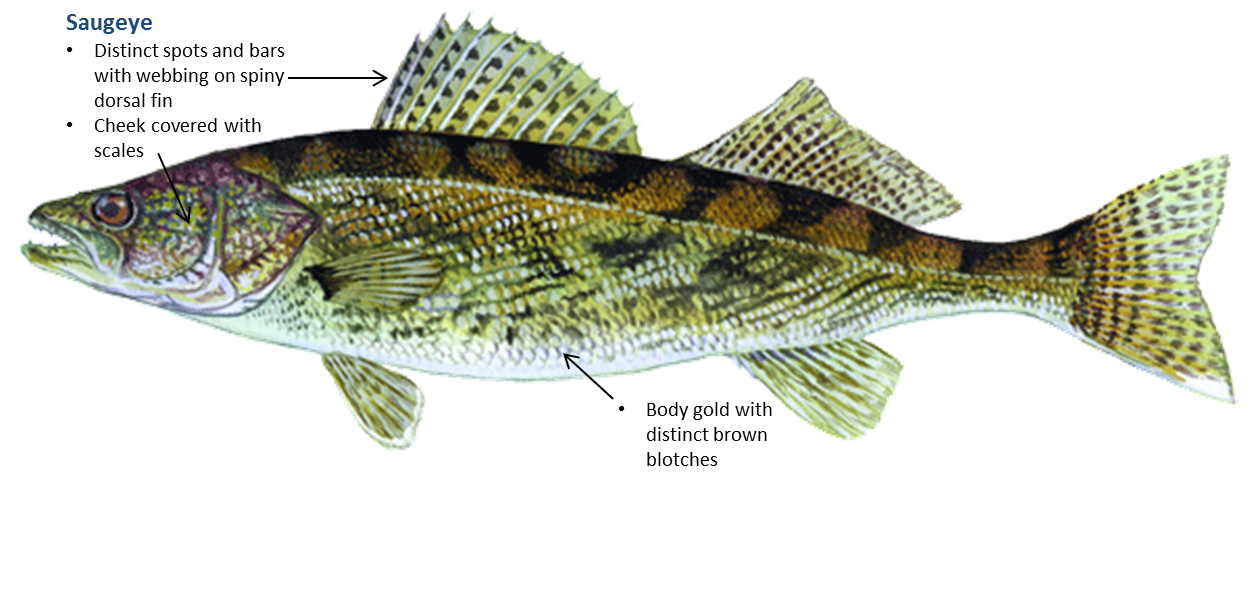
Taxonomy
- Kingdom
- Animalia
- Phylum
- Chordata
- Class
- Actinopterygii
- Order
- Perciformes
- Family
- Percidae
- Genus
- Stizostedion
- Species
- vitreum x S. canadense
Habitat
Saugeye primarily inhabit large rivers, reservoirs, and lakes in the central United States, favoring turbid waters with rocky or gravel bottoms. They prefer depths of 10 to 30 feet and areas with moderate currents, often near structures like dams or weed beds. These environments provide cover and ample prey.
Diet
Saugeye mainly consume small fish such as minnows, perch, and shiners, using ambush tactics in low-light conditions. They feed most actively at dusk and dawn, relying on their keen eyesight to spot prey. Their diet may also include crayfish and insects when fish are less available.
Behavior
Saugeye are typically solitary or form loose schools, being most active during low-light periods like dawn and dusk. They exhibit territorial behavior around spawning sites and are known for their wariness, often hiding near structures to ambush prey. These fish are generally nocturnal feeders but may be active during the day in deeper waters.
Fishing
Saugeye, a prized hybrid sport fish resulting from walleye and sauger crosses, offer exciting angling opportunities that support conservation through angler-funded stocking programs in the central United States, including states like Ohio, Kentucky, Tennessee, South Dakota, North Dakota, and Oklahoma. Target saugeye using effective techniques like trolling with crankbaits or jigging with soft plastics to mimic their preferred prey such as minnows and perch, especially in low-light conditions for the best strikes. Opt for medium-heavy spinning or baitcasting rods paired with 10-20 lb test monofilament or fluorocarbon line, along with jigs (1/4 to 1/2 ounce), crankbaits in shad or perch patterns, or live baits like minnows and crayfish for reliable results. The optimal season runs from spring through fall, with peak activity at dawn and dusk when saugeye are most aggressive in turbid waters; focus on large rivers, reservoirs, and lakes with rocky or gravel bottoms at depths of 10-30 feet near structures like dams or weed beds for higher success rates. Record sizes include fish up to 12 pounds 13 ounces and 30 inches, with the IGFA all-tackle world record standing at 12 pounds 13 ounces from Tennessee in 2020, highlighting the thrill of pursuing these fighters. Conservation efforts, bolstered by angler license fees and excise taxes, ensure sustainable populations through managed stocking programs, catch-and-release practices, and slot limits in many regions, which maintain balanced ecosystems and protect waterways for future generations.
Conservation Status
Listed as Least Concern by IUCN.