
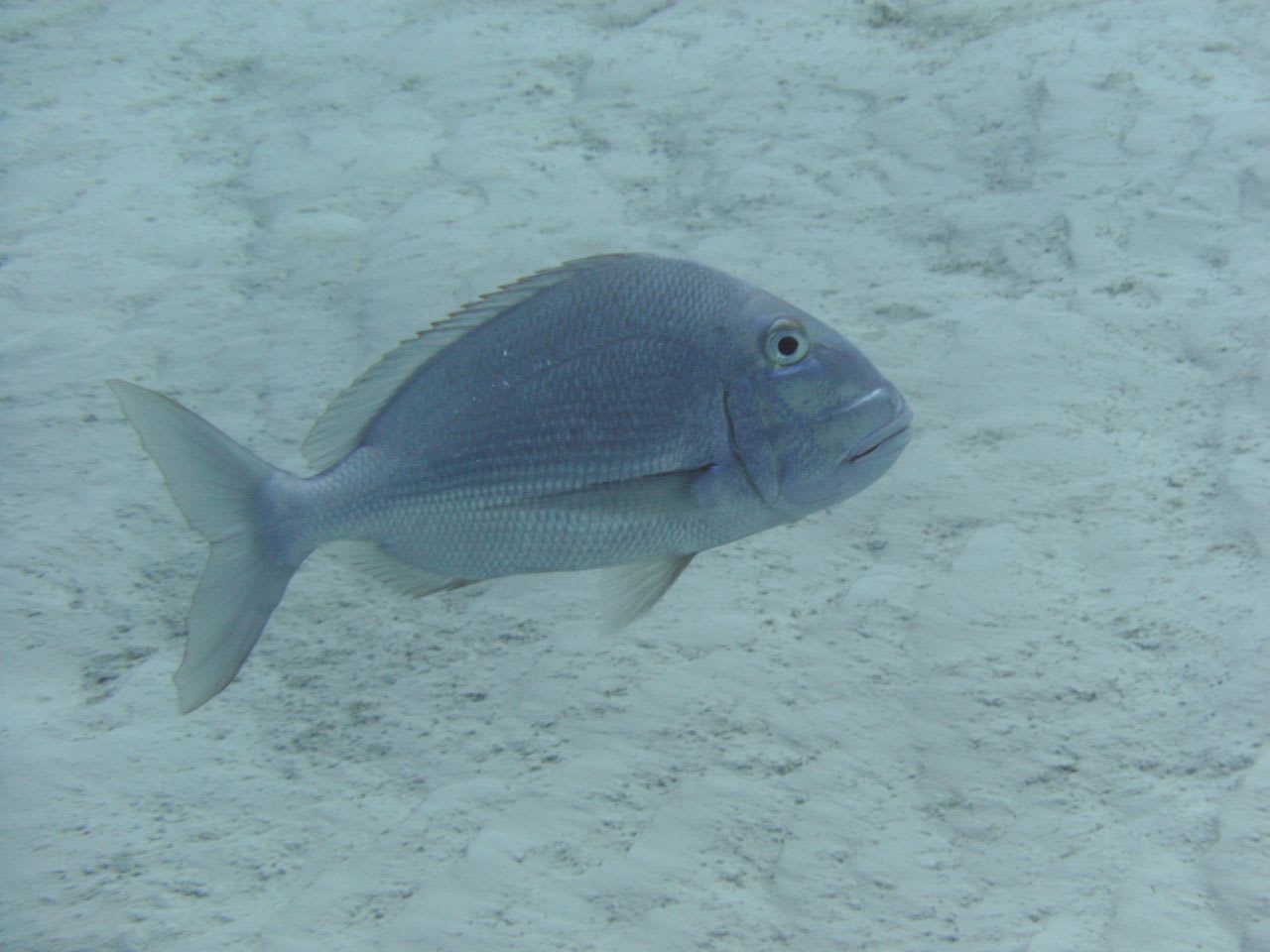
Taxonomy
- Kingdom
- Animalia
- Phylum
- Chordata
- Class
- Actinopterygii
- Order
- Siluriformes
- Family
- Sparidae
- Genus
- Calamus
- Species
- calamus
Habitat
Saucereye porgies primarily inhabit coral reefs, rocky bottoms, and ledges in the western Atlantic Ocean, from Florida to Brazil. They prefer depths of 10 to 100 meters, often associating with structures like caves and shipwrecks for shelter.
Diet
Saucereye porgies feed mainly on benthic invertebrates such as crabs, shrimp, and mollusks. They are diurnal foragers, actively searching for food over reefs and sandy substrates during the day.
Behavior
Saucereye porgies are schooling fish that form loose groups for protection and feeding. They are diurnal and exhibit cautious behavior around potential threats, often retreating to reefs when disturbed. They show territorial tendencies around prime feeding areas.
Fishing
Target Saucereye porgy with bottom fishing techniques using light tackle for an exciting fight in reef environments; use a medium-action rod with 10-20 lb test line, paired with a reel that handles drags up to 15 lbs, and opt for a simple bottom rig with a sinker to keep bait near the seafloor. Effective baits include live shrimp, crabs, or small mollusks, while jigs and soft plastics mimic their natural prey for added success. The best season is spring to summer when they spawn and are more active, with prime fishing times during the day when they forage; aim for dawn or dusk for higher bite rates. Focus on coral reefs, rocky bottoms, and ledges in depths of 10 to 100 meters across the Western Atlantic, such as Florida's Marquesas Keys or the Bahamas, by anchoring near structures like caves or shipwrecks to intercept schooling groups. Record sizes reach up to 50 cm and 1 lb 8 oz, with no specific IGFA record noted, but these fish offer a rewarding challenge for anglers. Conservation-wise, Saucereye porgy populations are stable and listed as Least Concern by IUCN, supported by angler-funded programs that promote catch-and-release and habitat protection through fishing licenses, ensuring sustainable stocks for future generations while reef fishing helps fund marine conservation efforts.
Conservation Status
Listed as Least Conecrn by IUCN.