
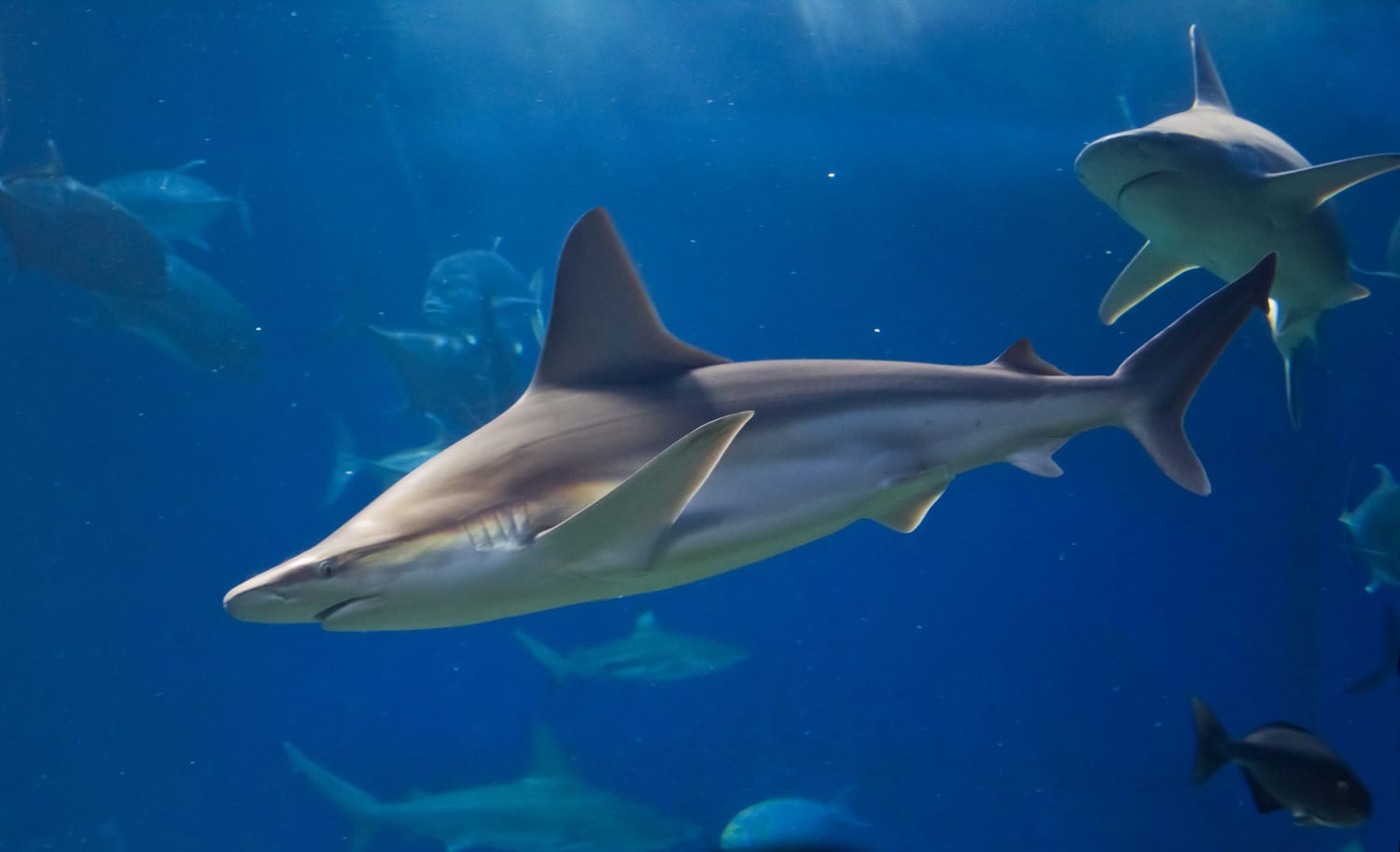
Taxonomy
- Kingdom
- Animalia
- Phylum
- Chordata
- Class
- Chondrichthyes
- Order
- Carcharhiniformes
- Family
- Carcharhinidae
- Genus
- Carcharhinus
- Species
- plumbeus
Habitat
Sandbar sharks primarily inhabit coastal waters, including bays, estuaries, and continental shelves, often in depths from shallow areas to about 200 meters. They prefer warm temperate and tropical seas with sandy or muddy bottoms, and are commonly found in the Atlantic, Indian, and Pacific Oceans. These sharks tolerate a range of salinities, allowing them to enter brackish waters.
Diet
Sandbar sharks mainly consume small bony fishes like menhaden and mullet, as well as crustaceans such as crabs and shrimp. They also eat mollusks, octopuses, and occasionally smaller sharks or rays. Feeding typically occurs at night when they are more active, using their keen senses to hunt on the ocean floor.
Behavior
Sandbar sharks are often solitary but may form loose groups in areas with plentiful food or during migration. They are primarily nocturnal, resting on the seafloor during the day and hunting at night, and exhibit seasonal migrations to warmer waters. These sharks are not particularly aggressive towards humans but can be territorial around feeding grounds.
Fishing
Sandbar sharks offer exciting sport fishing opportunities, serving as a vital conservation tool through angler-funded programs that support habitat protection and population monitoring. Target them using heavy tackle setups with stout rods (80-130 lb class), high-capacity reels spooled with 50-80 lb monofilament or braided line, and wire leaders to prevent bite-offs, paired with live baits like menhaden, mullet, or bluefish, or cut baits such as squid and mackerel for effective chumming or bottom fishing techniques that mimic their natural prey. The best seasons are summer months in warmer temperate and tropical waters, with peak activity at night when they hunt on the ocean floor; focus on coastal habitats like bays, estuaries, and continental shelves up to 200 meters deep with sandy or muddy bottoms, particularly in the Atlantic, Indian, and Pacific Oceans. The IGFA all-tackle world record is 529 pounds 1 ounce, caught in 2007 off the coast of Florida. As a Vulnerable species per the IUCN, conservation efforts include catch-and-release practices and regulated seasons or slot limits as effective management tools to sustain populations, with fishing license fees directly funding restoration programs that protect these migratory sharks and their ecosystems.
Conservation Status
Listed as Vulnerable by IUCN.