
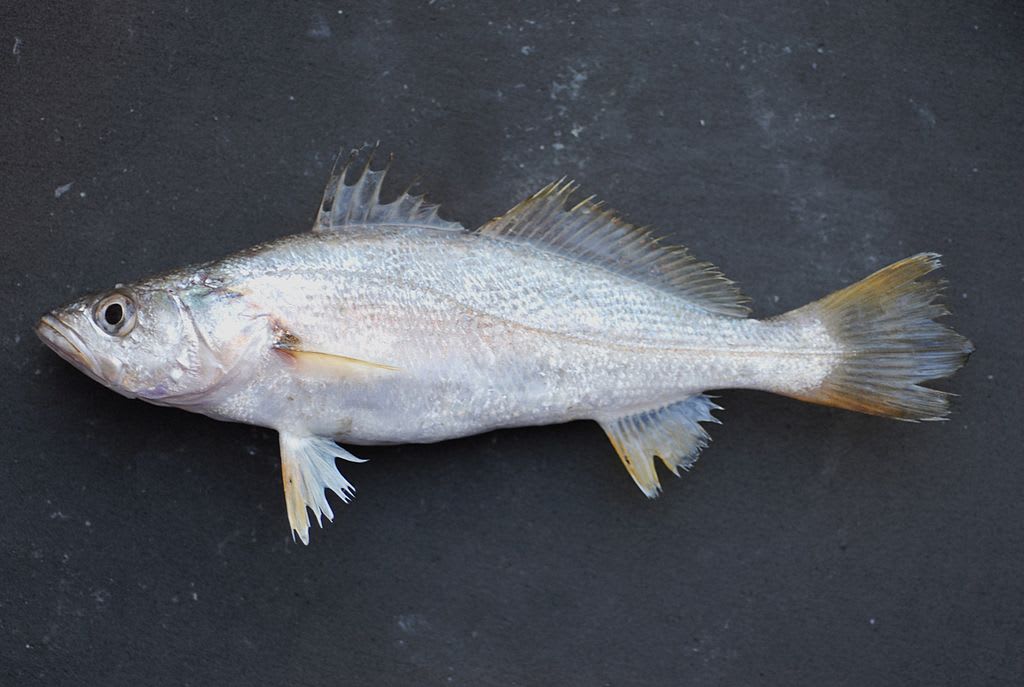
Taxonomy
- Kingdom
- Animalia
- Phylum
- Chordata
- Class
- Actinopterygii
- Order
- Perciformes
- Family
- Sciaenidae
- Genus
- Cynoscion
- Species
- arenarius
Habitat
Sand seatrout primarily inhabit coastal waters, bays, and estuaries along the western Atlantic and Gulf of Mexico. They prefer sandy or muddy bottoms in shallow areas, often near structures like seagrass beds or oyster reefs. These fish are commonly found in salinities ranging from full seawater to brackish conditions.
Diet
Sand seatrout feed mainly on small fish such as anchovies and menhaden, as well as shrimp and crabs. They are ambush predators that hunt by striking quickly at prey, often in shallow waters. Feeding activity peaks at night or during low light conditions.
Behavior
Sand seatrout are schooling fish that form loose groups for protection and feeding. They are primarily nocturnal, becoming more active at dusk and dawn to hunt. These fish exhibit seasonal migrations to deeper waters in winter and show minimal territorial behavior. They can be cautious around boats and anglers, making them challenging to approach.
Fishing
Sand seatrout are a popular inshore game fish that provide exciting action for anglers while supporting aquatic conservation through license fees and taxes that fund habitat restoration in coastal areas. Employ effective techniques like bottom fishing, jigging, or drifting with light to medium tackle, including 7-foot spinning rods, reels with 10-15 pound monofilament line, and size 1/0 to 2/0 hooks to handle their strong runs; top baits include live shrimp, small fish such as anchovies or menhaden, and crabs, while proven lures are 1/4 to 1/2 ounce jigs tipped with soft plastics or spoons that imitate their prey. The best seasons are spring and summer during spawning migrations, with optimal times at dawn and dusk when they are most active in low-light conditions; target shallow bays, estuaries, and coastal waters with sandy or muddy bottoms near seagrass beds and oyster reefs in locations like the Gulf of Mexico, Matagorda Bay, Galveston Bay, or along the Atlantic coasts of Florida and Texas for the highest success. The IGFA all-tackle world record is 6 pounds 2 ounces, caught in Texas in 1995, showcasing the potential of these fish. State regulations, such as slot limits (e.g., 15-20 inches in many Gulf areas) and bag limits, serve as effective management tools to sustain healthy populations, promoting catch-and-release practices that align with angler-funded programs protecting waterways and ensuring abundant fisheries for generations.
Conservation Status
Listed as Least Concern by IUCN.