
Taxonomy
- Kingdom
- Animalia
- Phylum
- Chordata
- Class
- Mammal
- Order
- Artiodactyla
- Family
- Cervidae
- Genus
- Rusa
Habitat
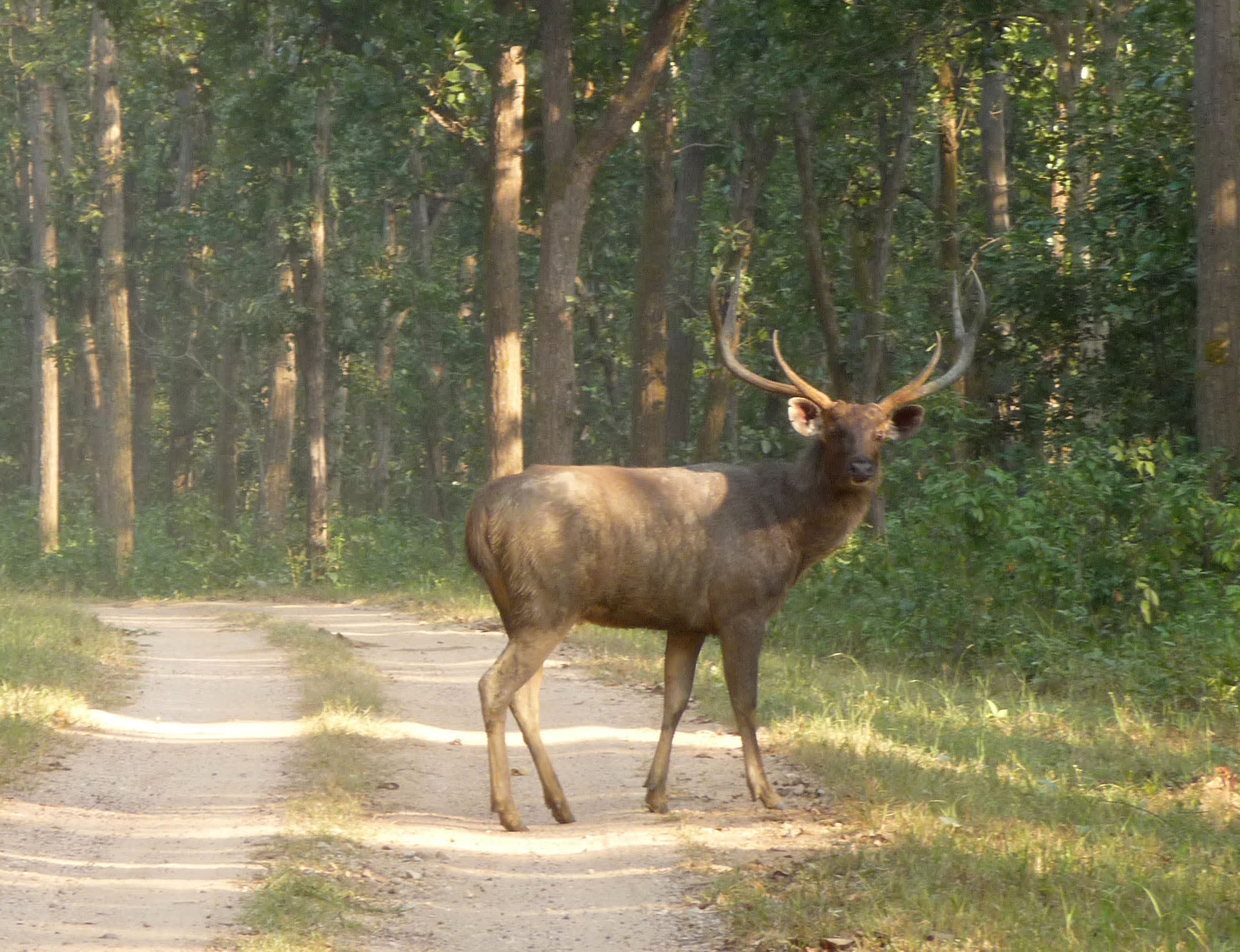
Sambar deer primarily inhabit dense forests, woodlands, and grasslands in South and Southeast Asia, including regions like India, Sri Lanka, and Indonesia. They prefer areas with proximity to water sources such as rivers and lakes, and can adapt to a range of elevations from lowland tropics to mountainous terrains up to 2,000 meters.
Diet
Sambar are herbivores that feed on grasses, leaves, fruits, and aquatic plants, often browsing on shrubs and trees. They are primarily nocturnal feeders, grazing during the night to avoid predators and resting in shaded areas during the day. Their feeding behavior includes selective browsing, which helps them obtain nutrient-rich foliage.
Behavior
Sambar deer are typically solitary or found in small family groups, with males being territorial and marking their areas using scent glands and vocalizations. They are mostly nocturnal, active at night for foraging and resting during the day in dense cover to evade predators. During the mating season, males exhibit aggressive behaviors like roaring and fighting to establish dominance.
Hunting
Sambar deer, a large and challenging game species, are best hunted using spot-and-stalk methods in dense forests and woodlands, where their nocturnal habits require early morning or late evening approaches; driven hunts can also be effective in open grasslands, with hunters positioned downwind to avoid their keen sense of smell. Use calibers like .30-06 Springfield, .308 Winchester, or larger such as .300 Winchester Magnum for ethical one-shot kills, focusing on precise shot placement in the heart-lung area behind the shoulder to ensure quick, humane harvests; a good rifle scope and steady rest are essential for the thick cover. The best hunting season aligns with their autumn mating period, typically from October to December in the Northern Hemisphere, when males are more vocal and active, making them easier to locate—always check local regulations for tag availability. For trophy criteria, focus on antler size and symmetry, with top specimens featuring three-tined racks over 1 meter long; these qualify for records in Safari Club International (SCI), where exceptional Sambar have scored highly. Legal hunting occurs in regions like Australia (e.g., Victoria and New South Wales, where they are managed as an introduced species), parts of India and Nepal under strictly regulated permits that support conservation efforts, and on private game ranches in the United States, such as in Texas; these programs demonstrate effective wildlife management, as hunting revenues fund habitat restoration and anti-poaching initiatives, contributing to population stability despite the species' Vulnerable status on the IUCN Red List.
Conservation Status
The IUCN classifies the sambar as Vulnerable due to ongoing threats like habitat loss from deforestation and poaching for meat and antlers. Population trends are decreasing across their range, with fragmentation further impacting their survival.