
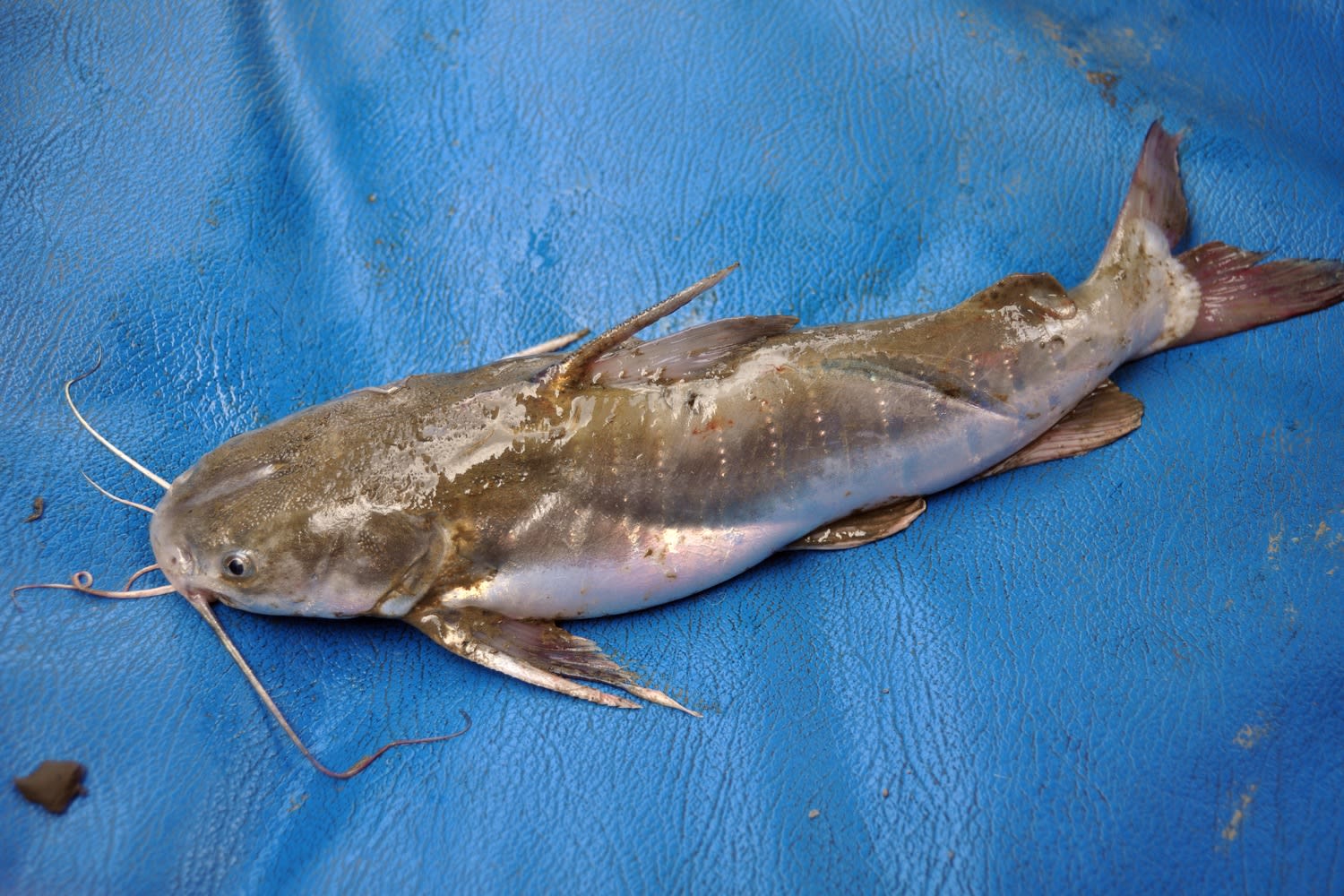
Taxonomy
- Kingdom
- Animalia
- Phylum
- Chordata
- Class
- Actinopterygii
- Order
- Anguilliformes
- Family
- Ariidae
- Genus
- Hexanematichthys
- Species
- sagor
Habitat
This species inhabits coastal marine and estuarine waters, including mangroves and river mouths in the Indo-West Pacific region. They prefer sandy or muddy substrates in shallow areas up to a few meters deep, often found in tropical and subtropical zones of South and Southeast Asia.
Diet
The Sagor catfish primarily feeds on small fish, crustaceans, and benthic invertebrates like worms and mollusks. They are nocturnal foragers, using their barbels to detect and capture prey on the ocean floor, with feeding activity peaking at night.
Behavior
Sagor catfish are solitary and nocturnal, spending daylight hours buried in sediment to avoid predators. They exhibit territorial behavior around feeding sites and use their barbels for navigation in low-visibility environments. Little is known about their social interactions, but they are generally sedentary bottom-dwellers.
Fishing
The Sagor catfish, found in coastal marine and estuarine waters of the Indo-West Pacific including South Asia, Southeast Asia, and Eastern Africa, offers rewarding fishing opportunities in mangroves, river mouths, and shallow sandy or muddy substrates up to a few meters deep; target these areas during warmer months when they are more active, with the best times being at night when their nocturnal feeding peaks. Use bottom fishing techniques with a light to medium spinning or baitcasting rod setup, paired with 10-20 pound test line and a strong hook to handle their barbels and potential runs in currents, employing live or cut bait such as small fish, crustaceans, or worms to mimic their diet of benthic invertebrates and prey. Anglers should focus on catch-and-release practices to support healthy populations, as regulated fishing in these regions contributes to conservation efforts through license fees that fund habitat restoration in tropical estuaries; while specific regulations vary by country, slot limits and seasonal closures in some areas serve as effective management tools to maintain sustainable stocks. Although not widely recognized in IGFA records, the species can reach up to 4 pounds and 50 cm, making it a fun challenge for recreational fishers in these biodiverse waters.
Conservation Status
Listed as Not Evaluated by IUCN.