
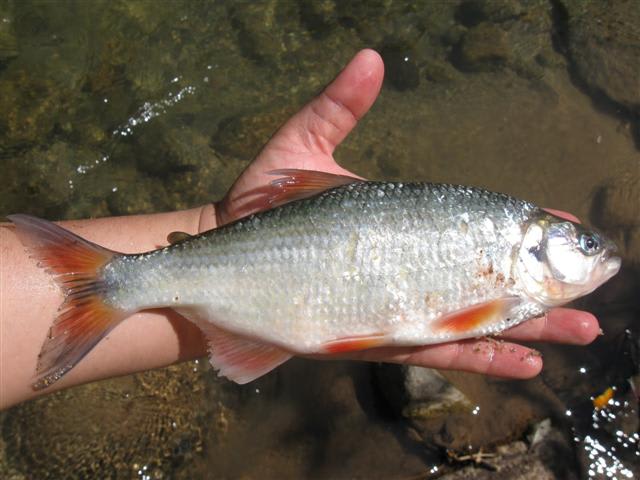
Taxonomy
- Kingdom
- Animalia
- Phylum
- Chordata
- Class
- Actinopterygii
- Order
- Characiformes
- Family
- Bryconidae
- Genus
- Brycon
- Species
- henni
Habitat
Primarily inhabits fast-flowing rivers and streams in the Andean regions of Colombia, such as the Cauca and San Jorge Rivers. They prefer clear, well-oxygenated waters with rocky substrates and moderate currents.
Diet
Feeds on insects, smaller fish, and fruits that fall into the water. They are opportunistic daytime feeders, often foraging near the surface or in mid-water columns.
Behavior
Sabaletas form schools for protection and feeding, making them highly social. They are diurnal, active during the day, and exhibit territorial behavior around prime feeding spots, often darting quickly to evade threats.
Fishing
Anglers targeting Sabaleta (Brycon henni) in Colombia's fast-flowing rivers like the Cauca, San Jorge, and Upper Uré will find success with techniques such as fly fishing or light spinning to mimic their diet of insects and small fish, casting near rocky substrates and mid-water columns for active strikes. Use light tackle setups with 6-9 foot rods, reels spooled with 4-8 lb test line, and small hooks (size 8-12) to handle their energetic fights in moderate currents; effective baits and lures include dry flies, nymphs, small spinners, or live insects to entice their opportunistic daytime feeding. The best season is during the rainy months from April to June when they are more active for spawning, with prime fishing times in the early morning or late afternoon daylight hours for better visibility and activity. Focus on clear, well-oxygenated Andean river habitats with rocky bottoms, such as the Trans-Andean River Basin or Calima Rivers, where they school for protection and feeding. The IGFA all-tackle world record for Sabaleta is approximately 2 pounds 7 ounces, reflecting their typical size of 20-40 cm. As a stable species listed as Least Concern by the IUCN, regulated fishing through catch-and-release practices and angler-funded programs in Colombia supports habitat restoration and maintains healthy populations, ensuring these waterways remain thriving ecosystems for future generations.
Conservation Status
Listed as Least Concern by IUCN.