
Overview
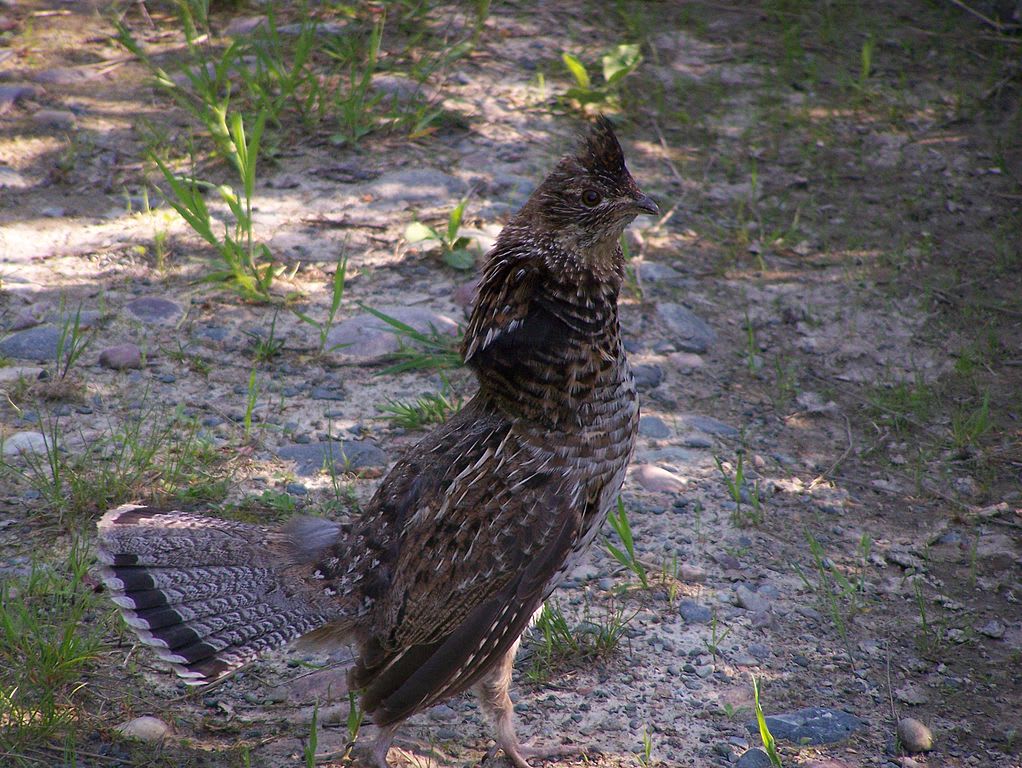
Chunky, medium-sized birds. They have two distinct morphs, grey and brown. In the grey morph, the head, neck and back are grey-brown; the breast is light with barring. There is much white on the underside and flanks, and overall the birds have a variegated appearance; the throat is often distinctly lighter. The tail is essentially the same brownish grey, with regular barring and a broad black band near the end.
Taxonomy
- Kingdom
- Animalia
- Phylum
- Chordata
- Class
- Bird
- Family
- Phasianidae
- Genus
- Bonasa
- Species
- umbellus
Habitat
Mixed woodland rich in aspen.
Diet
Seeds, insects, plant material, berries.
Behavior
They differ from other grouse species in its courtship display. Unlike other grouse species, they rely entirely on a non-vocal acoustic display, known as drumming. The drumming itself is a rapid, wing-beating display that creates a low frequency sound, starting slow and speeding up.
Hunting
Hunting of the ruffed grouse is common in the northern and far western United States as well as Canada, Often done with shotguns. Dogs may also be used. Hunting of the ruffed grouse can be challenging. This is because the grouse spends most of its time in thick brush, aspen stands, and second growth pines. It is also very hard to detect a foraging grouse bobbing about in the thicket due to their camouflage. With adequate snow cover they will burrow under the snow. Like other forest creatures, the ruffed grouse will maintain trails through the underbrush and pines. These can often be found by looking for the feathers of the bird on the ground and on twigs at the edges of its trail. Hunting of the ruffed grouse requires a good ear and lots of stamina as you will be constantly walking and listening for them in the leaves. – Joseph B. Barney
Conservation Status
Listed as Least Concern by IUCN.