
Overview
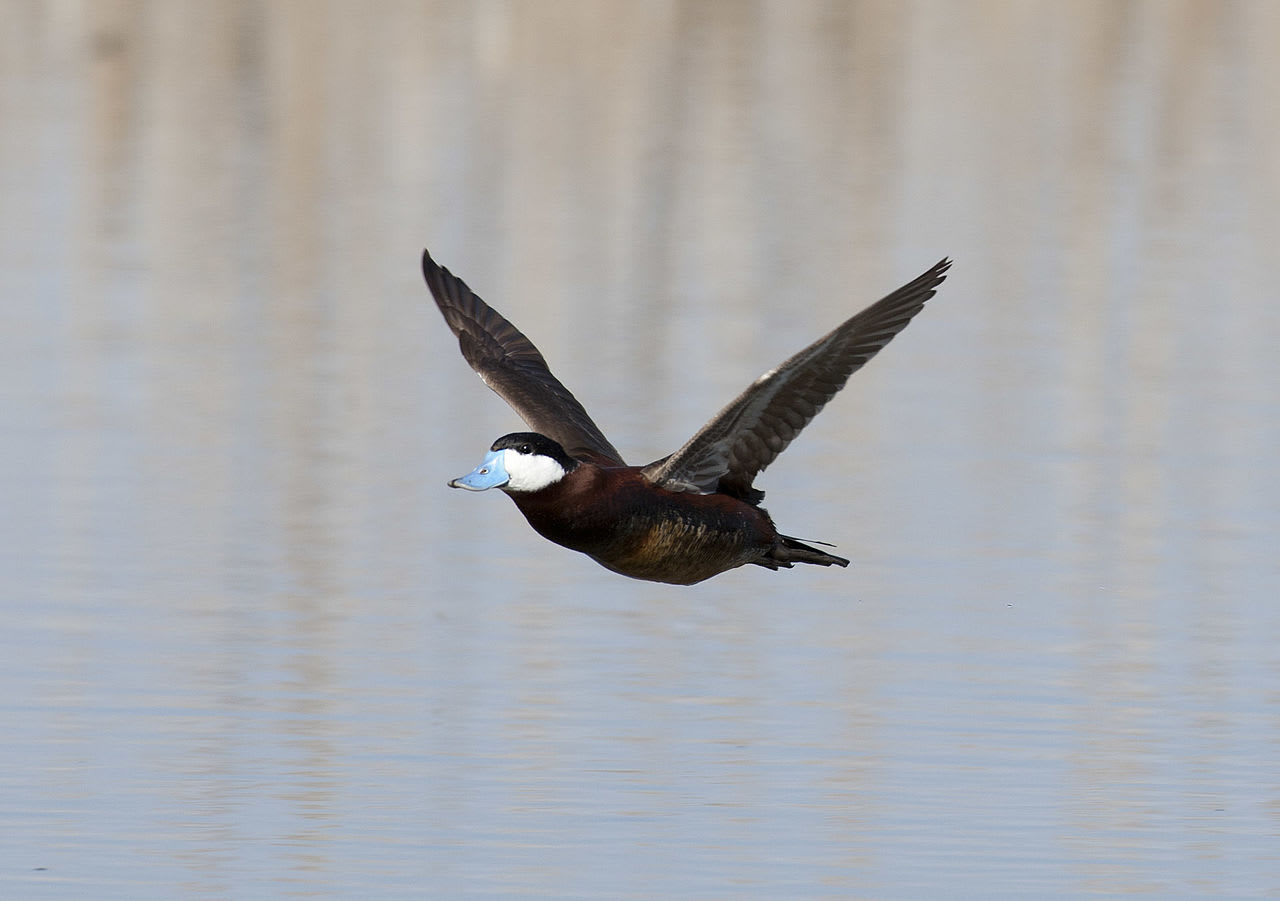
The Rudy duck is a highly distinct bird that can be easily identified. This small bird is part of the diving duck family with an average length of 13 to 15 inches and an average weight around 1 pound. Both the drake and hen share similar body shapes with a very compact body and a fan like tail. The drake has a rustic brownish coloration with a black head. The bird also has a distinct black fan-like tail and white patch that extends from its sky blue beak. The hen on the other hand, is brown grey in coloration with a brown neck and a dark grey bill. They are small compact fliers. These birds construct their nest in dense vegetative areas such as long grasses or cattails. The Rudy duck is known to consume algae, wild celery, smart grass, and forage for underwater invertebrates.
Taxonomy
- Kingdom
- Animalia
- Phylum
- Chordata
- Class
- Bird
- Family
- Anatidae
- Genus
- Oxyura
- Species
- jamaicensis
Habitat
They will spend their breeding season mainly centered in the North Central Pothole Region. When migration time swings around, over half the population of Rudy ducks will winter around the Pacific Coastlines, but the rest of the population can range from central United States to their eastern areas.
Diet
They mainly eat seeds and roots of aquatic plants, aquatic insects and crustaceans.
Behavior
They are migratory and winter in coastal bays and unfrozen lakes and ponds. These birds dive and swim underwater.
Hunting
Typically hunted with a 12 ga shotgun. Shot size #2-4 is sufficient. Effectively hunted with decoys and calling. Dogs are used for bird retrieval. Steel shot is required for waterfowl in the United States.
Conservation Status
Listed as Least Concern by IUCN.