
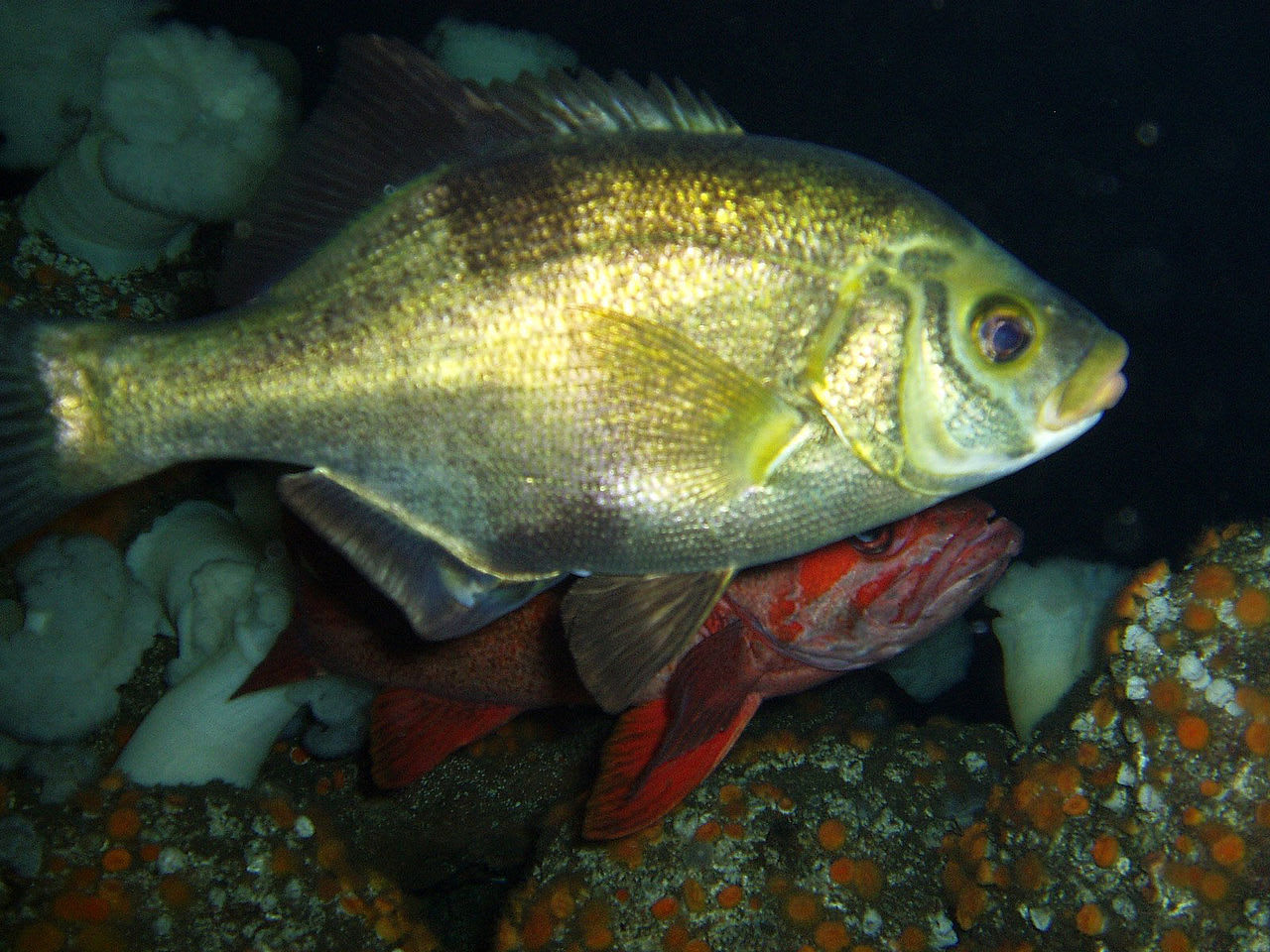
Taxonomy
- Kingdom
- Animalia
- Phylum
- Chordata
- Class
- Actinopterygii
- Order
- Perciformes
- Family
- Embiotocidae
- Genus
- Rhacochilus
- Species
- toxotes
Habitat
This species inhabits shallow coastal waters along the eastern Pacific, preferring rocky reefs, kelp forests, and sandy bottoms from Oregon to Baja California. They are commonly found in depths of 1 to 20 meters, often near surf zones or areas with abundant algae and invertebrates.
Diet
Rubberlip surfperch primarily feed on benthic invertebrates such as crabs, shrimp, worms, and small mollusks. They exhibit bottom-feeding behavior, using their specialized lips to scrape food from rocks and substrates, and are most active during daylight hours.
Behavior
Rubberlip surfperch are schooling fish that form loose groups for protection and feeding. They are diurnal, actively foraging during the day and seeking shelter in rocky crevices at night, and can be territorial around prime feeding areas. Males may display aggressive behavior during the breeding season to defend mates.
Fishing
Target Rubberlip surfperch with effective bottom fishing techniques, such as using a simple Carolina rig or drop-shot setup to present bait near the seafloor, allowing you to feel even the lightest bites in their shallow habitats. Opt for light to medium tackle, including a 7-9 foot spinning rod with 10-20 lb test monofilament line, a sensitive reel, and size 2-4 hooks to handle their feisty runs without overwhelming the fish; bait them with live options like worms, shrimp, or small crabs to mimic their diet of benthic invertebrates, or try jig heads with soft plastics for a versatile lure option. The best seasons for fishing are spring and summer, coinciding with their active feeding and breeding periods, with optimal times during daylight hours when they school and forage; focus on shallow coastal waters from Oregon to Baja California, specifically rocky reefs, kelp forests, and sandy bottoms in depths of 1-20 meters, where casting from shore or piers yields the best results. Rubberlip surfperch can reach up to 56 cm in length and weigh as much as 2 lbs 12 oz, with no specific IGFA all-tackle record listed, but these sizes highlight the thrill of landing a trophy catch. California's regulated bag limits and catch-and-release practices, funded through angler license fees, serve as proven management tools to maintain healthy populations and support conservation efforts, ensuring these fish contribute to vibrant marine ecosystems and waterway protection programs.
Conservation Status
Listed as Not Evaluated by IUCN.