
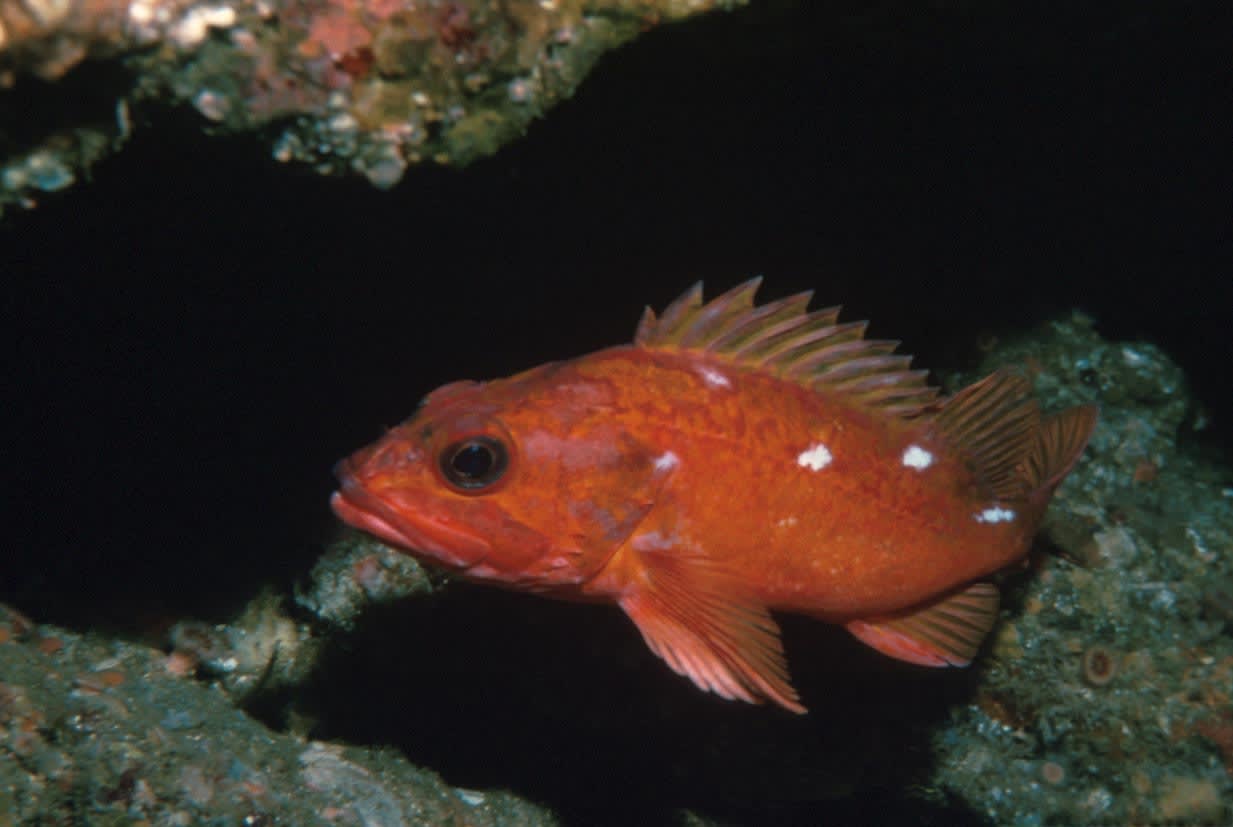
Taxonomy
- Kingdom
- Animalia
- Phylum
- Chordata
- Class
- Actinopterygii
- Order
- Salmoniformes
- Family
- Sebastidae
- Genus
- Sebastes
- Species
- aleutianus
Habitat
Rougheye rockfish primarily inhabit deep waters of the North Pacific Ocean, from 150 to 900 meters deep on rocky or boulder-strewn bottoms. They prefer cold, dark environments with strong currents, ranging from the Aleutian Islands and Bering Sea to the coasts of California and Japan.
Diet
Rougheye rockfish feed mainly on smaller fish, squid, and crustaceans, using ambush tactics in their deep-water habitats. They are opportunistic predators that hunt throughout the day and night when prey is available. Feeding behavior involves lurking near rock crevices to surprise their targets.
Behavior
Rougheye rockfish are solitary and territorial, often remaining hidden in rocky crevices to avoid predators and conserve energy. They exhibit slow, deliberate movements in low-light conditions and are not highly migratory, staying within specific deep-water areas. This species is generally inactive during the day but may feed opportunistically at any time.
Fishing
Rougheye rockfish are a prized deep-water target for experienced anglers in the North Pacific, including areas like the Aleutian Islands, British Columbia, and off California, where bottom fishing with heavy tackle is the go-to technique—use sturdy conventional rods paired with reels spooled in 50-80 lb test line, large hooks (size 7/0-10/0), and ample sinkers (8-16 oz or more) to reach depths of 150-900 meters on rocky or boulder-strewn bottoms; effective baits include fresh squid, cut fish, or vertical jigs that mimic their natural prey like smaller fish and crustaceans for a solid hookset in low-light conditions. The best season is summer through fall when weather allows safer boat access, with fishing productive around dawn or dusk when these solitary fish are more active, though they can be caught opportunistically year-round; target them by anchoring over structure and dropping lines straight down to avoid spooking them in their cold, current-swept habitats. The IGFA all-tackle world record stands at 14 pounds 12 ounces, caught off Alaska, highlighting the thrill of landing these long-lived species. Conservation-wise, Rougheye rockfish benefit from angler-supported programs like license fees that fund stock assessments and habitat protection, with effective management tools such as catch limits and seasonal closures in place to maintain healthy populations and combat declines from overfishing, ensuring sustainable fishing practices that support broader aquatic conservation efforts.
Conservation Status
Listed as Not Evaluated by IUCN.