
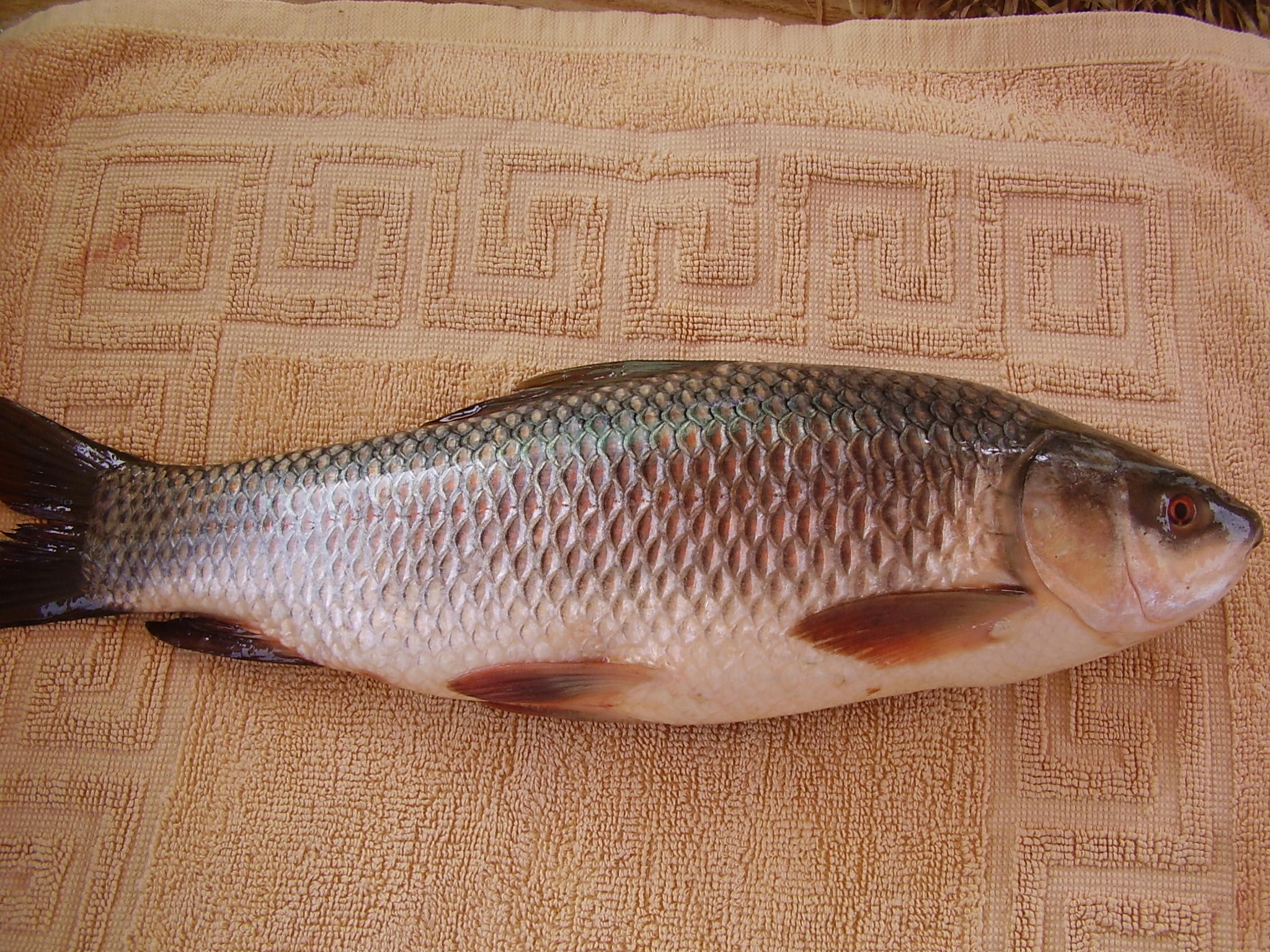
Taxonomy
- Kingdom
- Animalia
- Phylum
- Chordata
- Class
- Actinopterygii
- Order
- Neopterygii
- Family
- Cyprinidae
- Genus
- Labeo
- Species
- rohita
Habitat
Rohu primarily inhabits freshwater rivers, lakes, and reservoirs in tropical and subtropical regions of South Asia. It prefers warm, slow-moving waters with abundant vegetation and muddy substrates. This species is also commonly found in man-made ponds and aquaculture systems.
Diet
Rohu feeds mainly on phytoplankton, zooplankton, and detritus from the riverbed, using its downturned mouth to sift through sediment. It is primarily herbivorous but may consume small insects or worms. Feeding activity peaks in the early morning and evening when it searches for food along the bottom.
Behavior
Rohu is a schooling fish that forms loose groups for protection, especially in open waters. It is diurnal, actively foraging during the day and resting in quieter areas at night. This species exhibits migratory behavior upstream during the rainy season for spawning.
Fishing
Rohu (Labeo rohita) is a popular sport and food fish in South Asia, supporting conservation through license fees and excise taxes that fund habitat restoration in rivers and lakes. For the best results, use bottom fishing techniques with a simple ledger rig or float setup to target their feeding habits near the substrate, casting baited hooks into slow-moving waters with abundant vegetation; this method mimics their natural foraging for phytoplankton and detritus. Recommended tackle includes a 6- to 8-foot medium-action rod paired with a spinning reel spooled with 10- to 20-pound monofilament line, along with size 1-4 hooks to handle their strong runs, ensuring you can land fish up to their impressive record size of 27 pounds 8 ounces as per available data—check local IGFA-equivalent records for verification. Opt for natural baits like earthworms, bread dough, or vegetable-based lures to entice bites, as these align with their herbivorous diet. The prime season runs from June to September during the monsoon when Rohu are most active and migratory, with early morning and evening being the optimal times for feeding activity in freshwater rivers, lakes, and reservoirs across India, Bangladesh, and neighboring regions; focus on areas with muddy substrates and vegetation for higher success rates. Effective management tools like seasonal closures and slot limits in some areas help maintain healthy populations, while catch-and-release practices encouraged by angler-funded programs protect waterways and ensure sustainable fishing traditions that contribute to conservation efforts.
Conservation Status
Listed as Least Concern by IUCN.