
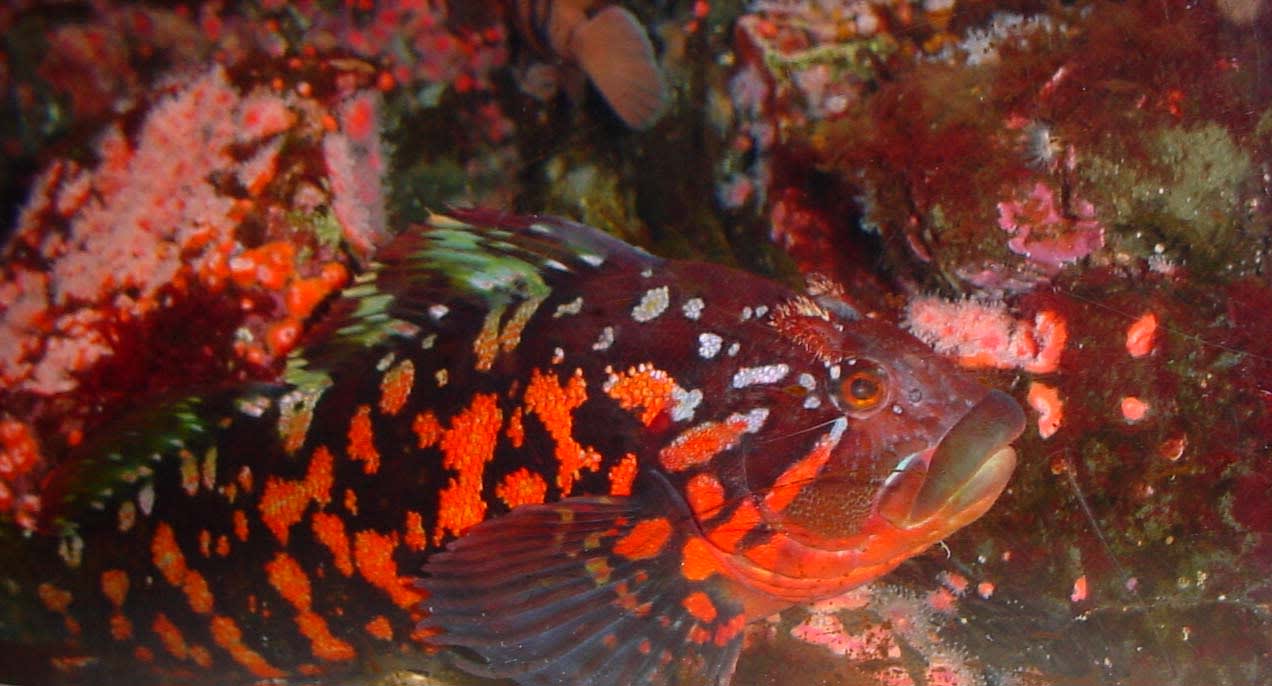
Taxonomy
- Kingdom
- Animalia
- Phylum
- Chordata
- Class
- Actinopterygii
- Order
- Perciformes
- Family
- Hexagrammidae
- Genus
- Hexagrammos
- Species
- lagocephalus
Habitat
Rock greenlings inhabit rocky reefs, kelp forests, and shallow coastal waters in the North Pacific. They prefer areas with strong wave action and abundant cover, ranging from the intertidal zone to depths of about 100 meters. This species is commonly found along the coasts of Alaska, British Columbia, and Japan.
Diet
Rock greenlings primarily feed on small crustaceans, mollusks, and polychaete worms found on the ocean floor. They are benthic foragers, using their mouths to pick prey from rocks and crevices, and are most active during daylight hours. Occasionally, they consume small fish or squid if available.
Behavior
Rock greenlings are solitary and territorial, often hiding in rock crevices or under kelp to avoid predators. They are diurnal, actively foraging during the day and resting at night, and exhibit aggressive displays toward intruders in their territory. Males become particularly defensive during the breeding season to protect eggs.
Fishing
Rock greenling offer exciting bottom-fishing opportunities in the North Pacific, serving as a key species in recreational fishing that funds conservation efforts through license fees and habitat restoration programs. Employ effective techniques like bottom fishing or jigging with light to medium tackle, including a 7- to 9-foot rod, 10-20 lb test line, and size 1-2 hooks to handle their structure-hugging behavior; use bait such as shrimp, worms, or small jigs that imitate their primary diet of crustaceans and mollusks for the best results. The prime seasons are spring and summer, with peak activity during daylight hours when they forage actively, making early morning or late afternoon ideal. Target them in rocky reefs, kelp forests, and shallow coastal waters up to 100 meters deep along the coasts of Alaska, British Columbia, and Japan, focusing on areas with strong wave action and cover for higher success rates. Record sizes include lengths up to 71 cm and weights up to 5 lbs 3 oz, with IGFA records highlighting their impressive growth and encouraging ethical angling practices. Conservation-wise, while not evaluated by the IUCN, rock greenling benefit from angler-supported management tools like catch limits and habitat protection initiatives that ensure stable populations and promote sustainable fishing.
Conservation Status
Listed as Not Evaluated by IUCN.