
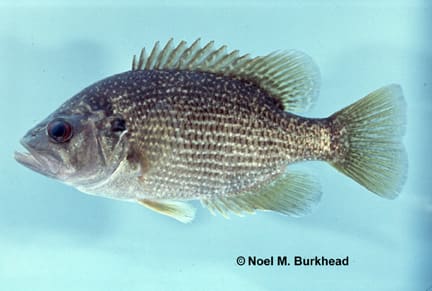
Taxonomy
- Kingdom
- Animalia
- Phylum
- Chordata
- Class
- Actinopterygii
- Order
- Cypriniformes
- Family
- Centrarchidae
- Genus
- Ambloplites
- Species
- cavifrons
Habitat
Roanoke bass primarily inhabit clear, flowing rivers and streams with rocky or gravel substrates in the southeastern United States. They prefer areas with moderate currents, such as riffles and pools in the Roanoke, Chowan, Tar, Neuse, and Cape Fear river basins in Virginia and North Carolina. These fish avoid stagnant or murky waters, thriving in well-oxygenated environments.
Diet
Roanoke bass feed on insects, crayfish, small fish, and aquatic invertebrates like worms and amphipods. They are ambush predators that hide among rocks and strike quickly at prey. Feeding activity peaks during dawn and dusk in warmer months.
Behavior
Roanoke bass are generally solitary and territorial, especially during spawning when males aggressively defend nests. They are most active during daylight hours, particularly in low-light conditions, and often seek cover under rocks or overhanging banks. This species exhibits schooling behavior in juveniles but becomes more solitary as adults.
Fishing
Target Roanoke bass in the clear, flowing rivers of Virginia and North Carolina, such as the Roanoke, Chowan, Tar, Neuse, and Cape Fear rivers, focusing on rocky or gravel substrates in riffles, pools, and areas with moderate currents for the best results. Use light spinning or baitcasting tackle with 4-8 lb test line, a medium-action rod, and reels suited for small streams; effective baits and lures include small jigs, crankbaits, soft plastics mimicking crayfish or insects, and live options like minnows, worms, or aquatic invertebrates, with techniques like casting and retrieving near structures or bottom fishing to mimic their ambush predation style. The prime seasons are spring and summer when water temperatures reach 60-70°F, with peak activity at dawn and dusk for higher catch rates. Roanoke bass typically grow to 6-12 inches and up to 1 pound 5 ounces, supporting enjoyable angling experiences. As a Least Concern species under IUCN, Roanoke bass benefit from angler-funded conservation programs through fishing licenses and excise taxes that protect these waterways, and adhering to state regulations—such as slot limits or catch-and-release in certain areas—serves as an effective management tool to ensure stable populations and sustainable fishing opportunities.
Conservation Status
Listed as Least Concern by IUCN.