
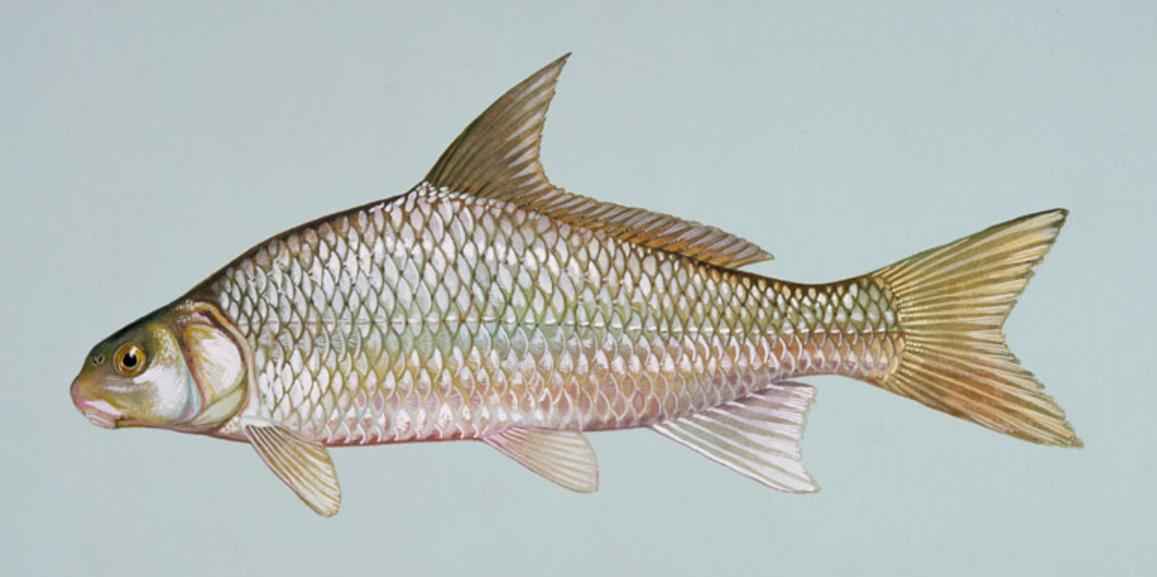
Taxonomy
- Kingdom
- Animalia
- Phylum
- Chordata
- Class
- Actinopterygii
- Order
- Clupeiformes
- Family
- Catostomidae
- Genus
- Carpiodes
- Species
- carpio
Habitat
River carpsuckers primarily inhabit large rivers and streams in North America, such as the Mississippi and Rio Grande basins, favoring areas with slow to moderate currents and substrates of sand, gravel, or mud. They prefer deeper pools and backwaters over fast-flowing waters, and are commonly found in the central and eastern United States as well as parts of Mexico.
Diet
River carpsuckers are bottom feeders that primarily consume detritus, aquatic insects, small crustaceans, and algae scraped from the riverbed. They feed mainly during the day using their specialized mouth to forage in sediments, which helps in nutrient recycling within river ecosystems. Their diet varies seasonally, with more insect intake in warmer months.
Behavior
River carpsuckers are schooling fish that form loose groups in open water, making them more visible during migration. They are diurnal, actively feeding during the day and resting in deeper areas at night, with seasonal upstream movements for spawning. These fish are generally non-territorial but can exhibit avoidance behaviors when threatened by predators.
Conservation Status
Listed as Least Concern by IUCN.