
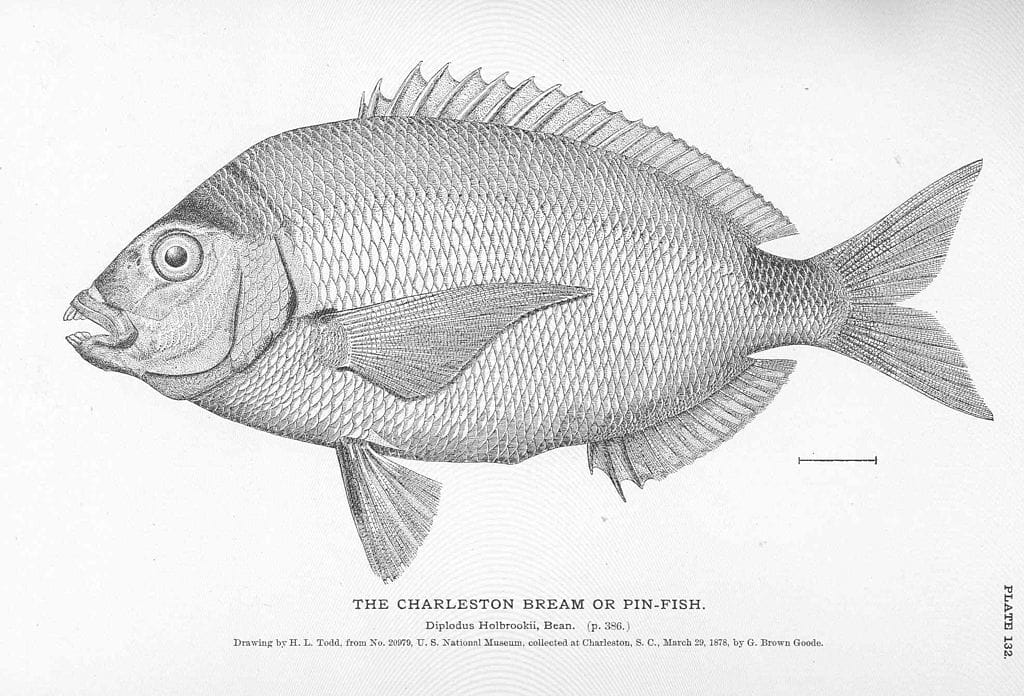
Taxonomy
- Kingdom
- Animalia
- Phylum
- Chordata
- Class
- Actinopterygii
- Order
- Siluriformes
- Family
- Sparidae
- Genus
- Diplodus
- Species
- holbrooki
Habitat
This species inhabits coastal waters of the western Atlantic, including rocky reefs, sandy bottoms, and seagrass beds at depths up to 100 meters. It prefers warm temperate to subtropical regions, often found near structures like jetties or shipwrecks that provide shelter.
Diet
Ring-tailed bream primarily feed on small crustaceans, mollusks, and polychaete worms, scavenging along the seafloor. They also consume algae and small fish, with feeding activity peaking during daylight hours in shallow waters.
Behavior
Ring-tailed bream are schooling fish that form groups for protection and foraging, often seen swimming in midwater or near the bottom. They exhibit diurnal activity, being most active during the day, and can be territorial around feeding sites. These fish are generally cautious, quickly darting into cover when threatened.
Fishing
Anglers targeting the ring-tailed bream, a popular inshore species in the western Atlantic from North Carolina to the Florida Keys and Gulf Coast, can employ bottom fishing techniques using light tackle for the best results, casting bait near structures like jetties, shipwrecks, rocky reefs, seagrass beds, or sandy bottoms in depths up to 100 meters; recommended tackle includes a 7- to 9-foot medium-light rod with 10- to 20-pound test line, paired with a simple bottom rig or jig head, and bait such as live shrimp, crabs, small mollusks, or worms to mimic their natural diet of crustaceans and bottom-dwelling prey, while artificial lures like soft plastics or metal jigs can also entice strikes during daylight hours when these schooling fish are most active. The best season for fishing is spring and summer, coinciding with their spawning periods, with peak bites often occurring in the early morning or late afternoon in warm temperate to subtropical waters; target areas include the Chesapeake Bay, Florida Keys, and Coast of Texas, where focusing on midwater or near-bottom zones enhances success. The IGFA all-tackle world record for a similar bream species is around 2 pounds 8 ounces, reflecting the potential size of larger individuals up to 50 cm. Conservation-wise, ring-tailed bream benefit from angler-funded programs that support habitat restoration and stocking efforts in these coastal regions, with catch-and-release practices and slot limits in certain areas serving as effective management tools to maintain healthy, stable populations—such as those designated in Florida waters—to ensure sustainable fishing and protect vital waterways for future generations.
Conservation Status
Listed as Least Concern by IUCN.