
Overview
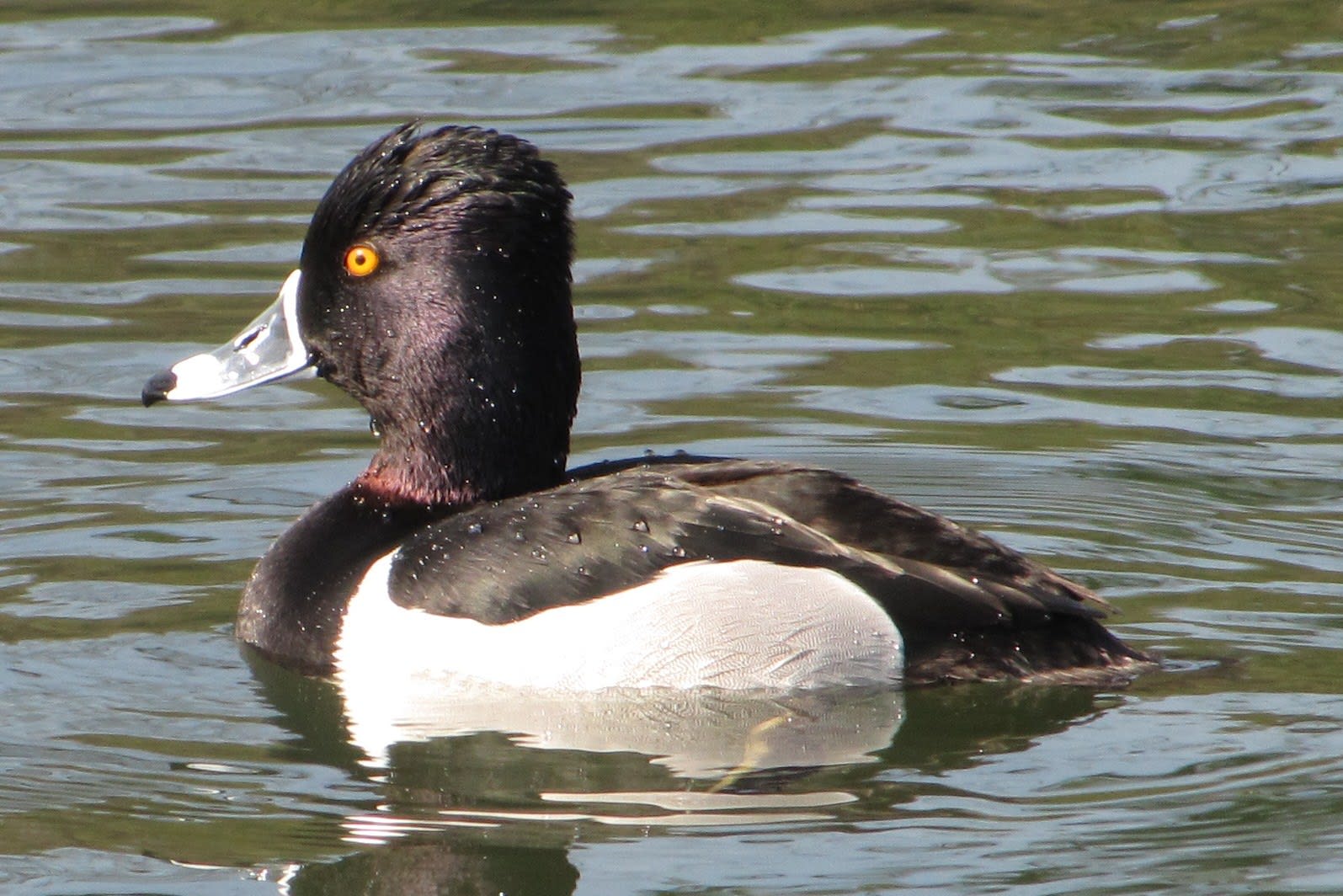
The Ring-Necked duck, also known as “jacks”, are a very common diving duck. These birds range in length from 15 to 17 inches and have an average weight around 1.5 lbs.. These birds closely resemble their ancestors, the Greater Scaup and Lesser Scaup. The drake has a black coloration with greyish white wing markings on the sides. The underbellies on these birds are white and are known for their bright yellow eyes and a very distinct bill with white markings. The hen closely resembles a Redhead hen by having a brownish grey colored body. The name Ring-Neck derived from the drake having a brownish copper colored ring at the base of its neck. During breeding the Ring-Neck prefer bogs, marshes, or areas with dense vegetation. While migrating these small divers prefer coastal areas, fresh marshes, or large bodies of water. The nutrition for these divers consist of tubers underwater, aquatic plants, wild rice, and several variations of seeds.
Taxonomy
- Kingdom
- Animalia
- Phylum
- Chordata
- Class
- Bird
- Family
- Anatidae
- Genus
- Aythya
- Species
- collaris
Habitat
These birds spend their summer from Alaska all the way to the north half of the United States. After breeding season at the start of the migration, these birds centralize their flight pattern from the Central flyway east to the Mississippi flyway.
Diet
These birds are omnivores and feed mainly by diving or dabbling at the surface. Ducklings are dependent on animal matter such as insects, earth worms, leeches, midges and snails. As they mature they tend change their diet to submerged plants such as pondweed and coontail, and emergents such as annual wild rice and snails.
Behavior
Their breeding habitat is wooded lakes or ponds in the northern United States and Canada. The main breeding area is Northwest boreal forest territories. Their breeding habits also take place in the eastern boreal region of Canada but no where near the same amount in the northwestern region. Winter months they are usually found in southern North America in lakes, ponds, rivers or bays. Ring-necked duck pairs start during spring migration. The nest is bowl-shaped, built on water in dense emergent vegetation with sedges and woody plants. The female lays one egg per day until 8 to 10 eggs are laid. They are incubated 25–29 days and the female may remain with the young until they are able to fly.
Hunting
Typically hunted with a 12 ga shotgun. Shot size #2-4 is sufficient. Effectively hunted with decoys and calling. Dogs are used for bird retrieval. Steel shot is required for waterfowl in the United States.
Conservation Status
Listed as Least Concern by IUCN.