
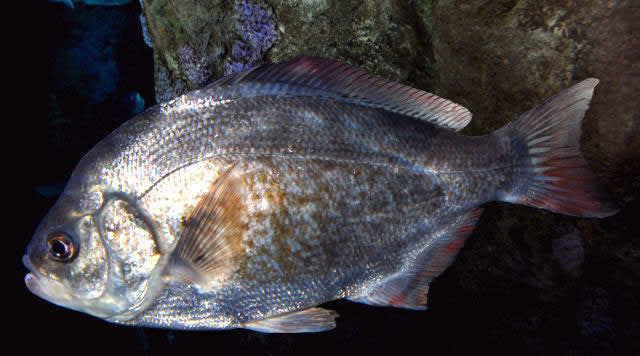
Taxonomy
- Kingdom
- Animalia
- Phylum
- Chordata
- Class
- Actinopterygii
- Order
- Perciformes
- Family
- Embiotocidae
- Genus
- Amphistichus
- Species
- rhodoterus
Habitat
Redtail surfperch inhabit shallow coastal waters along the Pacific coast of North America, from Vancouver Island to Central California, favoring sandy or rocky substrates in surf zones and near kelp beds. They prefer areas with moderate wave action and ample cover for foraging and protection. This species is commonly found in estuaries and nearshore environments up to about 15 meters deep.
Diet
Redtail surfperch primarily feed on small crustaceans, worms, and mollusks scavenged from the sandy or rocky bottom. They exhibit diurnal feeding behavior, actively foraging during the day by pecking at the substrate or chasing prey in shallow waters. Their diet helps control invertebrate populations in coastal ecosystems.
Behavior
Redtail surfperch are schooling fish that form loose groups in shallow coastal waters, making them more active during the day and resting in sheltered areas at night. They display territorial behavior during spawning seasons, aggressively defending nesting sites. This species is agile in turbulent surf zones and often uses camouflage to avoid predators.
Fishing
Target Redtail surfperch with confidence using light tackle surf fishing techniques, casting from beaches or jetties into the surf zones along the Pacific coast from Vancouver Island to Central California, where they school over sandy or rocky bottoms near kelp beds in waters up to 15 meters deep; opt for a 7-9 foot medium-light spinning rod paired with a reel spooled with 6-10 lb monofilament line, along with size 6-10 hooks and a simple Carolina rig or sliding sinker setup for bottom presentations. Use fresh bait like sand crabs, worms, or shrimp to mimic their diet of small crustaceans and mollusks, or try small jigs and soft plastics for a more active approach that helps sustain populations through selective angling. The best seasons are spring and summer when they are more active during spawning, with peak bites in the early morning or late afternoon on sunny days; focus your efforts during daylight hours when they forage diurnally in moderate wave action areas. Anglers contribute to conservation by participating in regulated fisheries that fund habitat restoration in coastal ecosystems, adhering to effective management tools like California's 20-fish daily bag limit, which ensures healthy populations and supports stocking programs for other species. The IGFA all-tackle world record for Redtail surfperch stands at 4 pounds 6 ounces, caught in California in 2001, showcasing the thrill of responsibly pursuing these abundant fish up to 40 cm in length.
Conservation Status
Listed as Not Evaluated by IUCN.