
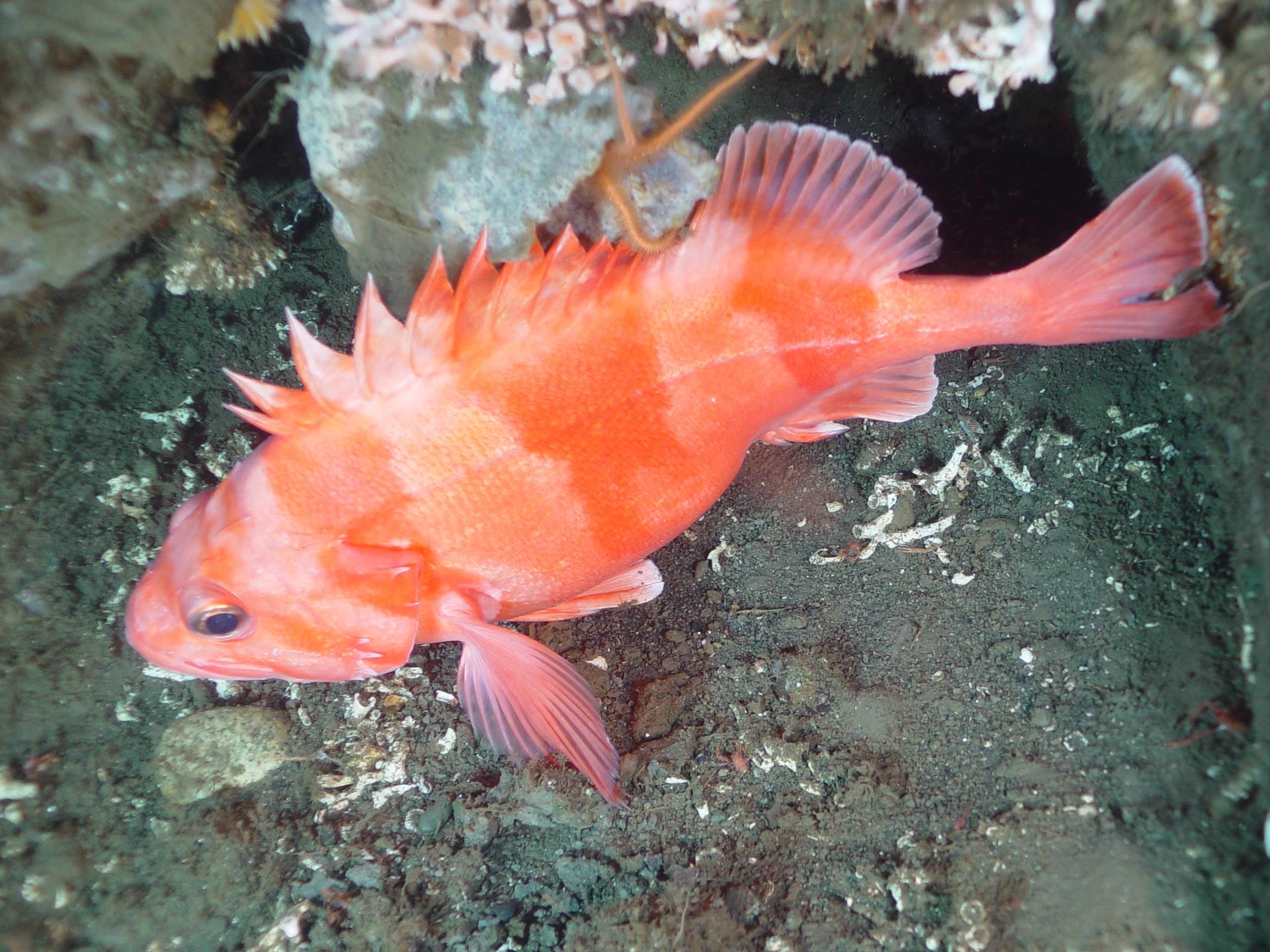
Taxonomy
- Kingdom
- Animalia
- Phylum
- Chordata
- Class
- Actinopterygii
- Order
- Salmoniformes
- Family
- Sebastidae
- Genus
- Sebastes
- Species
- babcocki
Habitat
Redbanded rockfish inhabit rocky reefs, boulder fields, and submarine canyons in the North Pacific, typically at depths of 18 to 366 meters. They prefer areas with strong currents and abundant cover for protection, ranging from Alaska to southern California.
Diet
They primarily feed on small fish, squid, and crustaceans, using ambush tactics from hiding spots. Feeding activity peaks at night when they are more active and less likely to be detected by predators.
Behavior
Redbanded rockfish are solitary and territorial, often hiding among rocks during the day and becoming more active at night for hunting. They exhibit aggressive displays toward intruders in their territory and do not form schools, preferring to remain in specific reef areas.
Fishing
Targeting redbanded rockfish, a prized species in Pacific fisheries, offers anglers a rewarding challenge while supporting conservation through license fees that fund habitat protection and stock assessments in the North Pacific. Employ bottom fishing techniques with heavy tackle for success in their deep-water habitats, using a sturdy rod rated for 20-50 pound test line paired with a conventional reel to handle depths up to 366 meters; rig with a sinker to keep bait near the bottom and strong leaders to avoid snags on rocky structures. Opt for bait like fresh squid, cut bait from small fish, or crustaceans, or use jigs and lures that mimic their natural prey to entice strikes, especially during their active nighttime feeding periods. The best season runs from late spring through fall in Alaskan and Californian waters, with prime fishing times at dusk or night when they hunt more aggressively; focus on rocky reefs, boulder fields, and submarine canyons like those in the Aleutian chain or Zhemchug Canyon, where strong currents provide cover. Redbanded rockfish can reach up to 61 cm and 9 pounds 12 ounces, with the IGFA all-tackle world record at 9 pounds 12 ounces caught off Alaska in 1987, showcasing the potential for memorable catches. Conservation efforts, including angler-funded programs that enforce bag limits and slot sizes in regions like California, ensure sustainable populations by maintaining breeding stock and protecting against overfishing, making responsible catch-and-release a key practice to preserve these long-lived fish for future generations.
Conservation Status
Listed as Not Evaluated by IUCN.