
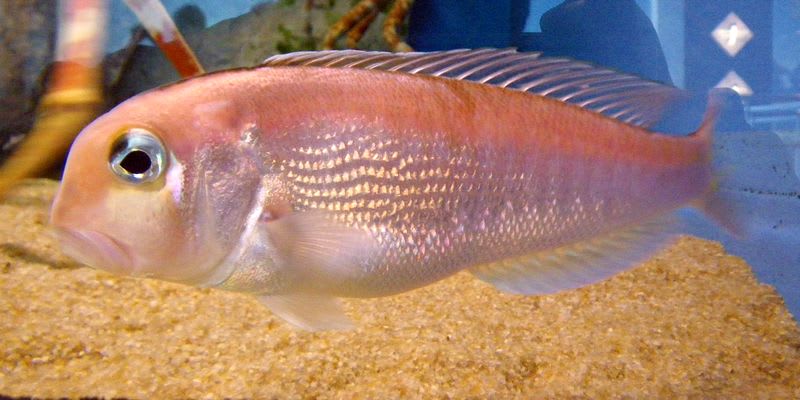
Taxonomy
- Kingdom
- Animalia
- Phylum
- Chordata
- Class
- Actinopterygii
- Order
- Perciformes
- Family
- Malacanthidae
- Genus
- Branchiostegus
- Species
- japonicus
Habitat
Red tilefish inhabit continental shelves and slopes in the Western Pacific, preferring sandy or muddy bottoms at depths of 50 to 600 meters. They construct burrows in these substrates for shelter and are commonly found in areas with moderate currents. Geographic preferences include regions around Japan, China, and the Philippines.
Diet
Red tilefish primarily feed on benthic invertebrates such as crabs, shrimp, and mollusks, along with occasional small fish. They are opportunistic bottom-feeders, foraging during the day by probing the seafloor. Feeding behavior involves using their strong jaws to crush hard-shelled prey.
Behavior
Red tilefish are solitary and territorial, often residing in self-constructed burrows on the seafloor. They are diurnal, actively foraging during the day and retreating to their burrows at night for protection. These fish may exhibit aggressive defense of their burrows against intruders.
Fishing
Target red tilefish with bottom fishing techniques using heavy tackle to reach their deep-water habitats, employing baited hooks dropped to the seafloor where they forage; effective methods include anchoring and drifting over sandy or muddy bottoms to entice bites from these territorial bottom-dwellers. Use a stout rod and reel setup with 20-50 lb test line, strong hooks, and ample sinkers to hold bait in place at depths of 50-600 meters, with baits like live shrimp, crabs, or squid proving most successful in mimicking their diet of benthic invertebrates. The best season for fishing red tilefish is spring to summer when they are more active during spawning, with daytime hours offering the prime window for strikes due to their diurnal behavior. Focus on continental shelves and slopes in the Western Pacific, such as around Japan, China, the Philippines, and Taiwan, where they construct burrows in moderate currents—always check local regulations for effective management tools like depth restrictions or size limits that support sustainable populations. Specimens can reach up to 4 lbs 15 oz and lengths of 30-70 cm, with no specific IGFA record noted, but anglers contribute to conservation through license fees that fund habitat protection and stocking programs, ensuring red tilefish populations remain stable as per their IUCN Least Concern status.
Conservation Status
Listed as Least Concern by IUCN.