
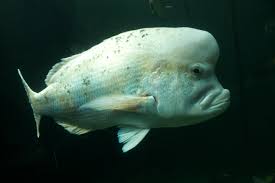
Taxonomy
- Kingdom
- Animalia
- Phylum
- Chordata
- Class
- Actinopterygii
- Order
- Siluriformes
- Family
- Sparidae
- Genus
- Chrysoblephus
- Species
- gibbiceps
Habitat
This species primarily inhabits rocky reefs and coastal waters along the southern coast of South Africa, from the Eastern Cape to KwaZulu-Natal. They prefer depths of 10 to 100 meters, often around kelp forests and areas with strong currents that provide shelter and food.
Diet
Red stumpnose seabream feed mainly on crustaceans, mollusks, and small fish found on the reef. They use their powerful jaws to crush shells during daytime foraging, with feeding activity peaking in the morning and late afternoon.
Behavior
These fish form schools around rocky reefs and are primarily diurnal, active during the day for feeding and exploration. They exhibit territorial behavior when defending feeding areas or during spawning. Red stumpnose are cautious and tend to flee quickly when threatened, making them elusive to observers.
Fishing
Targeting the Red stumpnose seabream, a prized sport fish in South Africa's coastal waters, requires precise techniques to ensure sustainable angling that supports conservation efforts; use bottom fishing or light trolling around rocky reefs and kelp forests in depths of 10 to 100 meters, focusing on structure-hugging presentations to mimic their natural prey. Opt for medium-heavy spinning or conventional rods with 20-30 lb test line, paired with a sturdy reel to handle strong currents and potential snags, and rig with circle hooks to promote safe catch-and-release; effective baits include live or cut crustaceans, mollusks, or small fish, while lures like jigs or soft plastics that imitate these can entice strikes during their active feeding periods. The best season is summer for spawning activity, with prime fishing times in the morning and late afternoon when they forage diurnally, though year-round opportunities exist in regions like the Eastern Cape and KwaZulu-Natal; focus on areas with strong currents and shelter, such as Cape Point or Jeffreys Bay, to increase your chances. Record sizes reach up to 100 cm in length and 16 lbs 8 oz in weight, highlighting the species' impressive growth potential. As an Endangered species under IUCN, angler-funded programs in South Africa enforce effective management tools like strict slot limits, catch-and-release mandates, and seasonal closures to maintain healthy populations and protect habitats, ensuring that recreational fishing continues to fund conservation initiatives through license fees and habitat restoration.
Conservation Status
Listed as Endangered by IUCN.