
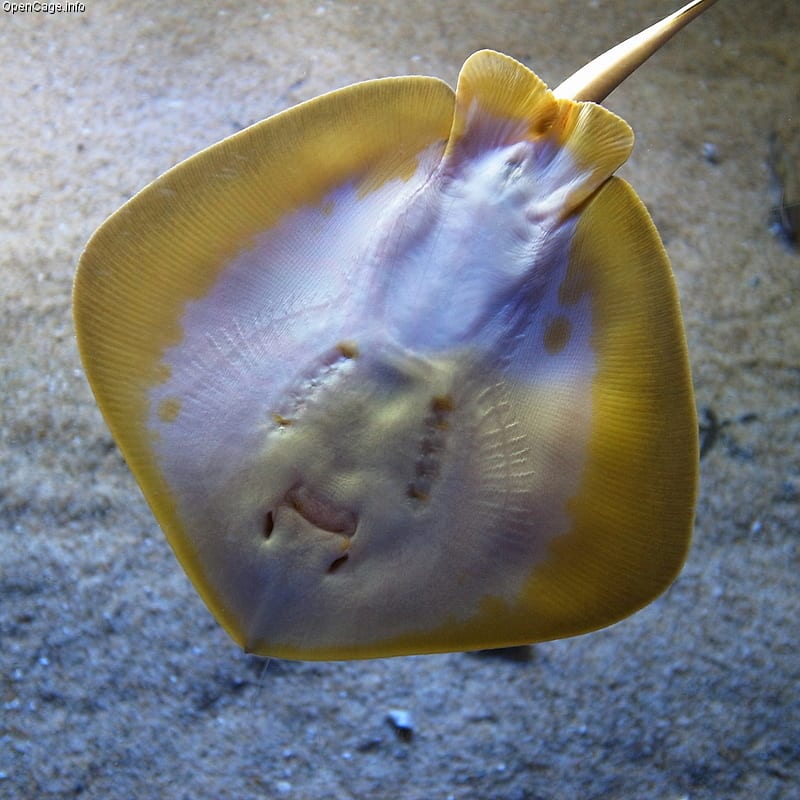
Taxonomy
- Kingdom
- Animalia
- Phylum
- Chordata
- Class
- Chondrichthyes
- Order
- Myliobatiformes
- Family
- Dasyatidae
- Genus
- Dasyatis
- Species
- akajei
Habitat
Red stingrays primarily inhabit coastal waters, estuaries, and sandy or muddy substrates in the Western Central and Northwest Pacific Oceans. They prefer depths from shallow intertidal zones to about 100 meters, often burying themselves in the sediment. This species is commonly found around Japan, including areas like Kanagawa and Sajima.
Diet
Red stingrays mainly feed on bottom-dwelling invertebrates such as crabs, shrimp, and mollusks, which they uncover by flapping their pectoral fins to stir up sediment. They occasionally consume small fish and worms. Feeding activity peaks at night when they are most active.
Behavior
Red stingrays are primarily solitary but may form loose groups in areas with abundant food. They are nocturnal, spending the day buried in sand to avoid predators and becoming active at night for hunting. They exhibit defensive behaviors, including rapid tail whips with their venomous spines when threatened.
Fishing
Targeting the red stingray (Dasyatis akajei) offers exciting challenges for anglers in the Western Central and Northwest Pacific Oceans, particularly around Japan in areas like Kanagawa and Sajima, where they inhabit coastal waters, estuaries, and sandy or muddy substrates from shallow intertidal zones to about 100 meters—focus on spots with soft bottoms where they bury themselves during the day. The best techniques involve bottom fishing with heavy tackle to manage their strong, initial runs and handle their venomous tails safely; use a stout rod (8-12 feet) with a conventional reel spooled with 50-80 pound braided line, paired with a steel leader to prevent cuts from their spines, and opt for circle hooks to promote easy release. Effective baits include live or dead crabs, shrimp, or small fish, which mimic their natural diet and should be presented on the bottom using a fish finder rig for optimal contact. The prime season aligns with warmer months from spring through summer when mating and feeding activity increases, and the best time of day is at night when they are most active and foraging; plan trips during tidal changes for higher success. Red stingrays can reach impressive sizes, with weights up to 58 pounds 8 ounces, and while specific IGFA records may vary, they underscore the thrill of this species—always check local regulations, which serve as effective management tools to sustain populations, such as catch-and-release requirements in many areas to combat their Near Threatened status as per IUCN assessments. By practicing responsible angling, including careful handling to avoid injury from spines and supporting angler-funded programs that protect Pacific habitats, you contribute to conservation efforts that maintain healthy stingray populations and broader aquatic ecosystems.
Conservation Status
Listed as Near Threatened by IUCN.