
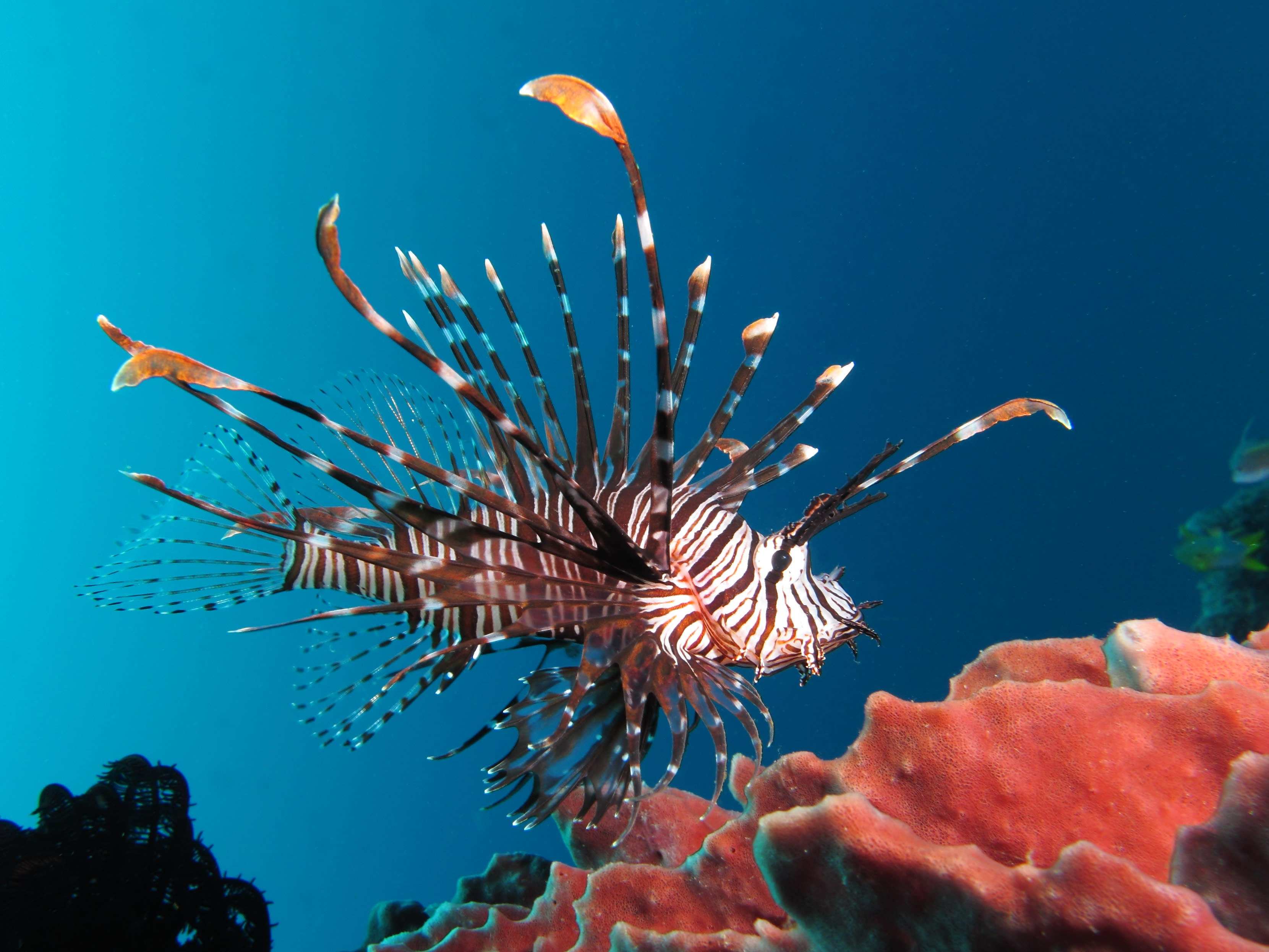
Taxonomy
- Kingdom
- Animalia
- Phylum
- Chordata
- Class
- Actinopterygii
- Order
- Pleuronectiformes
- Family
- Scorpaenidae
- Genus
- Pterois
- Species
- volitans
Habitat
Red lionfish primarily inhabit coral reefs, rocky crevices, and mangrove areas in warm tropical and subtropical waters. They are found from shallow depths of less than 1 meter to about 50 meters, preferring structures for hiding and ambushing prey. Originally from the Indo-Pacific, they have invaded the Western Atlantic, including the Caribbean and Gulf of Mexico.
Diet
Red lionfish primarily eat small fish, shrimp, and crabs, using their large mouths to engulf prey whole. They are ambush predators that lie in wait among corals and strike quickly, often at dusk or night when they are most active. Feeding behavior includes cornering prey with their extended fins before attacking.
Behavior
Red lionfish are generally solitary and territorial, defending small areas around their hiding spots in reefs. They are nocturnal hunters, becoming more active at night to stalk prey, but can be seen during the day resting in crevices. They exhibit a slow, deliberate swimming pattern and use their venomous spines as a defense mechanism against threats.
Fishing
Targeting the invasive red lionfish (Pterois volitans) through recreational fishing serves as a vital conservation tool, helping to control populations in non-native regions like the Western Atlantic, Caribbean, and Gulf of Mexico, where angler efforts directly support ecosystem balance and protect native species—much like how license fees and excise taxes fund habitat restoration programs. Use spearfishing as the most effective technique, employing a pole spear or Hawaiian sling for precision in shallow coral reefs and rocky crevices, or opt for light tackle angling with artificial lures mimicking small fish or shrimp; always handle with care due to venomous spines. Recommended tackle includes a speargun or a 7- to 9-foot rod with 10- to 20-pound test line, paired with circle hooks and brightly colored soft plastics or jigs as bait/lures to entice these ambush predators. The best season is year-round in tropical waters, with peak activity during warmer months like summer in invaded areas such as Florida's coasts, and target them at dusk or night when they are most active hunting. Focus on habitats like coral reefs, mangrove areas, and structures from 1 to 50 meters deep in locations including the Eastern Central Pacific, United States (e.g., Madeira Beach), and Indo-West Pacific regions, where lionfish hide and wait for prey—use GPS and dive lights for better visibility. Record sizes include an IGFA all-tackle world record of approximately 48 cm in length and up to 2 pounds 12 ounces in weight, showcasing the potential for impressive catches. Special regulations in invasive zones often encourage unlimited harvest as an effective management tool to maintain healthy native fish populations, emphasizing catch-and-remove practices that align with conservation initiatives driven by anglers to safeguard waterways.
Conservation Status
Listed as Least Concern by IUCN.