
Overview
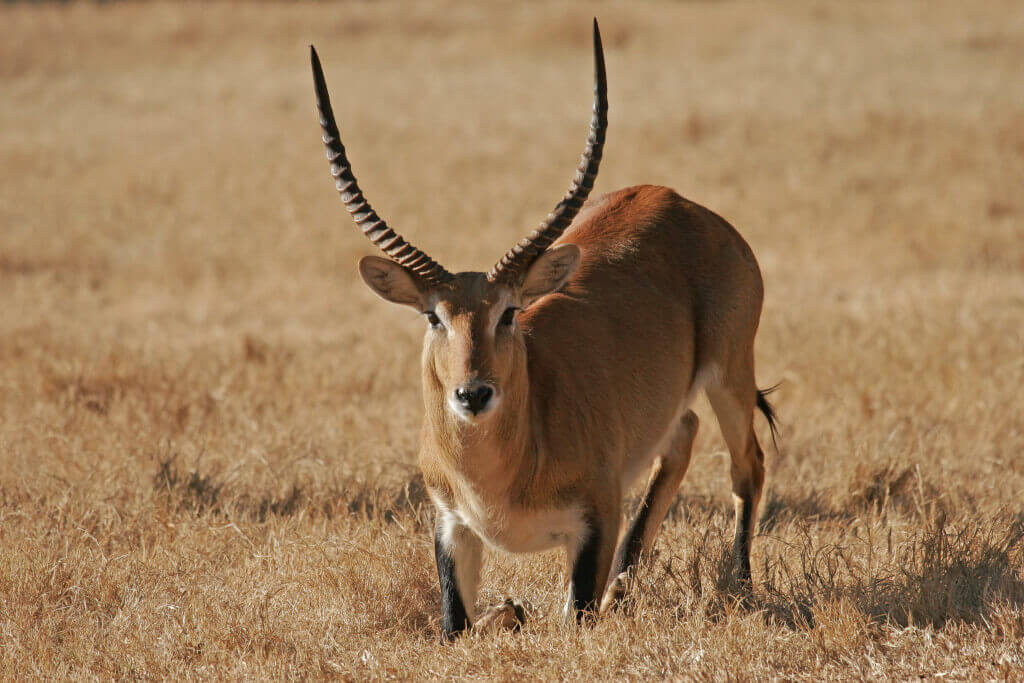
A medium-sized antelope with a rather short muzzle and hindquarters that are somewhat higher than the shoulders. The rather long, rough coat is bright chestnut-red in overall color, with underparts white from chin to belly, conspicuous black markings on the front legs, and a white patch above the hoofs. The hoofs are long and pointed; the back of the pasterns is hairless. The horns (males only) are long, ringed and lyrate, forming a double or S-shaped curve. Females are similar to males, but more lightly built and without horns.
Taxonomy
- Kingdom
- Animalia
- Phylum
- Chordata
- Class
- Mammal
- Order
- Artiodactyla
- Family
- Bovidae
- Genus
- Kobus
- Species
- Kobus leche
Habitat
Marshland and dense cover. Distribution- Native to southern Africa, where they are the most aquatic antelope after the sitatunga, living in permanent swamps and wetlands. Their long, narrow hoofs and hairless pasterns are adaptations to swamp habitat. Excellent swimmers though unable to run fast on dry land, they take refuge in shallow water. They can graze in water as deep as 14 inches (61 cm), but prefer depths of 2-8 inches (5-20 cm). Lechwe on game ranches in the United States (and South Africa) usually live on dry ground that is vastly different from their natural habitat.
Diet
Aquatic plants.
Behavior
They use the knee-deep water as protection from predators. Their legs are covered in a water-repellant substance which allows them to run quite fast in knee-deep water. Lechwe are diurnal. They gather in herds which can include many thousands of individuals. Herds are usually all of one sex, but during mating season they mix.
Hunting
As of 4/4/12 every entry must have a copy of the US Fish & Wildlife harvest permit accompany the score sheet to be considered as a entry into the SCI record book.
Conservation Status
Listed as Near Threatened by IUCN and populations are estimated at 80,000.