
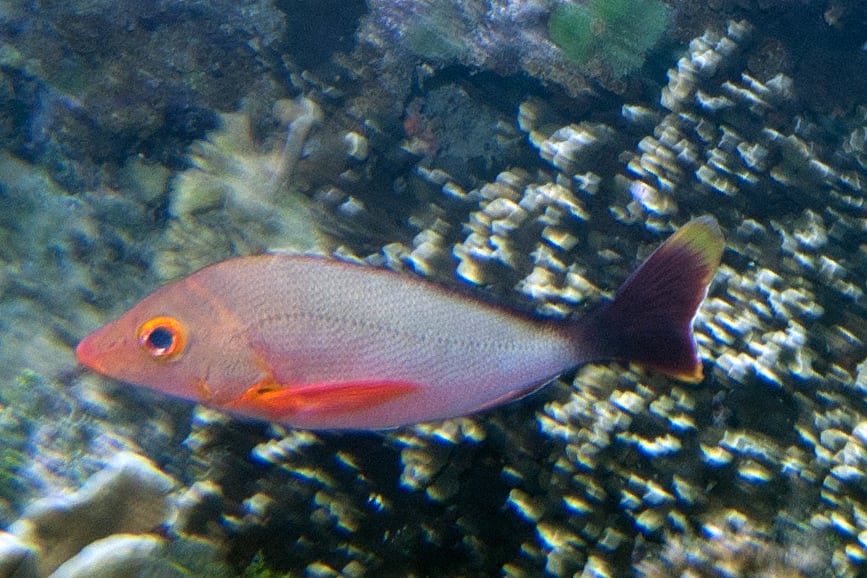
Taxonomy
- Kingdom
- Animalia
- Phylum
- Chordata
- Class
- Actinopterygii
- Order
- Perciformes
- Family
- Lutjanidae
- Genus
- Lutjanus
- Species
- gibbus
Habitat
This species inhabits coral reefs, rocky bottoms, and lagoons in tropical and subtropical waters. It prefers depths from 10 to 200 meters, often found around structures like caves and overhangs in the Indo-Pacific region. Geographic preferences include areas with strong currents and abundant cover for protection.
Diet
The red humpback snapper primarily feeds on small fishes, shrimps, crabs, and other crustaceans. It hunts during the day, using its keen eyesight to ambush prey in reef environments. Feeding behavior includes patrolling territories and hiding in crevices to surprise smaller organisms.
Behavior
Red humpback snappers are generally solitary or form small groups, often establishing territories around coral reefs. They are diurnal, active during the day for feeding and resting in crevices at night. This species exhibits aggressive territorial defense, especially during spawning periods, and can be cautious around divers or potential threats.
Fishing
Targeting the red humpback snapper, a prized sport fish in tropical waters, involves effective bottom fishing or jigging techniques around coral reefs, rocky bottoms, and lagoons in depths of 10 to 200 meters, where they patrol for prey like small fish and crustaceans—focus on areas with structures such as caves and overhangs in the Indian and Pacific Oceans, including spots off Australia, Japan, or American Samoa. Use medium-weight tackle, like a 7-foot rod paired with a reel spooled in 20-30 lb test line and size 2-4 circle hooks to reduce gut hooking and promote conservation; opt for baits such as live shrimp, small fish, or crabs, or artificial lures like metal jigs and soft plastics to mimic their diet. The best seasons are the warmer months from spring to summer during spawning aggregations, with prime daytime hours when they are most active and feeding aggressively. Record sizes include lengths up to 60 cm and weights to 3 lbs 15 oz, underscoring their appeal as a challenging catch, with IGFA records for similar snapper species emphasizing sustainable angling practices. As a Least Concern species with a stable population, conservation efforts are bolstered by angler license fees that fund habitat restoration and stocking programs, while tools like slot limits and catch-and-release help maintain healthy reef ecosystems, proving fishing's role in aquatic conservation.
Conservation Status
Listed as Least Concern by IUCN.