
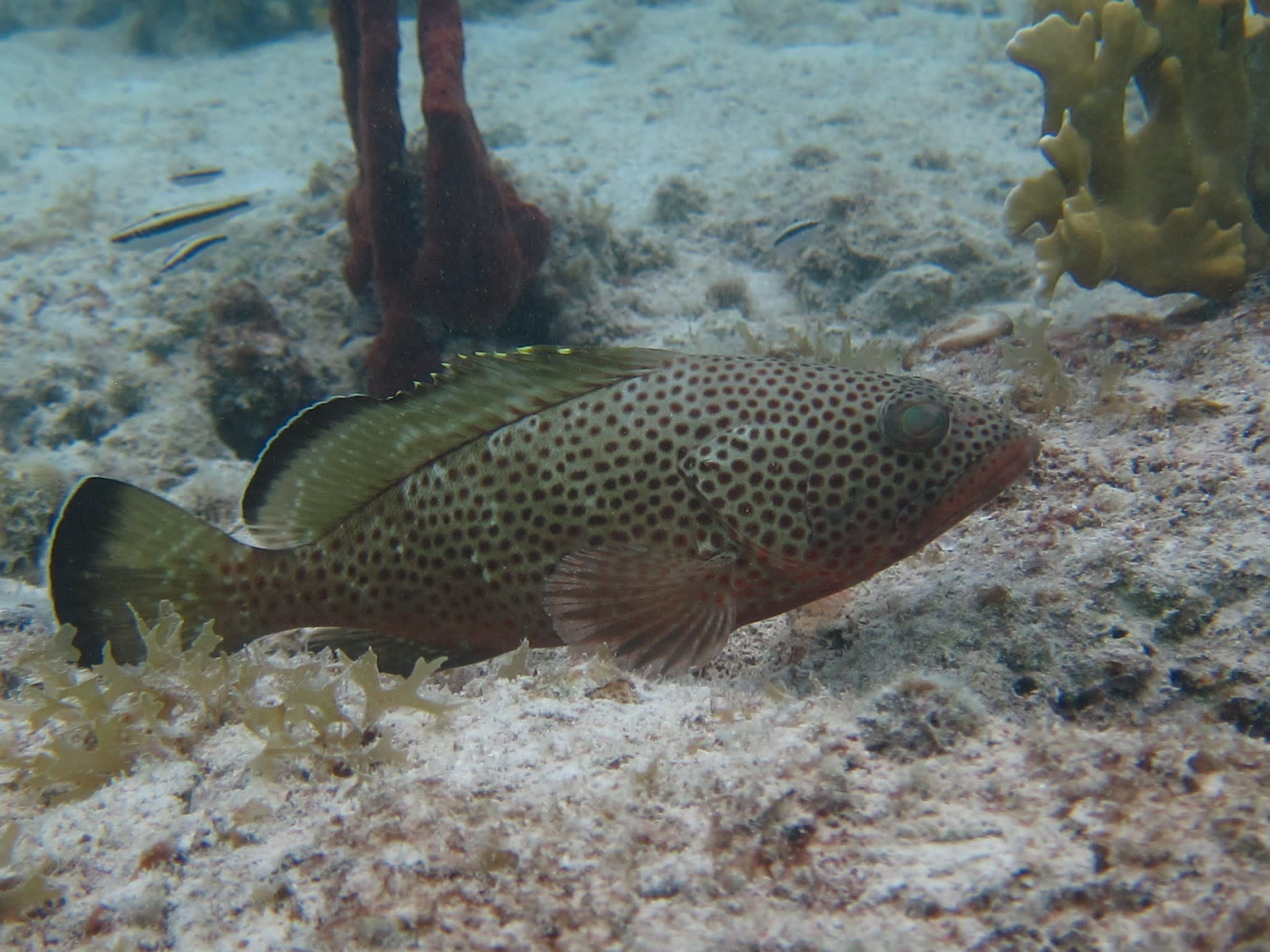
Taxonomy
- Kingdom
- Animalia
- Phylum
- Chordata
- Class
- Actinopterygii
- Order
- Scorpaeniformes
- Family
- Serranidae
- Genus
- Epinephelus
- Species
- guttatus
Habitat
Red hinds primarily inhabit coral reefs, rocky bottoms, and seagrass beds in shallow to moderate depths of 10-150 meters. They are commonly found in the western Atlantic, from Florida and the Gulf of Mexico to Brazil, preferring areas with structure for shelter and hunting. These environments provide ample hiding spots among corals and rocks.
Diet
Red hinds are carnivorous predators that feed mainly on small fishes, crustaceans like crabs and shrimp, and occasionally cephalopods such as squid. They employ a sit-and-wait strategy, ambushing prey during daylight hours in reef areas. Feeding activity peaks in the morning and late afternoon when prey is most abundant.
Behavior
Red hinds are generally solitary or found in small groups, exhibiting territorial behavior around coral reefs to defend feeding and spawning areas. They are diurnal, active during the day for hunting and resting at night in crevices. These fish can change color rapidly for camouflage or communication, and they form spawning aggregations during certain seasons.
Fishing
Red hinds are a popular sport fish in the western Atlantic, from Florida and the Gulf of Mexico to the Caribbean, offering exciting challenges for anglers while supporting conservation through license fees and habitat programs. Employ bottom fishing techniques or vertical jigging around coral reefs, rocky bottoms, and seagrass beds in depths of 10-150 meters, using a medium-heavy rod with 20-30 lb test line, a sturdy reel, and circle hooks to ensure safe catch-and-release. Opt for live baits like shrimp, crabs, or small fish, or effective lures such as jigs and soft plastics to mimic their natural prey. The best season runs from late fall through spring, with prime fishing during daylight hours, especially morning and late afternoon when they are most active; however, respect closed seasons like December to March during spawning aggregations, which are effective management tools to sustain populations. Target these fish in protected reef structures off places like the Bahamas or Belize for the best results, and always follow slot limits that promote healthy stocks. The IGFA all-tackle world record stands at 8 pounds 7 ounces, showcasing the thrill of the pursuit. By practicing catch-and-release and adhering to regulations, anglers directly contribute to conservation efforts that protect these vibrant ecosystems and ensure red hinds thrive for future generations.
Conservation Status
Listed as Least Concern by IUCN.