
Overview
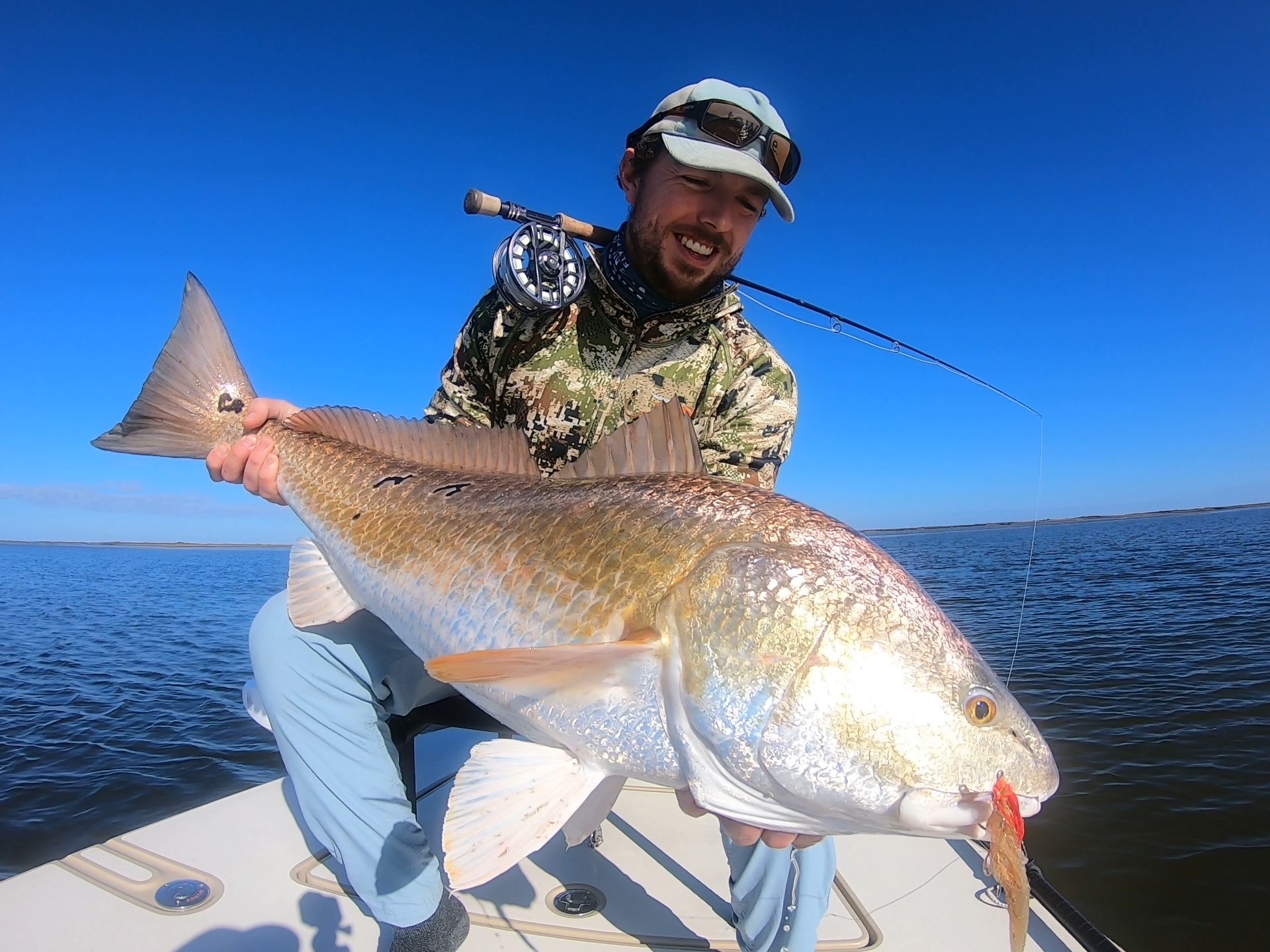
The Red Drum is most commonly known by anglers as the Redfish until it reaches a length of 28 inches. Once it surpasses 28 inches in length, this species becomes widely known as a Bull Red. The most distinguishing mark on the Redfish is one large black spot on the upper part of the tail base. Having multiple spots is not uncommon for this fish but having no spots is extremely rare. The color of red drum ranges from a deep blackish, coppery color to nearly silver. The most common color is reddish-bronze. Redfish are a fast growing fish reaching approximately 11 inches and one pound in its first year, 17-22 inches and 3 1/2 lbs. in two years, and 22-24 inches and 6-8 lbs. in three years. The record red drum was 94 lbs. and was caught on the East coast. The current Texas record is 59 1/2 lbs.. A Redfish
Taxonomy
- Kingdom
- Animalia
- Phylum
- Chordata
- Class
- Actinopterygii
- Order
- Perciformes
- Family
- Sciaenidae
- Genus
- Sciaenops
- Species
- ocellatus
Habitat
Found in the western Atlantic Ocean from Maine to the Gulf of Mexico. The Redfish is a schooling species that occurs inshore over sandy or muddy bottoms. It inhabits both salt and brackish waters and can tolerate fresh water. It is found in inlets and channels, and smaller specimens may be found in shallow estuaries.
Diet
Crabs, Shrimp, Mullet, Atlantic Croaker, Pinfish, Marine Worms.
Behavior
For the first three years of their lives red drum live in the bays or in the surf zone near passes. Evidence from tag returns show that they remain in the same area and generally move less than 3 miles from where they were tagged. As they mature, they move from the bays to the Gulf of Mexico where they remain the rest of their lives, except for infrequent visits to the bays. Although there is little evidence of seasonal migrations, anglers find concentrations of red drum in rivers and tidal creeks during the winter. Daily movement from the shallows to deeper waters is influenced by tides and water temperatures. During the fall, especially during stormy weather, large adult red drum move to the gulf beaches, possibly for spawning, where they can be caught from piers and by surf anglers. This is known as the bull redfish run.
Fishing
It is a strong, hard fighter when hooked. Fishing methods include drifting or still fishing on the bottom, jigging or casting from boats or from the shore, and slow trolling. In some areas red drum may be stalked on the flats like bonefish. Baits and lures include crabs, shrimp, clams, jigs, plugs, spoons, strip bait, and streamer flies. Large red drum can be taken from just above the breaker line on an incoming tide or near channels, inlets and shell beds.
Conservation Status
Listed as Least Concern by IUCN.