
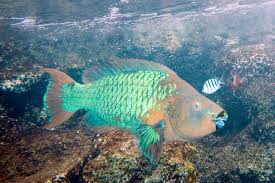
Taxonomy
- Kingdom
- Animalia
- Phylum
- Chordata
- Class
- Actinopterygii
- Order
- Perciformes
- Family
- Scaridae
- Genus
- Scarus
- Species
- guacamaia
Habitat
Rainbow parrotfish primarily inhabit coral reefs and rocky areas in shallow tropical waters, typically at depths of 3 to 25 meters. They prefer the western Atlantic Ocean regions, including the Caribbean and Florida Keys, where they seek out areas with abundant algae and seagrass for feeding.
Diet
Rainbow parrotfish mainly consume benthic algae, seagrasses, and small invertebrates scraped from coral and rocks. They feed during the day by using their strong beaks to graze on substrates, which helps control algae growth on reefs. Feeding behavior includes territorial patrolling to access prime grazing spots.
Behavior
Rainbow parrotfish are diurnal and spend much of their day grazing on algae, often in small groups or pairs. They exhibit territorial behavior, especially males who defend feeding areas from rivals. These fish are known for their ability to change sex from female to male as needed in their social hierarchy, and they communicate through color changes and body language.
Fishing
Anglers targeting the rainbow parrotfish, a vibrant reef dweller in the Western Atlantic including Florida Keys, Bahamas, and Caribbean regions, should focus on bottom fishing techniques using medium-light tackle to handle their grazing habits in shallow coral reefs at depths of 3 to 25 meters; use a 7-9 foot rod with a reel spooled in 10-20 lb test line, paired with a strong hook to manage their beak-like mouths, and opt for bait like seaweed, small crabs, or algae-imitating lures to mimic their diet of benthic algae and seagrasses. The best season is year-round in tropical waters, with peak activity during warmer months like summer, and target them during daylight hours when they actively graze and patrol territories. Focus on coral reef edges and seagrass beds for the highest success, as these habitats support their feeding behavior and contribute to reef health through algae control. The IGFA all-tackle record stands at around 10 pounds 12 ounces, reflecting the species' potential size up to 4 feet. Conservation-wise, as a Near Threatened species per IUCN, anglers play a key role by adhering to slot limits and catch-and-release practices in many areas, which are effective management tools funded through fishing licenses that protect coral ecosystems and maintain healthy populations for future generations.
Conservation Status
Listed as Near Threatened by IUCN.