
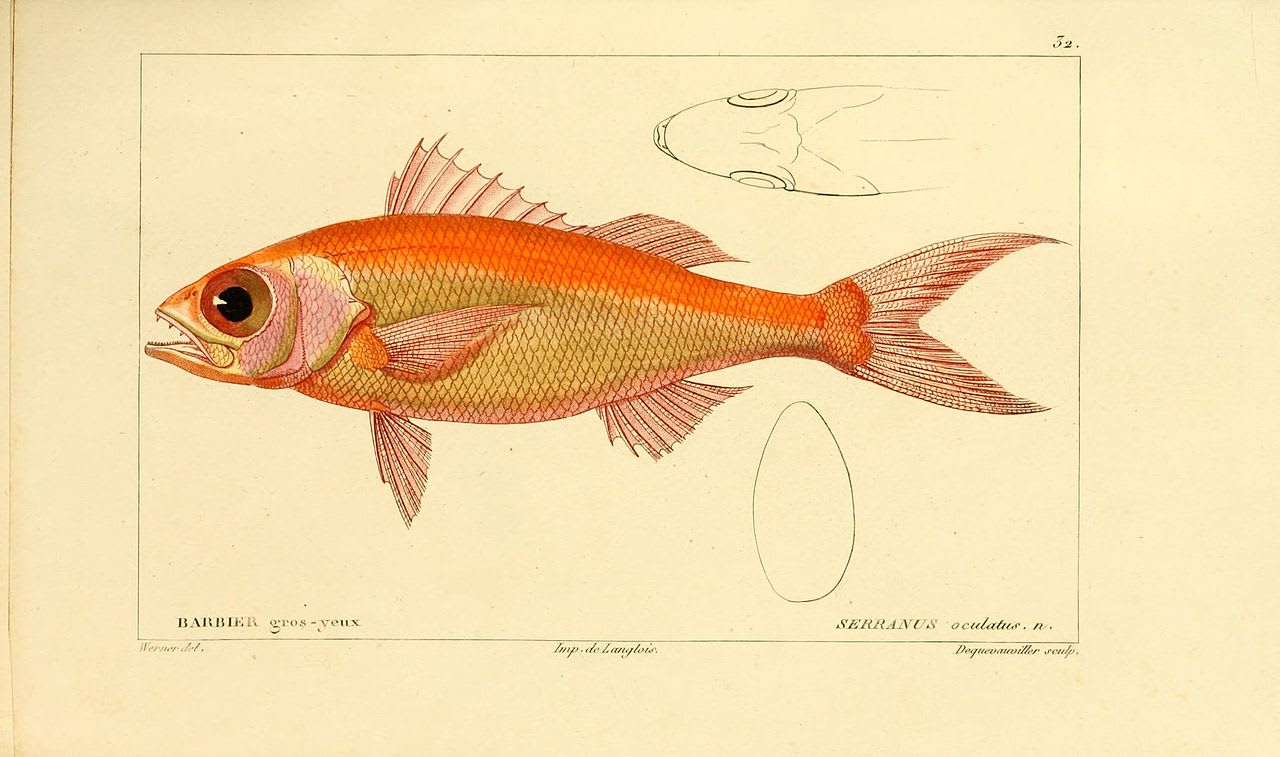
Taxonomy
- Kingdom
- Animalia
- Phylum
- Chordata
- Class
- Actinopterygii
- Order
- Perciformes
- Family
- Lutjanidae
- Genus
- Etelis
- Species
- oculatus
Habitat
Queen snappers inhabit deep waters of the continental shelf, typically at depths of 100-400 meters over rocky reefs, coral formations, and drop-offs. They are found in the western Atlantic Ocean, from the southeastern United States to Brazil, preferring areas with strong currents and structure for ambush feeding. These environments provide cover and abundant prey.
Diet
Queen snappers primarily feed on smaller fishes, shrimps, and cephalopods like squid. They are nocturnal hunters, using their large eyes to spot prey in low-light conditions, often ambushing from hiding spots near reefs. Feeding activity peaks at night when they venture out from deeper waters.
Behavior
Queen snappers are generally solitary or found in small loose groups, often resting during the day in deeper waters and becoming active at night for feeding. They exhibit ambush predation, hiding near structures to surprise prey, and are not highly territorial but may defend feeding areas. These fish are known for their wariness, making them challenging to approach in the wild.
Fishing
Queen snappers are a thrilling deep-water target for sport anglers, playing a key role in conservation by funding marine habitat protection through license fees and excise taxes that support sustainable fisheries management. Use bottom fishing techniques with heavy tackle, including a robust rod (8-12 feet) matched with a conventional reel spooled with 50-80 lb braided line and a strong leader to withstand the depths and structure; deploy bait like live shrimp, squid, or small fish, or effective lures such as diamond jigs or heavy metal spoons to imitate their nocturnal prey. The best season is late spring through summer during spawning aggregations, with optimal fishing times at night when they are most active; target them in deep waters of 100-400 meters over rocky reefs, coral drop-offs, and areas with strong currents in the western Atlantic, including the Gulf of Mexico, Florida, the Bahamas, and Brazil. Record sizes include fish up to 28 pounds and 1 meter in length, with the IGFA all-tackle world record around 28 pounds, highlighting the potential for memorable catches. As a Least Concern species, queen snappers benefit from effective management tools like slot limits and seasonal closures in some regions, which maintain healthy populations and promote catch-and-release practices to ensure long-term sustainability and protect vital reef ecosystems through angler-supported programs.
Conservation Status
Listed as Least Concern by IUCN.