
Overview
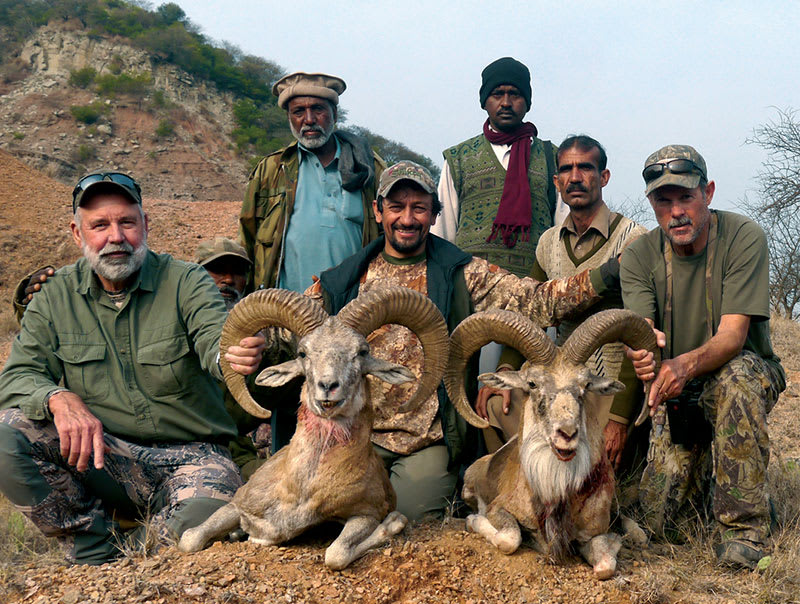
The urial is considered one of the smaller species of wild sheep. It is a handsome sheep, with a redder coat than other urials. Males have a white bib and a long black neck ruff in their winter coat. However, one specimen collected near Rawalpindi had a white neck ruff. Most Punjab urials have a narrow, two-colored saddle patch that is black in front and white behind, but in some individuals it may be all white or absent entirely. The rump patch, belly and lower legs are white and there is a dark, narrow stripe between belly and upper body. There is no extensive white area in the tail region. The tail is always the same color as the dorsal hair and lacks any longer hair or terminal tuft. The sub-orbital glands are deep and conspicuous, often exuding a viscous substance which mats the hair. The horns are cervical, curving tightly in some animals and less so in others. Urial males have large horns, curling outwards from the top of the head turning in to end somewhere behind the head; females have shorter, compressed horns. The horns of the males may be up to 39 inches (100 cm) long. Females have slender upward curving horns about 5 inches (12.7cm) long.
Taxonomy
- Kingdom
- Animalia
- Phylum
- Chordata
- Class
- Mammal
- Order
- Artiodactyla
- Family
- Bovidae
- Genus
- Ovis
- Species
- Urial, vignei
Habitat
Grassy slopes below the timberline.They rarely move to the rocky areas of the mountains. typically associated with lower stony hills sparsely covered with wild olive (Olea ferruginea) & phulai (Acacia modesta).
Diet
Mainly graze but will browse when necessary.
Behavior
In their native habitat, mating season begins in September, where rams will select 4-5 ewes that give birth to one or two lambs after 5 months of gestation. Rams display a strict hierarchial behavior based on age, aggression, and horn size. Battles for dominance between rams can be brutal in nature, and both injury and death are possible. Rams tend to be solitary outside of the breeding season.
Hunting
The best hunting months in their native range are December through March, and on high fence ranches in North America they can be hunted year round. In their native habitat, and habitat that resembles their native habitat, they are primarily hunted by any number of spot and stalk methods, or waiting in an area with visibility in a known travel route. Proper glassing equipment, footwear, pysical stamina, and a medium caliber rifle sighted in for longer ranges is preferred. A 300. win mag and similair calibers work well for this type of hunting. On private ranches they can be hunted by any means acceptible to the outfitter and legal in that area. Many are hunted on high fence ranches, but there are still opportunities to hunt them in their native range. The hunts in their native range are undoubtledy more costly and difficult due to the terrain and travel to and from the countries that it can be hunted. When traveling to their native range, a properly vetted outfitter is a necessity. Beware of anyone offering discounted hunts of any type as these are more than likely illegal.
Conservation Status
This species faced serious decline in the 20th century for many reasons. Currently, the most populated regions occurs within the Salt Range near Kalabagh in the western edge near the Indus River. Limited number of hunting permits began being issued by the Pakistani government in 2004.