
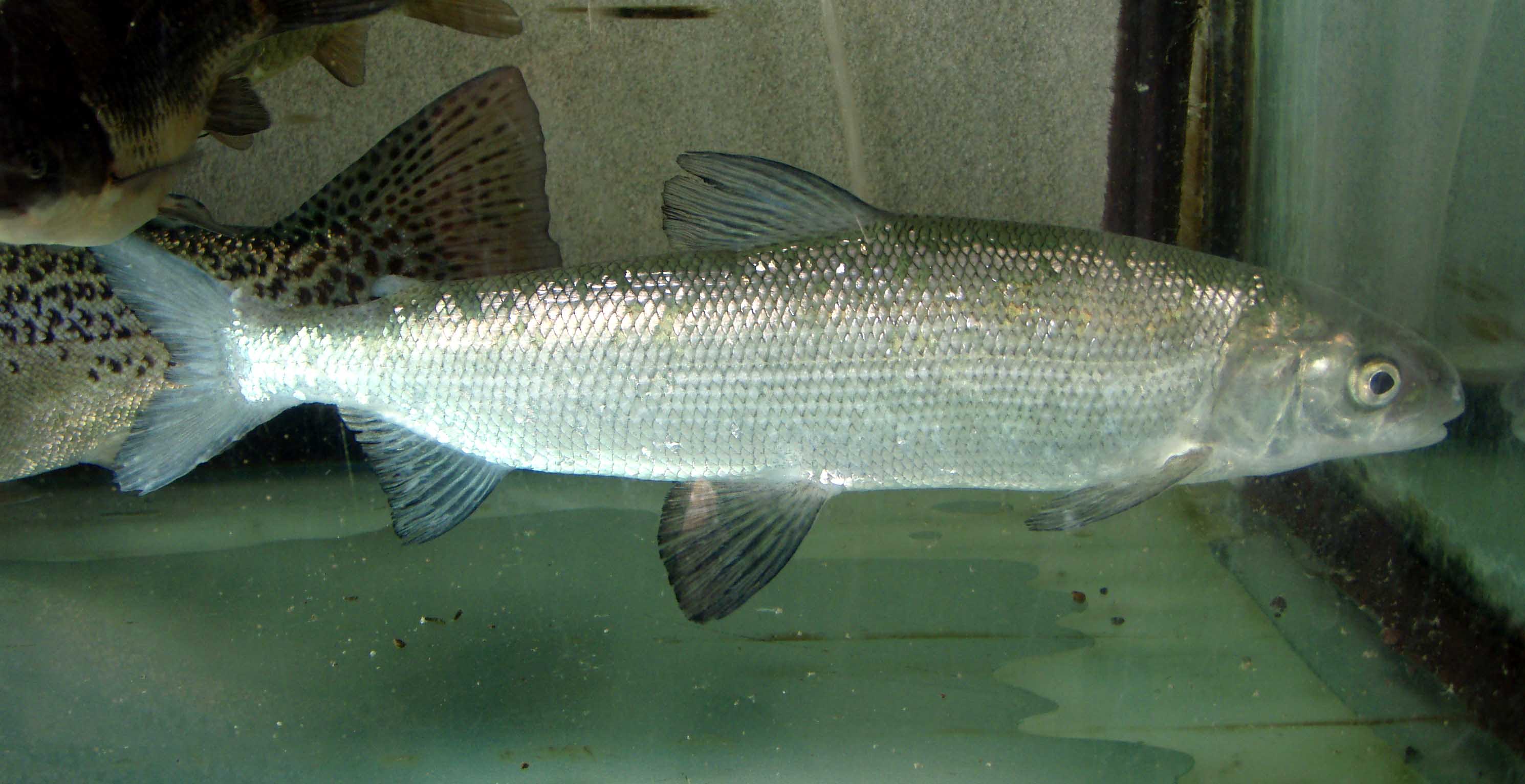
Taxonomy
- Kingdom
- Animalia
- Phylum
- Chordata
- Class
- Actinopterygii
- Order
- Perciformes
- Family
- Salmonidae
- Genus
- Coregonus
- Species
- lavaretus
Habitat
Powan thrive in deep, cold, oligotrophic lakes with clear water and rocky or sandy bottoms, such as Lakes Geneva, Bourget, and Aiguebelette in France, and various lakes in Sweden. They prefer depths of 10 to 50 meters where oxygen levels are high, and they avoid warmer, shallower areas except during spawning. These habitats are typically in northern and western Europe.
Diet
Powan primarily consume zooplankton like Daphnia and copepods, as well as small insects, larvae, and occasionally small fish. They are filter feeders that sift food from the water column, often feeding in schools. Feeding activity peaks at dawn and dusk in the upper layers of the water.
Behavior
Powan are schooling fish that form large groups for protection and foraging, especially in open water. They are generally nocturnal, venturing into shallower areas at night to feed and retreating to deeper waters during the day. These fish exhibit seasonal migrations within lakes, moving to shallower zones for spawning in autumn.
Fishing
Target powan in deep, cold, oligotrophic lakes such as Lakes Geneva, Bourget, and Aiguebelette in France, or various lakes in Sweden, focusing on depths of 10 to 50 meters where they school and feed; use trolling or still fishing techniques with light spinning rods and reels, 6-10 lb test line, and small hooks to mimic their zooplankton diet—effective baits include small flies, jigs, or live insects like Daphnia and copepods, cast during dawn and dusk when feeding activity peaks. The best season is autumn, particularly October to December, coinciding with their spawning migrations to shallower areas, though summer evenings can also yield catches in cooler water. Powan can reach record sizes up to 11 lbs 4 oz and 60 cm, with the IGFA all-tackle world record standing at 11 lbs 4 oz, showcasing their potential as a challenging sport fish. As a vulnerable species listed by the IUCN, adhere to local regulations like catch-and-release practices and slot limits as effective management tools that maintain healthy populations; these angler-funded programs, including license fees and stocking efforts, play a key role in habitat restoration and conservation, ensuring powan thrive in protected European waterways while supporting sustainable recreational fishing.
Conservation Status
Listed as Vulnerable by IUCN.